USMCA and Manufacturing: Mexico–U.S. Integration Keeps the Export Engine Running
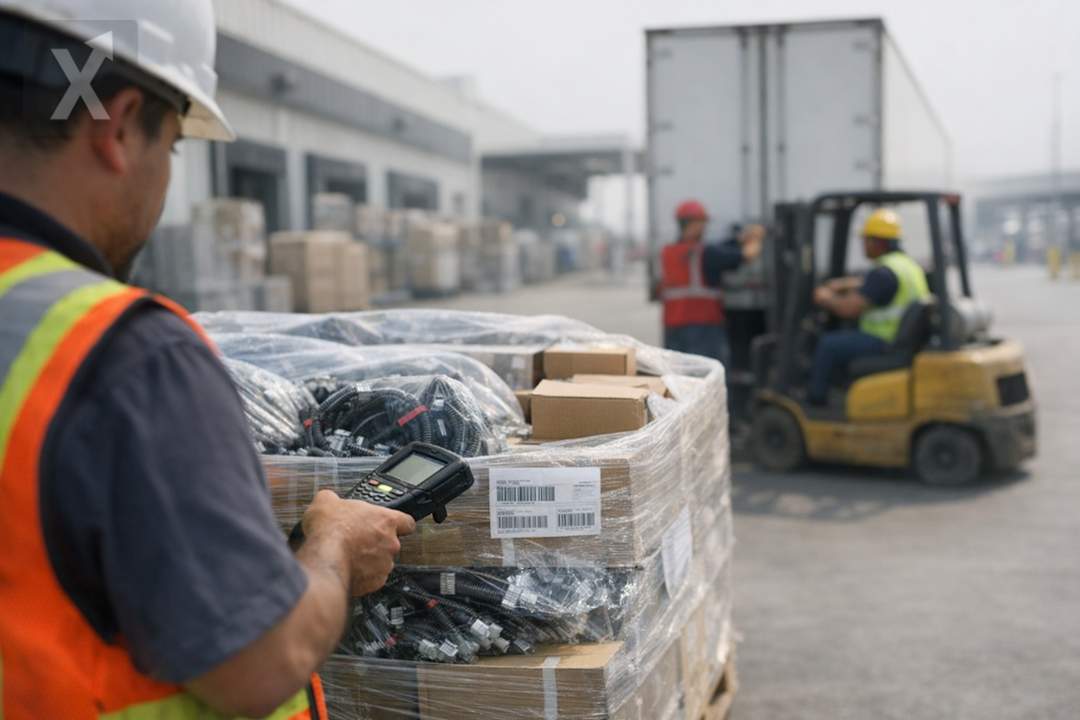
Most of what Mexico sells to the United States is industrial inputs that feed directly into U.S. production, strengthening an increasingly interdependent regional supply chain.
Trade between Mexico and the United States has, in practice, become a daily back-and-forth operation: auto parts, wiring harnesses, electrical components, industrial textiles, machinery, and subassemblies cross the border to undergo specific processes and then get reincorporated into production lines on the other side. More than an exchange of “finished goods,” a central share of trade flows follows a regional co-manufacturing logic that was solidified under the United States–Mexico–Canada Agreement (USMCA) and by the global reshuffling of supply chains after the pandemic.
One figure shows the depth of that interdependence: according to the National Association of Manufacturers (NAM), 64% of U.S. purchases from Mexico are industrial materials, parts, components, machinery, and equipment used in manufacturing processes inside the United States. In other words, nearly two out of every three dollars in imports from Mexico directly support production at U.S. factories—making it more expensive, and more complicated, to replace Mexico as a supplier.
This dynamic helps explain why Mexico has gained ground against Asia in supplying the U.S. market in recent years. With ongoing trade tensions between Washington and Beijing, and with companies looking for shorter, more predictable logistics routes, nearshoring accelerated investment and sourcing decisions. The result has been a stronger North American industrial corridor in sectors such as automotive, electrical and electronic equipment, aerospace, medical devices, machinery, and intermediate goods.
The shift is also tied to regional content: manufactured goods produced in Mexico and exported to the United States often incorporate a meaningful share of U.S. and Canadian inputs, unlike imports from China, where the U.S. component is much smaller. That means Mexico–U.S. trade doesn’t just move goods; it also redistributes demand and jobs across the region—from steel and plastics suppliers to manufacturers of specialized sensors and connectors.
For Mexico, the payoff has been twofold: higher export flows and an industrial platform with spillovers into formal employment, supplier linkages, and tax collection. However, it also brings challenges: dependence on a single market, pressure on border and energy infrastructure, and the need to raise productivity so local value added grows at the same pace as trade.
The Asian-input dilemma: more exports, but also more imports
Mexico’s rise as a key supplier to the United States coexists with another trend: growing imports of inputs from Asia to feed the manufacturing base located in Mexico. In particular, increased purchases from China and the jump in imports from economies such as Vietnam suggest that some export assembly includes components from outside North America. This pattern opens up an important debate ahead of the USMCA review: whether Mexico is increasing regional content or whether, in some segments, it is operating as a processing platform using external inputs.
In practice, the answer varies by sector. In auto parts and machinery, USMCA rules of origin and proximity to North American suppliers support deeper regional integration. In consumer electronics, computing, or certain components, dependence on Asia tends to be higher due to global specialization and scale. For Mexico, the strategic challenge is to attract more supplier investment (Tier 2 and Tier 3), build local capabilities, and reduce bottlenecks—logistical, regulatory, and human-capital-related—that currently limit import substitution in key parts.
Productive integration is also reflected in foreign direct investment: U.S. companies have accumulated significant amounts in Mexican manufacturing, supported by rules of origin, contractual certainty, and USMCA dispute-settlement mechanisms. Those flows combine with corporate decisions tied to costs, the availability of technical talent, logistics reliability, and access to competitively priced energy. In Mexico, the industrial pull has been particularly strong in the Bajío region, along the northern border, and in logistics corridors connected to ports and border crossings, although infrastructure and public-security gaps persist and raise operating costs.
Looking ahead, the performance of this “regional factory” will depend on several fronts. One is the quality of the investment environment: clear rules, customs clearance times, digitalization of procedures, and regulatory consistency. Another is infrastructure: border-crossing capacity, rail, highways, warehousing, and electricity supply. The macroeconomic backdrop will also matter, as Mexico combines export strength with domestic pressures such as financing costs, the need for targeted public investment, and productivity challenges.
At the same time, the USMCA review is shaping up to be a high-impact event. For industry, the goal is usually to preserve the agreement’s trilateral nature and modernize procedures (customs, trade facilitation, digital rules), while also addressing recurring frictions in sensitive sectors. For Mexico, the opportunity is to turn integration into higher domestic value added by increasing the role of local suppliers, boosting technological content, and raising job sophistication.
Overall, the evidence suggests that Mexico is not just an “exporter” to the United States, but an operational extension of U.S. manufacturing supply chains. From an economic-policy standpoint, the key will be to translate that interdependence into more productive investment, innovation, and domestic capabilities—without losing competitiveness or certainty under the USMCA framework.
In perspective, the Mexico–U.S. relationship will remain the backbone of Mexico’s external sector, but its sustainability will depend on consolidating regional supply networks, improving infrastructure, and reducing regulatory risks; integration already exists—now the challenge is capturing more value inside the country.






