High oil prices, rising gasoline: the new front for inflation and costs in Mexico
The rebound in crude is already making fuels more expensive and putting pressure on transportation and food, while subsidies and the exchange rate are cushioning the overall impact.
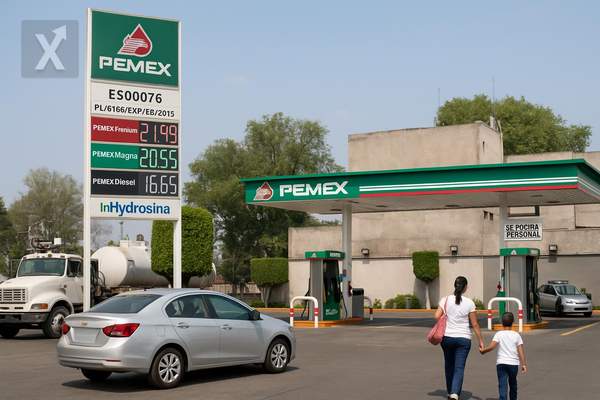
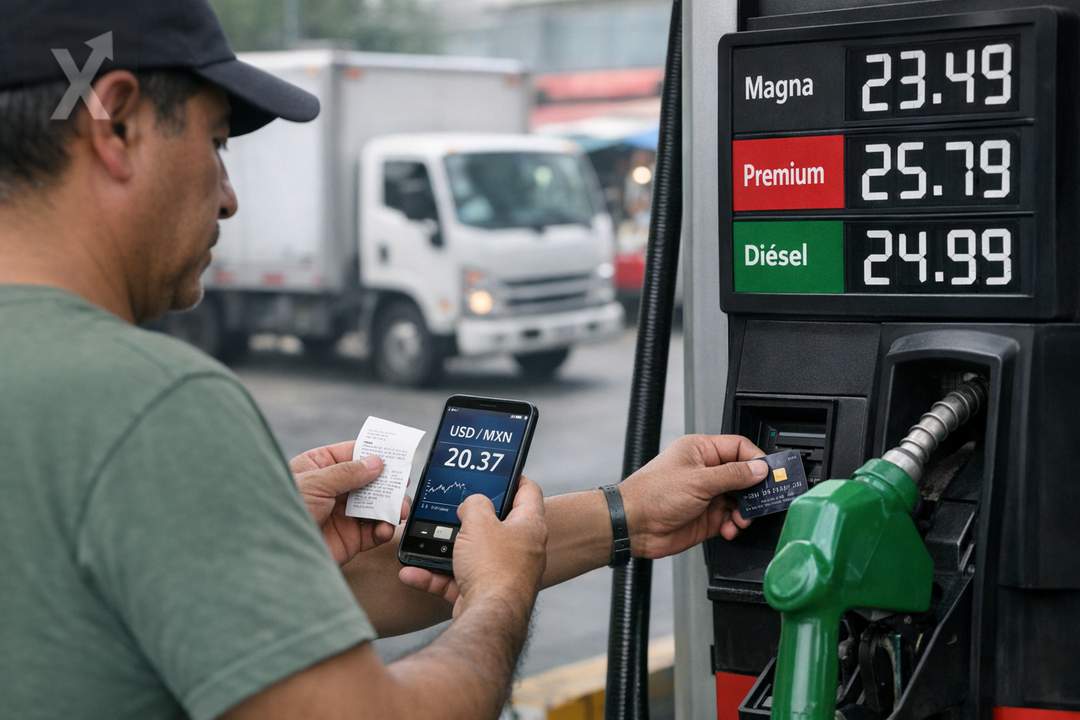
The rise in oil prices in international markets—sparked by the escalation of the conflict in the Middle East—has once again put fuels at the center of Mexico’s economic concerns. In recent weeks, consumer prices for gasoline and diesel have posted notable increases, a move that typically filters quickly through the rest of the economy because of its direct effect on transportation, logistics, and the production cost of a wide range of goods.
The most immediate transmission channel is what people pay at the pump. When crude climbs sharply, refined products—gasoline and diesel—also get more expensive, even though Mexico is an oil-producing country. That’s because the domestic market is tied to international benchmarks and because Mexico continues to import a significant share of the fuels it consumes, especially gasoline.
To soften the blow, the federal government has again turned to the fuel IEPS stimulus mechanism, a tool that reduces the applicable tax to keep the international increase from being fully passed through to the final price. The cost of this strategy is far from trivial: when the shock is persistent, fiscal support competes with other budget priorities and can narrow the public finances’ room to maneuver, especially in an environment of greater spending needs and high borrowing costs.
Even so, analysts have noted that, for now, the episode looks more like a relative-price shock than the start of a sustained inflationary spiral. The impact tends to show up first in non-core inflation—fuels and some foods—and, if it drags on, it can delay disinflation in certain services tied to transportation and distribution.
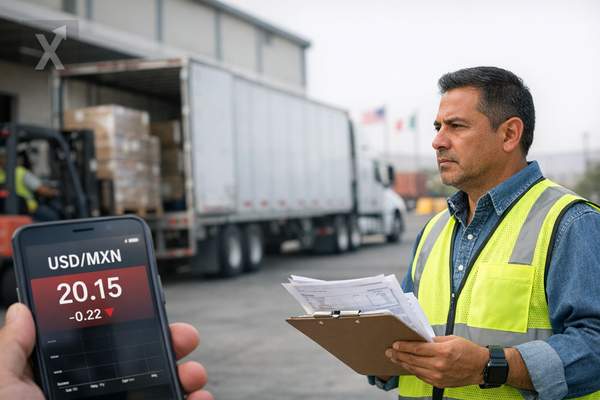
At the same time, the exchange rate has been more volatile after a period of peso strength. A depreciation against the U.S. dollar can make imports more expensive, from industrial inputs to energy products and finished goods. However, exchange-rate pass-through to prices in Mexico has historically been moderate compared with other emerging economies, in part because of the credibility of the monetary framework, the depth of the foreign-exchange market, and lower operational dollarization among firms.
From fuel to the table: logistics, farming, and fertilizers
The pressure isn’t limited to what drivers pay. In a country where the movement of goods depends heavily on trucking, diesel is a cross-cutting input: it affects freight rates, food distribution, last-mile deliveries, and operating costs for small and medium-sized businesses. The result typically shows up with a lag in consumer prices, especially for products with long supply chains or those highly sensitive to transportation costs.
The agricultural sector faces a two-front challenge. On one hand, fuel raises on-farm operating costs and the cost of transporting harvests. On the other, reliance on imported fertilizers increases vulnerability to external shocks. When energy prices rise and logistics routes tighten, fertilizers tend to become more expensive, pushing up the production costs of staple grains and potentially showing up in food prices months later, particularly around key planting and harvest cycles.
This delayed effect matters: even if the international price of crude pulls back, shelf prices can keep adjusting because of inventories purchased at higher prices, transportation contracts, and delivery lead times. In that sense, the current episode isn’t just about daily quotes, but about how costs reset across the real economy.
On the economic policy side, inflation dynamics—especially core inflation—will be critical for gauging the room the Bank of Mexico has to act. If the energy shock stays contained within the non-core component, the impact on rate decisions could be limited; but if there is clearer spillover into services and expectations, the central bank may choose to be more cautious. For the government, the dilemma is how long it can sustain fuel tax relief without eroding revenue or crowding out spending in other areas.
In broader terms, Mexico is facing an episode that combines external factors (geopolitics and international prices) with internal vulnerabilities (dependence on imported fuels and fertilizers, and high logistics sensitivity). Containment through subsidies can smooth the immediate hit, but the full effect will be measured by companies’ ability to absorb costs and by how the exchange rate evolves against the U.S. dollar.
In sum, the rebound in oil is rekindling pressure on fuels and supply chains, with contained but meaningful risks for food and transportation; the size of the impact will depend on how long the shock lasts and on the balance among fiscal support, the exchange rate, and inflation.