Mexico Braces for a More Expensive Global Environment: The IMF Sees Greater Risk of Slower Growth and Inflation Due to the War with Iran
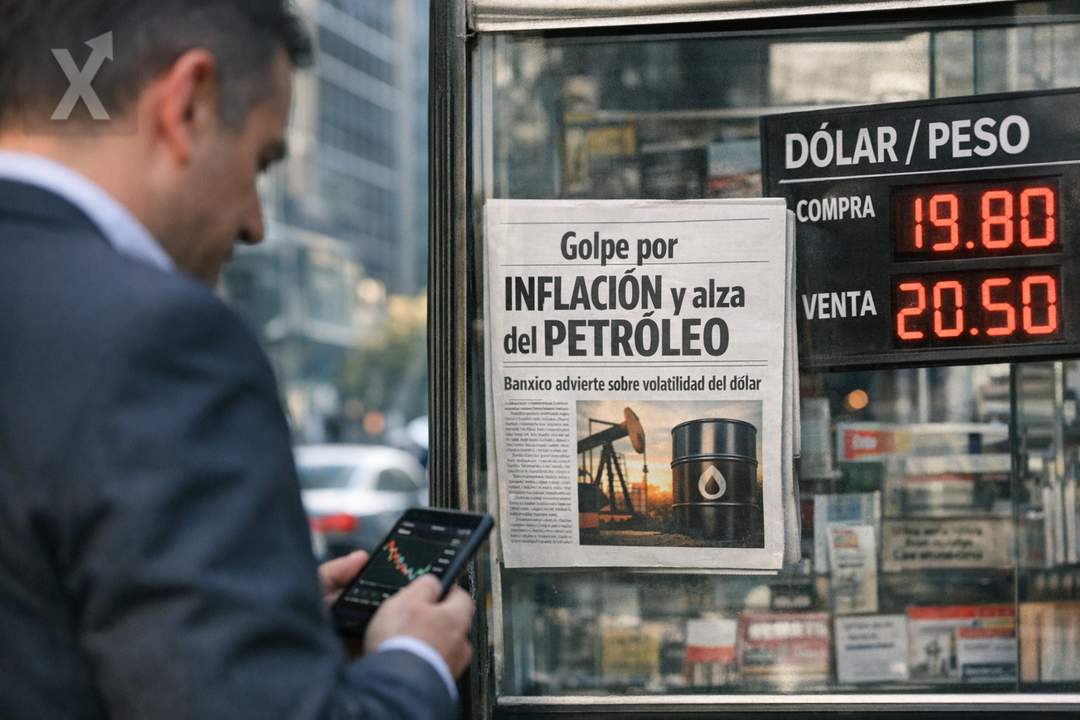
A prolonged oil shock would push up costs and inflation and complicate Mexico’s trade-off between growth and interest rates.
The International Monetary Fund’s (IMF) warning that the global economy is shifting toward an “adverse” scenario due to disruptions tied to the war with Iran puts a familiar risk back on the table for net fuel-importing countries: a longer stretch of high oil prices that eventually feeds into inflation and the cost of borrowing.
The IMF has noted that, under this adverse scenario, global growth could slow to around 2.5% in 2026, alongside higher inflation risks and tighter financial conditions. While the organization acknowledges that inflation expectations remain relatively well anchored, the message is that the margin for error is shrinking: if energy stays persistently more expensive, the shock can spread from transportation and production into consumer prices and investment decisions.
For Mexico, the potential impact would be transmitted through several channels. In the near term, a sustained rebound in crude typically shows up in higher energy and logistics costs; in addition, global volatility can raise risk premia and put upward pressure on funding costs. This is compounded by the challenge that Mexico’s economy relies on imports of gasoline and other refined products, making the external balance and the performance of certain sectors more sensitive to changes in the energy bill.
On the financial front, a less benign global backdrop tends to strengthen the U.S. dollar during risk-off episodes, which can translate into currency depreciation and an additional pass-through to inflation via imported goods. In that context, the role of the Bank of Mexico (Banxico) becomes more important: any sign that inflation could rebound would limit how quickly the central bank can cut rates without reigniting price pressures.
Inflation, the Exchange Rate, and Banxico’s Decisions: The Near-Term Triangle
In Mexico, assessing an external energy shock typically comes down to the behavior of core inflation (which excludes volatile components) and the speed at which costs are passed through to final prices. If fuel increases become persistent, the chain can run from freight and processed foods to services, complicating the disinflation process. At the same time, stronger demand for safe-haven assets abroad can pressure the exchange rate, raising the peso cost of imported inputs. Against that backdrop, Banxico faces the dilemma of keeping a restrictive stance for longer to reinforce expectations, even if economic activity loses momentum.
The scenario also has fiscal implications and consequences for businesses. High oil prices can boost public-sector oil revenues, but that effect may be offset if fuel import costs also rise, if support measures or subsidies increase to cushion domestic prices, or if debt service becomes more expensive. For companies, an environment of higher-for-longer rates and greater volatility can curb investment—especially in energy-intensive sectors or those with supply chains that are sensitive to logistics costs.
Looking ahead, the degree of impact will depend on the duration of the conflict, the path of crude prices, and the extent to which global inflation expectations become contaminated. Mexico enters this episode with monetary policy still restrictive, a domestic market that has shown resilience in consumption, and an export sector closely tied to the U.S. industrial cycle. However, a prolonged energy shock could reorder priorities: protecting price stability, sustaining financial confidence, and preventing higher input costs from eroding margins and employment.
In sum, the IMF’s alert underscores that the risk is not just slower global growth, but the combination of expensive energy, stickier inflation, and less accessible financing; for Mexico, that means greater caution in monetary policy and closer attention to the channels through which oil and the exchange rate transmit to prices and economic activity.






