U.S. inflation ticks back up on pricey energy, reviving pressure for Mexico
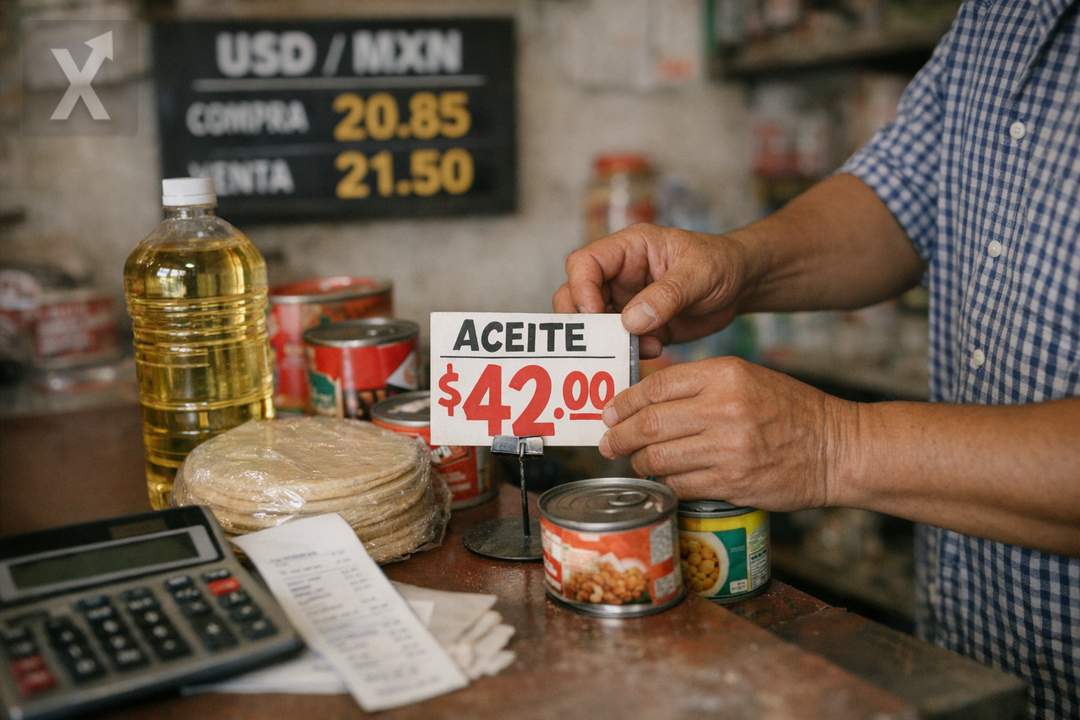
The inflation rebound in the U.S., driven by energy, could complicate Mexico’s outlook for interest rates, the exchange rate, and imported prices.
Inflation in the United States accelerated again in April, reaching its highest level in about three years, amid geopolitical tensions in the Middle East and a sustained rise in energy costs. The reading, which came in at 3.8% year over year, reinforces the view that disinflation in the world’s largest economy remains uneven—especially as oil prices stay elevated and feed through to fuels, transportation, and services.
For Mexico, the inflation rebound in its top trading partner is not a minor external issue: it influences the global rate cycle, the behavior of the U.S. dollar (USD), and the cost of importing inputs and finished goods. In an economy so tightly integrated into North American supply chains, higher energy costs and persistent price pressures in the U.S. often end up filtering—directly or indirectly—into Mexican companies’ cost structures and consumers’ wallets.
Looking at the details, core inflation in the U.S.—which excludes volatile components like food and energy—also rose, a signal closely watched by the Federal Reserve. If the central bank concludes that progress toward its 2% target is stalling, markets typically adjust expectations: fewer rate cuts, or even a longer period of restrictive policy. That shift in the script often strengthens the USD, raises financing costs, and puts pressure on assets in emerging markets, including Mexico.
On the energy front, the run-up in gasoline and electricity prices in the U.S. has become an immediate reference point for anticipating pressure on transportation and logistics. While Mexico has a different structure—featuring a mix of administered prices, taxes, and fuel tax (IEPS) stimulus mechanisms—moves in crude and refined products affect import costs and the fiscal balance tied to support measures used to smooth swings in consumer prices.
Exchange rate, interest rates, and Banxico’s room to maneuver
A more persistent inflation backdrop in the U.S. tends to push investors to favor USD-denominated assets, which can trigger bouts of volatility in the FX market. For the Mexican peso, the risk isn’t only a one-off depreciation, but also the effect of a stronger dollar on the prices of imported goods (from industrial components to consumer products) and on inflation expectations.
Banxico, which has been fine-tuning its monetary stance after the inflation peak of recent years, faces a classic dilemma: ensuring local inflation keeps trending down without putting an unnecessary brake on activity. If the Fed keeps rates high for longer, the interest-rate differential—a factor that has supported flows into Mexico—may need to be managed more cautiously to avoid disorderly pressure on the exchange rate or a premature easing of financial conditions.
In addition, the transmission isn’t only financial. Mexico exports a substantial share of its manufacturing output to the U.S.; if monetary tightening there cools consumption, the pace of orders could slow in sectors such as autos, electronics, and home appliances. At the same time, nearshoring continues to act as a structural counterweight, but its materialization depends on financing costs, regulatory certainty, and energy and logistics infrastructure.
Staple basket, energy, and indirect effects on prices
The U.S. inflation rebound is also a reminder that energy shocks tend to spread broadly. In Mexico, food inflation has shown bouts of stickiness at different times due to transportation costs, fertilizers, weather conditions, and margins along supply chains. Persistently expensive oil can push up freight and distribution costs and ultimately show up in consumer prices—even if the energy component is partially cushioned through fiscal policy.
For Mexican companies—especially those importing inputs or machinery—a more expensive dollar and higher global rates mean higher operating and investment costs. In that context, FX hedging strategies, renegotiating supply contracts, and improving energy efficiency become increasingly important. For households, the impact tends to show up in everyday expenses: transportation, services, and certain goods with high import content.
Looking ahead, the focus will be on whether U.S. inflation resumes its downward path or whether energy shocks keep price pressures elevated. For Mexico, the challenge will be navigating a potentially more restrictive financial environment without losing sight of inflation convergence and FX market stability—while preserving export momentum and capitalizing on opportunities for productive investment.






