Business bank lending accelerates in Mexico: financing grows, but banks rein in risk appetite

Business lending is still posting annual growth, driven by SME demand, while banks protect portfolio quality in an uncertain environment.
Bank financing for businesses in Mexico kept a steady pace at the start of the year. In the first quarter, the business loan portfolio reached 3.97 trillion pesos, up 7.7% from the same period a year earlier. The figure comes one year after an agreement between banks and the government to expand small and medium-sized enterprises’ (SMEs) access to credit, and it arrives as companies continue to report that limited financing remains a direct brake on growth, investment, and expansion.
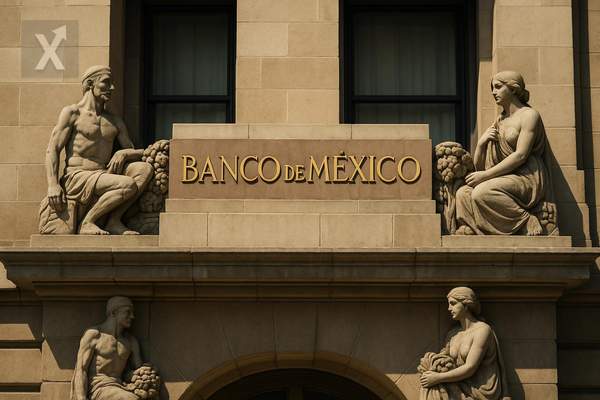
The stronger momentum shows up not only in the total balance, but also in the market’s qualitative read. According to the Survey on General Conditions and/or Standards in the Bank Credit Market from Banco de México (Banxico), the banks with the largest market share reported an increase in demand, especially in the SME segment. Practically speaking, this suggests that some companies are not only seeking more credit, but are also finding willing lenders—even with interest rates still high compared with levels before the inflation cycle.
The expansion in lending is happening as Mexico’s economy mixes supports and pressures. On the one hand, the labor market and consumption have shown resilience, and the reshoring of supply chains (nearshoring) continues to attract investment interest, particularly in manufacturing and logistics. On the other, uncertainty persists: the performance of the U.S. economy—Mexico’s main trading partner—volatility in financing costs, and corporate caution around long-term investment decisions.
The underlying challenge, acknowledged by both authorities and the financial sector, is turning balance-sheet growth into a real expansion of access for SMEs. Mexico’s National Survey of Business Financing has shown that not having credit has concrete effects: a large share of companies report setbacks ranging from delayed expansion to canceled investments. In that sense, portfolio growth is a necessary condition, but not a sufficient one, to close the financing gap in the segment that accounts for a large share of employment.
More SME credit, but with a close watch on delinquencies and the economic cycle
Financing is expanding with a caution flag: portfolio quality is showing mild signs of pressure. Bank delinquency ticked up slightly from 1.65% in March 2025 to 1.71% in March the following year. While the level remains low by historical standards, the move confirms that the credit cycle is normalizing and that banks are becoming more selective—especially with SMEs, where financial information can be more uneven and sensitivity to demand or cost shocks tends to be higher.
In this environment, rating agencies and analysts have noted that the agreement to expand credit does not necessarily imply indiscriminate risk-taking. Banks can grow, but with tighter underwriting standards: collateral, payment history, diversification of risk across sectors, and adjustments to pricing and terms. Economically, that means credit can continue to grow, but with a more defensive allocation toward companies with more predictable cash flows or those integrated into export supply chains.
Banxico’s survey also indicates that in the next quarter, the largest banks expect momentum to continue, while smaller players could see a pickup in demand. That opens a competitive window: mid-sized and niche institutions can gain ground in specific regions or sectors, as long as they have strong underwriting and collections capabilities.
At the same time, the public debate has raised ambitions for financial deepening. After the original commitment to expand financing to reach a larger share of SMEs by the end of the decade, the government has pushed for higher targets, linking access to credit with a goal of increasing financing’s weight in the broader economy. In a country where private-sector credit as a share of GDP has been lower than in other comparable economies, the proposal implies not only lending more, but also building institutional infrastructure: formalization, digital bookkeeping, traceable payments, and better credit information.
Technology shows up as a tool, though not necessarily as the end-use of new credit. Banxico reports that for now, a significant share of new financing is not expected to be used specifically for investment in Artificial Intelligence (AI), although some intermediaries have seen a modest increase tied to that purpose. In practice, the most immediate use of digital solutions tends to be process-focused: verification, risk assessment, fraud prevention, and lower operating costs—factors that can improve the economics of serving segments that have traditionally been more expensive to underwrite, such as SMEs.
Looking ahead, business lending performance will depend on the path of inflation and interest rates, the strength of external demand, and companies’ ability to sustain margins in a competitive environment. If the economy maintains moderate growth and export-linked investment consolidates, credit can keep expanding; if the cycle weakens or external shocks intensify, banks will likely tighten risk filters, limiting access for firms with lower levels of formalization or more volatile revenues.
Overall, the increase in business lending confirms stronger demand traction and a response from the banking system—particularly for SMEs—but it also underscores that expansion must coexist with disciplined risk management and structural improvements so financing reaches more companies without weakening portfolio quality.