HDI and Afirme Bet on Bancassurance in Mexico with a 20-Year Alliance and an Insurer Acquisition
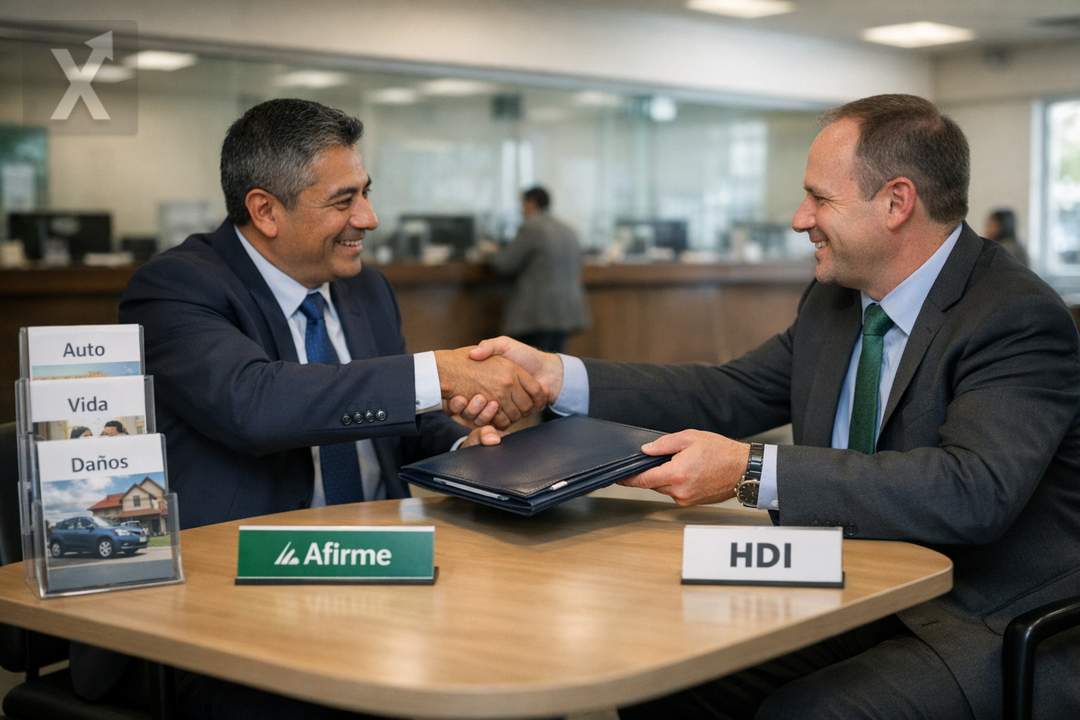
The partnership aims to expand insurance distribution in Mexico as the sector recalibrates prices and coverage in response to higher tax and claims costs.
HDI Seguros México, backed by its German parent company Talanx, reached a long-term agreement with Afirme to jointly market auto, life, and property & casualty insurance over the next 20 years, while Talanx agreed to acquire 100% of Afirme Seguros. The deal is still subject to regulatory approvals in Mexico, and the companies did not disclose the amount.
The move fits into a strategy that has been gaining traction across the financial system: bancassurance—selling insurance policies through a bank’s distribution network. For global insurance groups, Mexico remains a significant market due to low insurance penetration compared with developed economies, a large base of potential customers, and a growing need for financial protection among households and SMEs.
According to the companies, the goal is to combine capabilities to expand the product lineup and make it easier to access “more affordable and relevant” offerings. In practice, this often translates into broader commercial reach—branches, digital banking, sales forces—and greater ability to segment risk and price using the bank’s transactional data, always within regulatory and data-protection limits.
While the relevant approvals are secured, both organizations will continue operating independently under their respective CEOs: Ignacio González at HDI Seguros México and Tonatiuh Gutiérrez at Afirme Seguros. For Talanx, as stated by Wilm Langenbach, head of HDI International, the transaction reaffirms Mexico’s appeal as a key market and opens additional distribution channels to build a more competitive offering.
Cost Pressures, Tax Changes, and the Challenge of Sustaining Profitability
The partnership comes at a time when the insurance business is facing a mix of pressures. On one hand, insurers have been hit by tax adjustments that made claims servicing more expensive by limiting the deductibility of VAT in certain cases—an impact felt especially in mass-market lines such as auto insurance and some health/medical expense segments. On the other, claims frequency and severity remain a sensitive issue: inflation in auto parts, hospital costs, and repair services typically flows through to premiums with a lag, squeezing margins if rate increases are not implemented in time.
In this environment, building scale and expanding distribution can act as a buffer: more policies and a more diversified risk mix tend to improve earnings stability, though they also raise the challenge of managing reserves, reinsurance, and customer service. Acquiring a local insurer can also speed up expansion by adding an existing book of business, licenses, processes, and regional market know-how—especially in areas where mid-sized banks have a long-standing presence.
Market Implications: Competition, Inclusion, and Oversight
For consumers, a bank-insurer partnership typically means greater product availability at branches and through digital channels, as well as bundled policies tied to auto loans, mortgages, or payroll services. This can intensify competition on price and coverage, but it also requires oversight to prevent improper tying, opaque commissions, or products that do not match a customer’s profile. That is why supervision and clear disclosure practices matter—particularly around total cost, deductibles, and exclusions.
At the macro level, stronger insurance penetration has a financial-resilience component: broader coverage can reduce vulnerabilities to shocks—accidents, illness, disasters—and ease pressure on household finances. However, progress will depend on the sector’s ability to offer products that are easy to understand and affordable in an environment where households are still adjusting spending due to higher service costs and interest rates that, while beginning to normalize gradually, still shape the cost of credit and demand for cars and housing.
Overall, the HDI–Afirme partnership, along with Talanx’s acquisition of Afirme Seguros, is designed to gain scale and distribution in a market with substantial upside, but one facing profitability challenges tied to costs and the tax framework; its impact will be measured in pricing, service quality, and broader access to financial protection.






