Hacienda and Art as a Public Asset: A Cultural Collection That Also Requires Budget, Oversight, and Transparency

Mexico’s Ministry of Finance safeguards more than 17,000 pieces and is looking to open its catalog to the public—an effort that intersects culture, administration, and accountability.
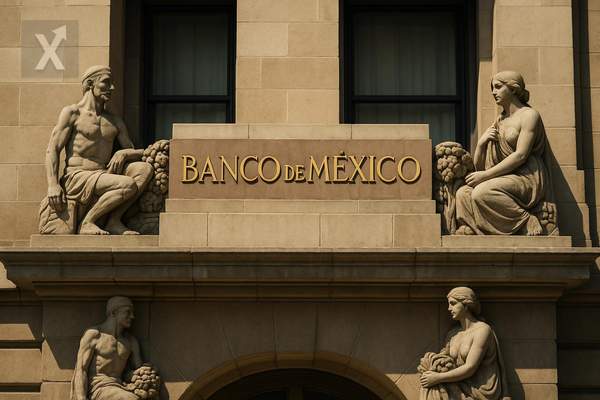
In Mexico, the Ministry of Finance and Public Credit (SHCP) is typically associated with revenue, spending, debt, and fiscal rules. However, beyond its central role in economic policy, the agency also serves as a custodian of cultural heritage: it safeguards more than 17,000 pieces, including artwork, furniture, and historic objects that form part of the federal government’s collection. The cultural dimension is significant—managing and sharing this heritage requires inventories, insurance, specialized conservation, and an institutional framework that, in practice, competes for resources with other public-sector priorities.
The origin of a substantial portion of the collection lies in the “Payment in Kind” program, a mechanism in place since the late 1950s that allows artists—Mexican nationals or foreign artists who produce and sell work in the country—to meet tax obligations by turning over artwork. Mexico’s Tax Administration Service (SAT) receives the pieces, which are later distributed through a system that allocates works among municipalities, state governments, and the federal government. Through that channel, the collection exceeds 13,200 pieces, in addition to roughly 4,000 items that include antique furniture, historic office equipment, private donations, and—during past periods—seized assets. Among the items reportedly held in custody is even a sculpture attributed to Salvador Dalí.
Management of this collection is unfolding at a time when the Mexican economy is seeking to lock in macroeconomic stability amid simultaneous pressures: calls for higher social spending, public investment needs, demands for operational austerity across multiple agencies, and a volatile international environment. In that context, cultural heritage held by the state becomes a case study in how the government manages nonfinancial assets: they don’t generate direct tax revenue, but they do create public value in terms of identity, access to culture, cultural diplomacy, and institutional strengthening.
Transparency and inventory controls: the value of knowing what you have
Modernizing the recordkeeping is a critical point. In practice, a collection of this size requires cataloging standards, traceability, and conservation assessments to prevent losses, deterioration, or simple administrative “gray areas.” SHCP has reported updates to its Collections Registry and Administration System (SIRAC), with the aim of enabling public access to the collection. Beyond cultural interest, platforms like these often raise the quality of internal controls: they reduce the risk of undercounting, make audits easier, organize loans to museums or embassies, and improve accountability for the use of public assets. In a country where transparency is increasingly part of how public policies are evaluated, opening catalogs and standardizing technical documentation also functions as an integrity policy.
Maintaining custody comes with costs: specialized storage for two-dimensional and three-dimensional works, technical staff and conservation protocols, and “nail-to-nail” insurance to protect pieces during storage, transport, and exhibition. Unlike other budget areas, the challenge here isn’t only “spend less,” but spend at the right time: a cut or delay in maintenance can cause irreversible damage and, as a result, a loss of cultural value that is not easily restored. This is why, even under fiscal discipline frameworks, cultural institutions often argue their spending has investment-like characteristics tied to preservation.
SHCP has pointed to an allocated budget for these tasks in 2026, with room for adjustments. From a public finance standpoint, the issue highlights a familiar tension: cultural budgets tend to be small relative to total discretionary spending, but their qualitative impact can be high when it translates into traveling exhibitions, partnerships with museums, and public access. At the same time, the country still faces the challenge of expanding the tax base and improving collection efficiency; “Payment in Kind” does not replace cash revenue, but it does illustrate how certain tools can align tax compliance with cultural policy objectives.
The collection is also tied to Mexico’s international projection. Lending pieces for exhibitions abroad or for diplomatic spaces can contribute to cultural diplomacy—a “soft” resource that complements the economic agenda through tourism, nation branding, and attracting investment in creative industries. In an environment where Mexico is looking to benefit from supply-chain relocation and deeper regional integration, cultural storytelling can reinforce perceptions of stability and identity, even if it is not a determining factor on its own.
Looking ahead, the challenge will be to sustain a balance: preserve and share without turning heritage into a merely ornamental line item or a bureaucratic burden. If the digital catalog is solidified and loans are managed under clear criteria, the state can expand public access to assets that are already public—without losing control over their integrity.
In perspective, the case shows that public-sector economics isn’t only about raising and spending money, but also about managing state assets with rules, controls, and transparency. To the extent that SHCP strengthens inventories, conservation, and dissemination, the collection can become an example of public management that adds cultural value with administrative discipline.