Mexico and the European Union Modernize Their Agreement: Tariff Relief for Agriculture and a Bet on Diversifying Exports
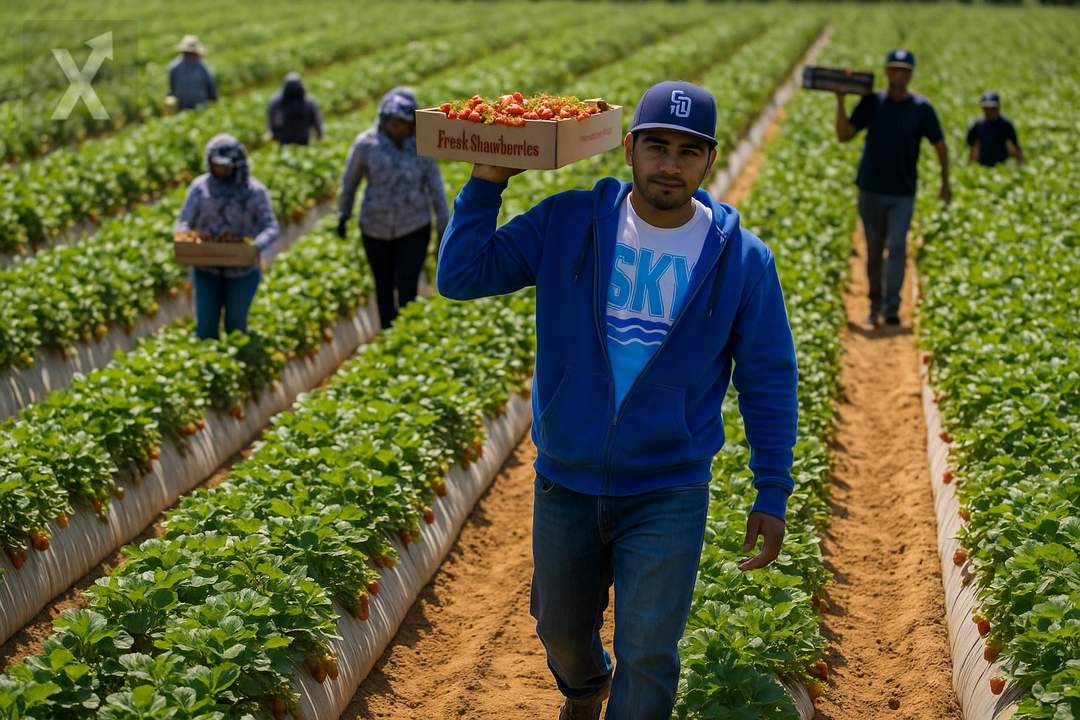
Modernizing the Mexico–EU pact will eliminate tariffs on most agricultural goods and aims to reduce commercial dependence on North America.
The update to the trade agreement between Mexico and the European Union (EU) points to a meaningful shift for the agrifood sector: more than 83% of farm and food-industry products would receive immediate duty-free access, while the rest would move through a phased tariff-elimination schedule. The structure is designed to increase certainty for exporters and to open a path for growth in a high-income market with strict standards.
In the context of the Mexican economy, the move is viewed as part of a broader trade-diversification strategy. Mexico has cemented an export-oriented model over recent decades, but with a concentrated pattern: most agrifood shipments go to North America, increasing exposure to economic cycles, regulatory changes, or episodes of trade friction with its main destination.
The modernized agreement with the EU—one of Mexico’s top-tier trading partners—seeks to reduce not only tariffs, but also costs tied to quotas, paperwork, and technical requirements that often determine the true real-world viability of selling in Europe. For large companies, the incentive is to scale volumes and capture better prices; for small and mid-sized firms, the challenge will be meeting sanitary standards, traceability rules, and certification requirements amid logistics costs that can be high without sufficient scale.
The window of opportunity widens because of the size of the European market and its role in global food trade. However, Mexico’s share of European agrifood imports remains small, suggesting room to grow while also underscoring that competing in the EU means adapting to a demanding consumer, a robust regulatory framework, and longer, costlier logistics than the route to the United States.
On Mexico’s side, the sector arrives with strengths: an export apparatus that far exceeds what it was three decades ago, integrated agroindustrial supply chains, and experience with internationally positioned products such as tequila, coffee, and certain fruits. Still, the to-do list includes boosting farm productivity, improving cold-chain and transportation infrastructure, strengthening inspection services, and reducing losses—key factors for meeting timing and quality requirements in distant destinations.
Beyond the Tariff: Logistics, Sanitary Rules, and Value Added
Tariff cuts alone do not guarantee an export surge. In practice, access to the EU market often depends on the ability to demonstrate food safety, traceability, and environmental compliance, as well as maintaining consistent quality and supply. For Mexico, that means investing in certifications, laboratories, packaging, standardization, and post-harvest processes. It also opens a discussion about value added: selling raw commodities is typically less profitable than placing processed goods or products with denominations of origin and differentiated attributes. At a time when the Mexican economy is looking to sustain growth with greater domestic content, agribusiness can capture more revenue by driving processing, branding, and quality—though that requires coordination among producers, agroindustrial firms, and regulatory authorities.
The agreement’s modernization also comes amid a broader reconfiguration of global trade. In recent years, companies have reassessed supply risks and sought more resilient chains. For Mexico, which is already benefiting from its manufacturing integration with the United States, expanding agrifood presence in Europe could help balance its export mix and reduce vulnerabilities to market-specific shocks.
The challenge, however, is operational and financial. Exporting to Europe requires planning, insurance, working-capital financing, and currency-risk management, along with addressing domestic bottlenecks such as logistics costs, highway security, and the availability of port infrastructure. At the same time, complying with European standards can become a competitive advantage if it drives quality improvements that later translate into better prices in the domestic market as well.
Over the coming months, the focus will be on implementation: timelines, rules of origin, customs procedures, and regulatory cooperation mechanisms. For Mexican agriculture, the promise is clear: broader access to the EU and, with it, an incentive to invest and professionalize export operations. For the economy as a whole, the upside lies in diversifying destinations and increasing value-added content, though the outcome will depend on how quickly the sector turns formal access into sustainable sales.
In short, the Mexico–EU agreement opens an important lane for the agrifood sector by reducing tariffs and trade frictions, but its impact will hinge on productivity, logistics, sanitary compliance, and a value-added strategy to compete in a highly regulated market.






