Fewer Snacks in Classrooms, Less Fiscal Momentum: Mexico’s Junk-Food Excise Tax Cools in 2026
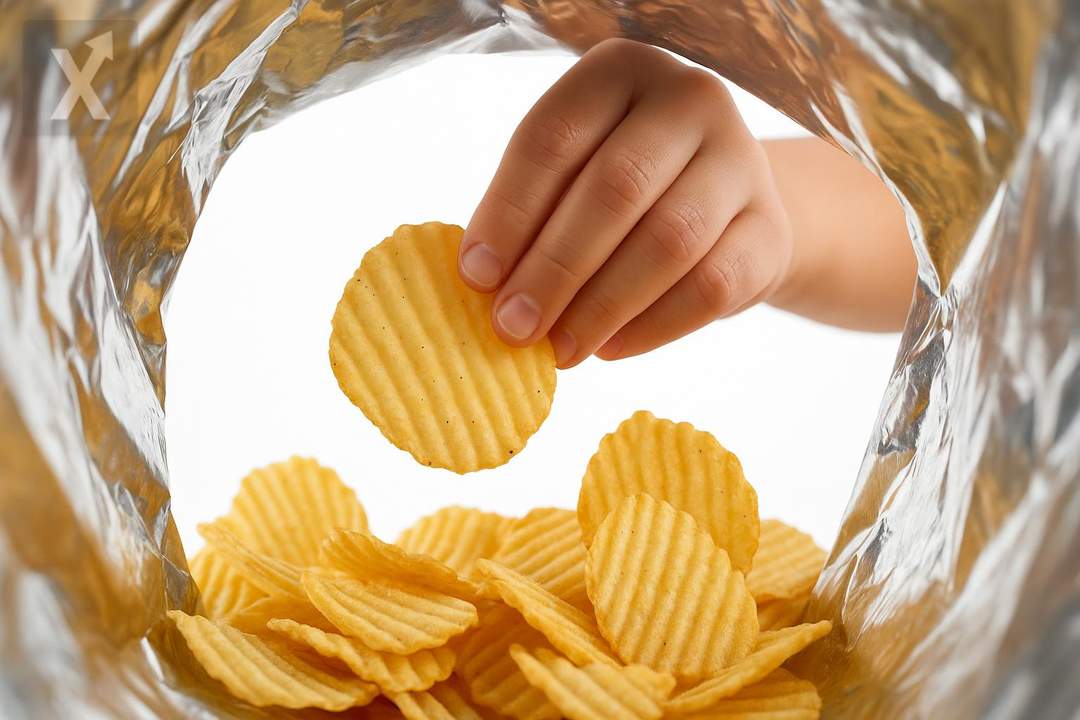
Restrictions on ultra-processed foods in schools slowed the growth of the excise tax on junk food, reopening the debate between public health goals and revenue targets.
Revenue from the Special Tax on Production and Services (IEPS) applied to non-essential, high-calorie foods—such as chips, snack cakes, and candy—posted only marginal growth at the start of 2026, against a backdrop shaped by the ban on selling “junk food” in schools, implemented in late March 2025. According to official public-finance figures, revenue from this source rose just 1.1% year over year from January to April, well below the pace seen over the prior four years, when the average hovered around 14%.
The slowdown in IEPS growth does not necessarily point to weaker tax administration, but rather to a shift in consumption patterns that health authorities have aimed to encourage: less access to—and fewer purchases of—ultra-processed foods in school settings. In the same period of 2025, the tax was already signaling a deceleration (2.2% year over year), suggesting a gradual transition since regulatory measures were strengthened, such as the front-of-pack warning labels in place since 2020 and the 8% tax applied since 2014.
Economically, the data matter because the IEPS is a stable source of federal revenue and a gauge of domestic consumption in specific categories. When growth in a consumption tax flattens, it typically reflects a combination of softer demand, substitution toward untaxed products, or channel shifts (for example, buying outside of school or in different package sizes). For Mexico’s Finance Ministry (Hacienda), that translates into less pull from a line item that—while not among the largest in total tax revenue—still contributes and also serves as a public-policy tool.
Organizations focused on tax justice and public health have stressed that the primary goal of health-related taxes is not to maximize revenue, but to discourage consumption of products associated with overweight, obesity, and chronic disease. Under that logic, a sustained slowdown in collections can be read as a sign that the policy mix—taxes, labeling, and restrictions in school spaces—is changing habits, at least in certain segments.
Update the IEPS? Health, Industry, and Price Effects
The debate is now centered on whether the current 8% rate is sufficient to align with international standards and create a stronger incentive for product reformulation. Various forums have proposed raising it to 20%, a level seen in recent Latin American experiences where increases were phased in over time. In Mexico, the argument in favor is that consumption of snacks, sweets, and desserts remains high among young people, and that a higher tax could push industry to adjust portion sizes, reduce critical contents (sugars, sodium, fats), and broaden product offerings.
However, a higher rate also carries macro- and microeconomic implications that the government typically weighs: the short-term inflation impact on certain consumer baskets, potential substitution toward cheaper, lower-quality products, and added pressure on small retailers that depend on those sales. In addition, in an environment where purchasing power is being squeezed by inflation and the interest-rate cycle, any tax change on mass-consumption goods tends to amplify distributional debates—particularly because these levies are usually more visible to households.
For analysts, the final effect depends on demand elasticity: if consumers meaningfully cut purchases in response to price increases, revenue may not rise in the same proportion as the tax rate, reinforcing that the health objective dominates the fiscal one. Conversely, if demand is relatively inelastic, the government collects more, but the health benefit could be smaller. That’s why empirical evidence and ongoing evaluation are decisive before any adjustment.
The Unfinished Task: Traceability and Spending Legitimacy
One issue gaining traction in the public discussion is the lack of clear mechanisms to track where revenue from health-related taxes ultimately goes. Although tax revenues flow into the general budget pool, specialists argue that greater transparency—such as reports showing allocations to prevention, primary care, school health, or medical infrastructure—could strengthen public acceptance of the levy.
In a country where health spending is under pressure from rising chronic disease and from demands for coverage and reliable supply, traceability is not just a communications issue; it can also become a tool for budget governance. For Hacienda, earmarking funds reduces flexibility; for the public, seeing concrete results can improve the perception that the tax serves a purpose beyond raising revenue.
Looking ahead, the performance of the junk-food IEPS will function as a dual indicator: of ultra-processed consumption and of the real reach of public policy in schools. If the slowdown persists, the government will face a classic corrective-tax dilemma: public-health success with lower marginal revenue, or rate adjustments aimed at reinforcing behavior change without worsening price pressures. In any scenario, the central challenge will be sustaining a comprehensive, measurable strategy—one in which reduced consumption is paired with affordable food alternatives and greater transparency in how the resources are used.






