Mexico Climbs in High-Tech Exports: The U.S. Steps Up Purchases and the Country Overtakes the European Union
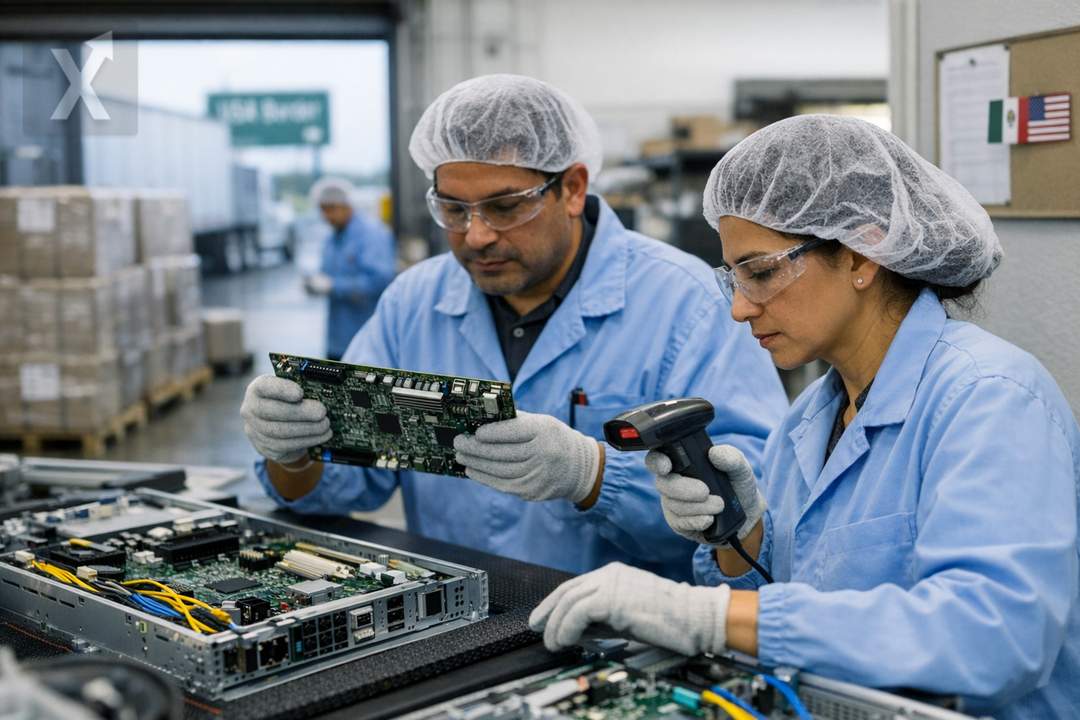
The surge in technology sales to the United States confirms Mexico’s industrial progress, but the challenge remains to raise value added and productivity.
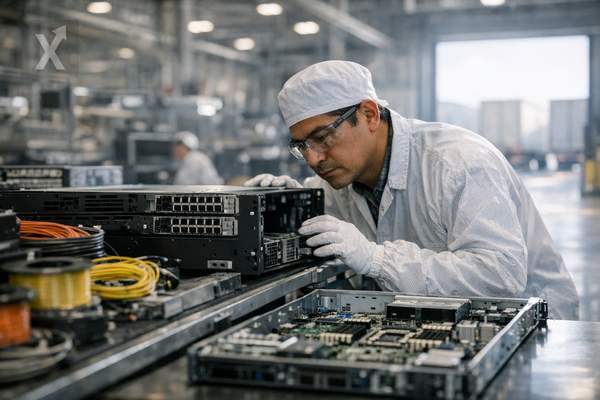
The trade relationship between Mexico and the United States is entering a new phase: beyond cars, auto parts, and home appliances, the U.S. market is sharply increasing its purchases of goods classified as “advanced technology” made in Mexico. The shift suggests Mexico is gaining ground in more sophisticated manufacturing and assembly segments—computers, servers, telecom equipment, electronic components, and medical devices—at a time marked by the expansion of artificial intelligence and the reshaping of North American supply chains.
Between January and May 2026, U.S. imports of advanced technology products from Mexico totaled nearly $78 billion, a 43% year-over-year increase, according to the U.S. Census Bureau. Over the same period, U.S. purchases from the European Union were around $62 billion, meaning Mexico surpassed the EU as an aggregated supplier in this category. In the ranking, Vietnam placed ahead, at roughly $100 billion.
The “Advanced Technology Products” classification used by the U.S. government includes nearly 500 tariff codes grouped into 10 segments (ranging from information and communications to life sciences, optoelectronics, or aerospace). This means the momentum is not limited to semiconductors: it spans a broad basket of industrial goods with high technology intensity.
The biggest boost for Mexico is seen in “information and communications,” where the United States bought Mexico-origin goods worth approximately $63.75 billion in the first five months of the year. In that category, only Taiwan remained ahead. Other segments also advanced, though on a much smaller scale: electronics ($3.927 billion), optoelectronics ($3.734 billion), life sciences ($3.578 billion), and aerospace ($1.697 billion).
The trend aligns with the global boom in demand for equipment tied to data centers, storage, networking, and hardware associated with training and running AI models. It is also explained by the push for regional sourcing, lower logistics risk, and shorter delivery times—a pattern that has favored Mexico as a manufacturing platform for the U.S. market.
The “nearshoring” boost—and its limits: more exports don’t always mean more growth
In recent years, Mexico has capitalized on trends such as nearshoring and “friendshoring,” supported by its geographic proximity to the United States, production integration under the USMCA, and accumulated experience in export manufacturing. However, the jump in tech exports does not by itself guarantee an equivalent acceleration in GDP growth or an automatic improvement in wages: a meaningful share of the content in these exports comes from imported inputs, machinery, software, and intellectual property developed outside the country, which reduces the domestic spillover.
This point is central to understanding Mexico’s paradox: more goods are exported with an “advanced” label, yet domestic value creation can remain limited if the country stays focused on assembly or final integration stages. Estimates from international organizations have emphasized that a significant fraction of export value incorporates foreign content, particularly in electronics. The challenge, therefore, is not just to sell more, but to move up the chain: design, engineering, certifications, specialized processes, automation, and research and development capabilities.
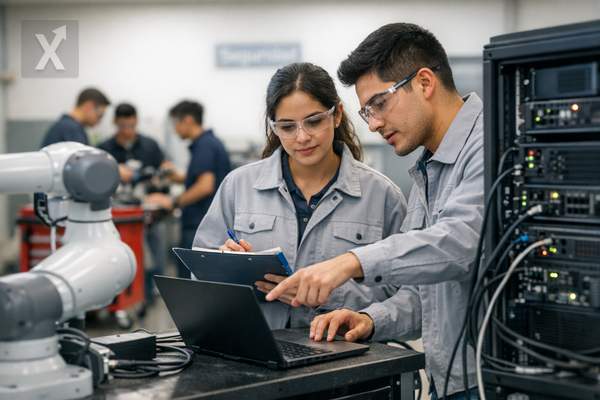
In addition, Mexico’s consolidation in these supply chains faces internal bottlenecks. The availability of reliable electricity, the cost and stability of supply, logistics infrastructure (ports, border crossings, rail, highways), as well as security and regulatory certainty, influence how quickly new projects are executed. At the same time, developing technical talent—engineers, specialized technicians, advanced maintenance, electronics, mechatronics, and industrial software—becomes decisive to sustain the leap toward more complex manufacturing.
On the U.S. side, the backdrop is also pushing change. Various analyses have pointed out that the United States has lost competitiveness in several strategic technology industries and has widened trade deficits in advanced categories. In that scenario, Mexico becomes a practical piece of the supply puzzle for serving the North American market, though with an ongoing dependence on components and equipment coming from Asia and other regions.
For Mexico, the opportunity is twofold: sustain export momentum while also attracting investment that deepens local sourcing. In practical terms, that means developing more capable domestic suppliers, raising standards and certifications, expanding access to productive financing for industrial SMEs, and improving digital connectivity and telecommunications to support smart manufacturing processes. The shift toward data- and automation-intensive sectors also pushes companies to invest in cybersecurity, traceability, and operational resilience.
In the medium term, the performance of these exports can influence macroeconomic stability through external accounts and investment flows, but the impact on living standards will depend on whether the country can translate trade integration into productivity. In an environment where the United States concentrates most regional demand, Mexico also faces the challenge of diversifying markets and reducing vulnerabilities to industrial cycles, trade policy decisions, and rapid technological change.
In short, the increase in U.S. high-tech purchases confirms that Mexico is already competing in more sophisticated segments than the traditional ones, but the next step—more value added and better wages—will depend on resolving domestic constraints and scaling industrial and innovation capabilities.