U.S. Inflation Eases on Cheaper Gasoline; the Impact on Mexico Will Depend on Oil and the Exchange Rate

A softer U.S. CPI reading eases financial pressure, but a rebound in crude driven by geopolitical tensions could raise energy costs and shift expectations in Mexico.
Inflation in the United States cooled in June to 3.5% year over year, below what the market expected, mainly due to a 9.7% month-over-month drop in gasoline prices. The figure, reported by the Department of Labor, gave investors a breather after pricing in a longer stretch of higher rates; however, the very backdrop that drove the decline—a temporary de-escalation episode in the Middle East—reversed as hostilities resumed, bringing fresh pressure to the oil market.
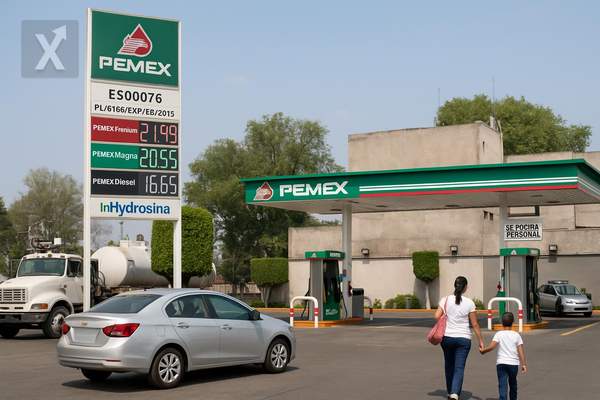
For Mexico, the read-through isn’t automatic: lower inflation in the United States can ease part of the global cost of capital and reduce volatility in flows to emerging markets, but the energy channel pulls the other way. If oil becomes more expensive again due to risks along strategic routes—such as the Strait of Hormuz—pressure on fuels and transportation can flare up, which often filters into consumer prices, especially in open economies with integrated supply chains like Mexico’s.
Looking at the details of the U.S. report, the headline index fell 0.4% from May—the first monthly decline since 2020—while food rose 0.2% month over month and core inflation (excluding food and energy) came in at 2.6% year over year. This mix keeps alive the debate over how much room the Federal Reserve has to ease without reigniting price pressures, an issue that matters for Mexico given the interest-rate spread and its effect on the exchange rate.
Banxico, rates, and the peso: the “Fed effect” doesn’t come by itself
When U.S. inflation cools, the odds typically rise that the Fed will cut rates later on, which in theory supports emerging-market currencies and reduces risk premiums. In Mexico, that mechanism can translate into less pressure on the peso versus the U.S. dollar and, in turn, lower import costs for inputs and finished goods priced in USD. Still, the balance depends on where Mexico is in its own monetary cycle: Banxico has favored a restrictive stance for years to lock in disinflation, and any overly rapid narrowing of the differential versus the United States can change the relative appeal of peso-denominated assets and bring back FX volatility.
Put differently, lower U.S. inflation helps, but it doesn’t replace domestic drivers: services stickiness, wage dynamics, logistics costs, and the credit path. In addition, if higher crude translates into higher global gasoline prices, Mexico faces the challenge of cushioning the impact without throwing public finances off track. The country operates under a framework in which the excise tax on fuels (IEPS) and related stimulus mechanisms can smooth swings in consumer prices, but heavy use carries fiscal costs and does not fully prevent pass-through to inflation, especially when the shock is prolonged.
The external backdrop arrives as Mexico continues to benefit from the reshuffling of supply chains toward North America. That process—known as nearshoring—boosts manufacturing exports and attracts investment in sectors such as auto parts, electronics, and logistics, but it also raises demand for energy, water, and transportation, making the economy more sensitive to energy shocks. At the same time, Mexican inflation has shown persistence in some services and food components, so a new episode of more expensive oil could complicate the pace of price convergence, even though pass-through is usually partial and depends on the exchange rate and on administered-price policies.
In the near term, markets will be watching two signals: the path of oil and the Fed’s tone around its 2% inflation target. If the crude rebound holds, the relief seen in June’s CPI could prove temporary, pushing energy costs back up and shaping expectations. For Mexico, that would mean monitoring both imported inflation and peso stability, in an environment where Banxico’s policy decisions and the Fed’s messaging often set the regional financial pulse.
In sum, the U.S. inflation print improves sentiment and opens the door to less restrictive financial conditions, but oil risk could offset part of the benefit. For the Mexican economy, the final effect will depend on the balance between a steadier U.S. dollar, Banxico’s response, and how long the energy shock lasts.