Trump Walks Back the Hormuz Toll, and Oil Once Again Shifts Mexico’s Inflation and Exchange-Rate Expectations
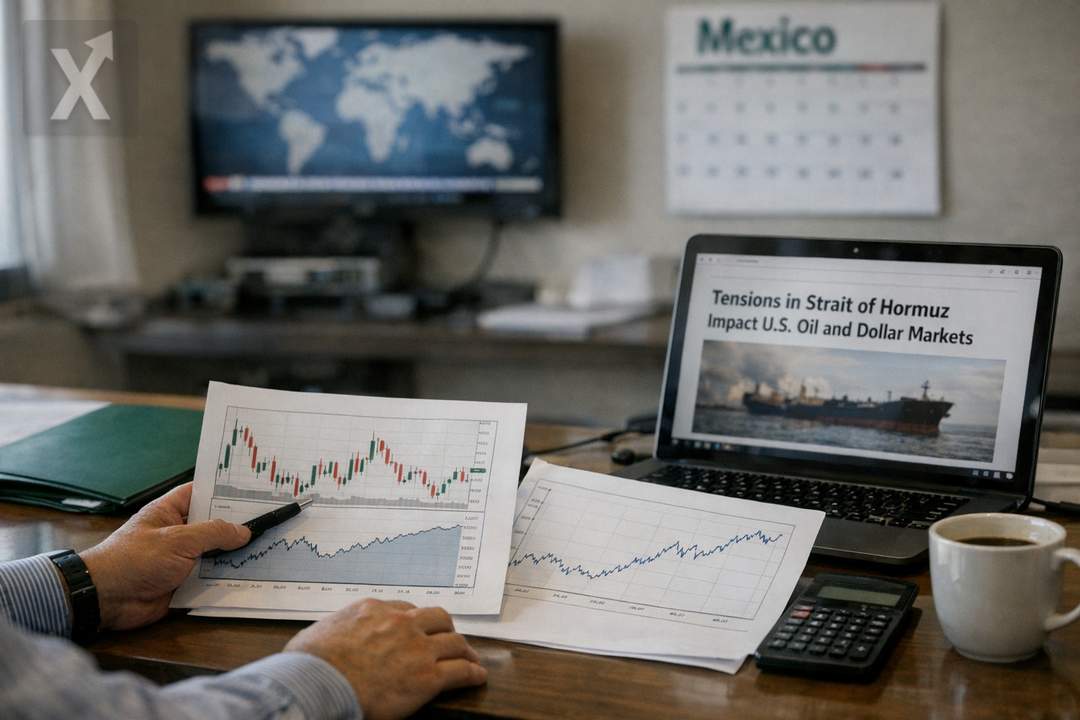
Washington’s reversal on Hormuz eases immediate pressure on energy, but keeps the volatility Mexico feels in gasoline prices, inflation, and public finances.
President Donald Trump’s decision to withdraw the 20% fee he had announced for ships crossing the Strait of Hormuz reshapes—at least temporarily—the risk balance for the international oil market. Hormuz is a critical maritime chokepoint through which a significant share of the crude the world consumes flows; that’s why any military or commercial friction in the area is quickly reflected in energy prices and in global risk sentiment.
For Mexico, the shift matters through two channels: first, the price channel—especially fuels and petrochemicals—which feeds into inflation; second, the financial channel, because bouts of geopolitical तनाव typically strengthen the U.S. dollar and make hedging and financing more expensive for emerging economies. Although Trump’s announcement aims to replace the toll with “trade and investment agreements” between Gulf countries and the United States, the broader confrontation with Iran keeps uncertainty about supply elevated.
In practice, removing the levy could ease logistical and cost pressures for shipping companies and insurers, which typically trims the “risk premium” embedded in a barrel of oil. However, the warning that the passage would be “open to all traffic except Iran,” along with the announcement of a new blockade of Iranian ports, sustains the risk of disruptions—limiting how far prices can fall and keeping markets focused on the stability of energy flows.
In Mexico, sensitivity to these moves is high. Gasoline and diesel prices—even with IEPS tax-stimulus mechanisms—are influenced by international benchmarks and import costs. In addition, the country still imports a meaningful share of finished fuels, so external shocks either reach the end consumer or, alternatively, translate into higher fiscal costs if the government seeks to cushion the impact through subsidies or other support.
Inflation, Banxico, and the FX Channel: the Indirect Impact of Hormuz Tensions
A spike in crude prices typically filters into Mexico’s inflation first through energy and transportation, and then through goods and services that depend on logistics. In an environment where the market is closely watching the inflation path and the monetary-policy stance, higher energy prices can complicate the Bank of Mexico (Banxico)’s efforts to lock in sustained disinflation—especially if the shock persists or coincides with domestic pressures in food and services.
The other mechanism is the exchange rate. During risk-off phases, demand often rises for perceived safe-haven assets and the USD tends to strengthen against multiple currencies, including the peso. A weaker peso makes imports more expensive and can amplify oil’s inflationary impact; it also raises hedging costs for companies with dollar-denominated liabilities or purchases. While the Mexican peso has shown bouts of resilience in recent cycles, its performance remains tied to interest-rate differentials, flows into emerging markets, and perceptions of geopolitical risk.
For public finances, an energy shock cuts both ways. On one hand, higher crude prices can lift oil-related revenue; on the other, they also raise the cost of importing fuels and increase pressure to contain prices at the pump. The net outcome depends on the export mix, cost structure, and the design of subsidies or tax relief, as well as the behavior of domestic demand.
Looking ahead, the message for Mexico is that volatility will remain the norm as long as the standoff between the United States and Iran persists. Even if the toll has been shelved, the market will continue to react to military signals, sanctions, blockades, and shifts in shipping routes or insurance terms. In that context, energy-intensive companies, freight carriers, and sectors with high import exposure are usually the first to adjust budgets, hedges, and pricing.
In sum, Trump’s reversal reduces an immediate risk of additional costs in Hormuz, but it does not eliminate the fragility of the global energy backdrop. For Mexico, the key will be how oil and the USD evolve, and how effectively monetary and fiscal policy can cushion the impacts without adding pressure to inflation, growth, and public accounts.






