Critical Minerals and Nearshoring: Mexico’s Window in the New Geopolitics of Supply Chains
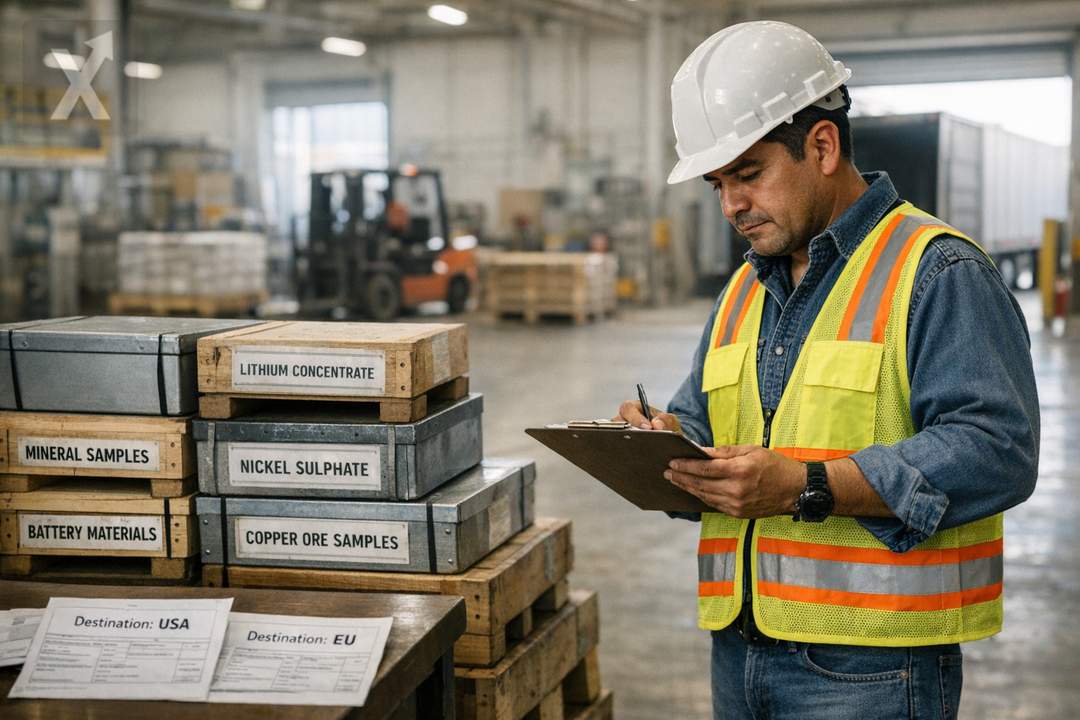
Mexico is looking to turn its industrial position and mining potential into an investment lever at a time of global realignment in response to China.
The global reshuffling of supply chains is raising the strategic value of critical minerals—key inputs for batteries, power grids, semiconductors, and defense technologies—and has put Latin America on the radar of the world’s leading economies. In that context, the Organisation for Economic Co-operation and Development (OECD) has argued that the region faces an “unprecedented” opportunity if it advances reforms to attract private investment, strengthen institutions, and boost productivity. For Mexico, the debate is arriving at a particular moment: the country is already a manufacturing hub integrated with the United States and Canada, but its role as a supplier of minerals and materials for the energy transition is still being built.
This isn’t just a mining discussion. Competition to secure reliable supplies—and reduce dependencies concentrated in China—has translated into more active industrial policies in advanced economies, with incentives to locate processes domestically and diversify suppliers. Mexico can capture part of that reconfiguration thanks to its proximity to the United States, its export infrastructure, and its automotive and electronics ecosystem, as long as it can clear key bottlenecks: sufficient, competitively priced energy; available water; regulatory certainty; and efficient logistics.
In recent years, “nearshoring” has reinforced the flow of projects to northern Mexico and the Bajío, boosting demand for industrial parks and putting pressure on public services. At the same time, the type of investment the U.S. wants for the energy transition—from electric-vehicle components to energy storage—tends to require traceability, environmental standards, and clear rules. Mexico therefore faces a public-policy dilemma: speed up investment without loosening oversight, while also avoiding regulatory uncertainty that could deter long-term capital.
On the trade front, the European Union (EU) has also expressed interest in a stronger supply base from Mexico as talks advance to modernize the bilateral agreement. For the country, better market access and technological cooperation can help it move up the value chain: shifting from extraction and basic processing to specialized materials, advanced manufacturing, and industrial recycling—areas where profit margins and skilled jobs are concentrated.
What Mexico Needs to Turn Resources into an “Investment Case”
Geographic appeal does not replace industrial policy or institutional capacity. In Mexico, the opportunity hinges on shaping an agenda that combines investment with rules: more predictable permitting, coordination across levels of government, rail and port infrastructure that cuts time and costs, and reliable power for electricity-intensive plants. The social dimension also matters: mining and energy projects require strong community relationships, consultation mechanisms, and verifiable local benefits to reduce conflict and operational shutdowns. Add to that a financial factor: as global investment incorporates environmental, social, and governance (ESG) criteria, access to capital may depend on reporting, audits, and origin standards—not geology alone.
For Mexico, the upside grows if it ties this to its export base. Auto parts, electronics, and electrical equipment manufacturing can integrate regional inputs with higher local content, strengthening resilience against external disruptions. However, that transition requires human capital: technicians, engineers, and specialized operators; and it requires productivity gains—a recurring point in recommendations from multilateral organizations. At the macro level, the challenge is to turn the opportunity into sustained growth without worsening pressure on water, land, and power grids, especially in the states seeing the largest inflows of investment.
In perspective, Mexico’s window is not just about “having minerals,” but about building confidence: a stable regulatory framework, infrastructure and energy that keep pace with industrial expansion, and a strategy to capture value added. If the global reconfiguration continues, the country could consolidate itself as a manufacturing platform for the energy transition; if it fails to address bottlenecks, investment could shift to other destinations in the region with better conditions for long-term projects.






