Nacional Monte de Piedad Appoints José Antonio Murillo Garza Amid Ongoing Strike: The Challenge of Restarting a Bellwether of Working-Class Consumption
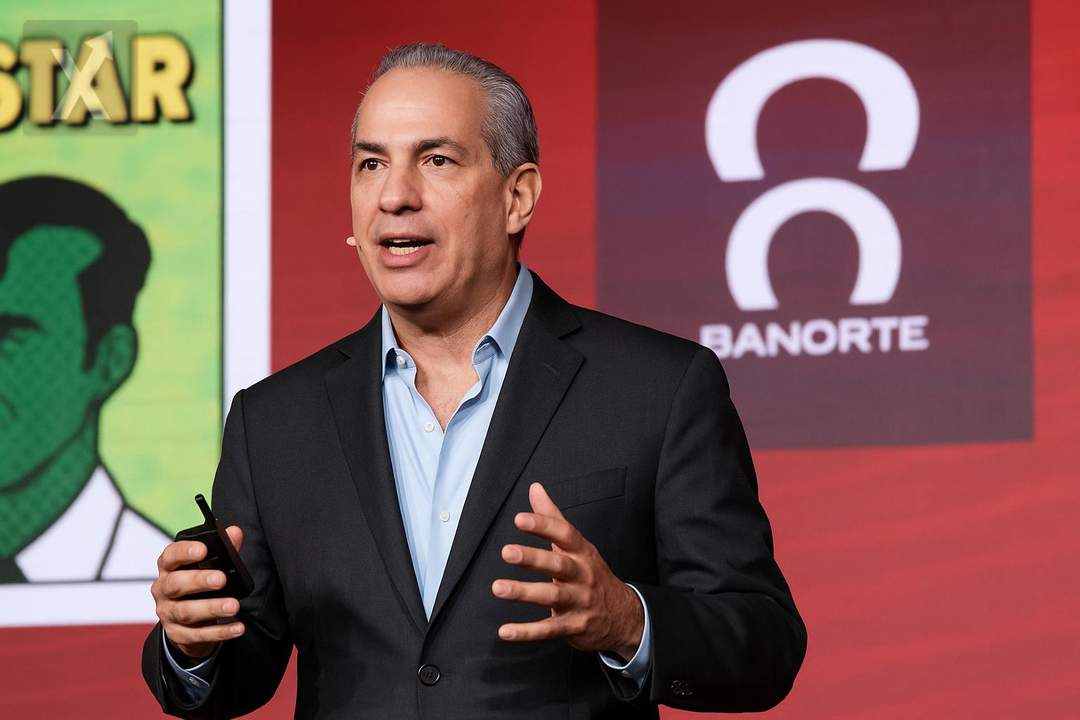
The new CEO’s arrival comes with 301 branches closed, increasing pressure to reach a labor deal to restore a key liquidity channel for households.
In the middle of a strike that has now stretched into its eighth month, the Board of Trustees of Nacional Monte de Piedad (NMP) appointed José Antonio Murillo Garza as its new CEO, effective June 1. The leadership change follows the resignation of Rafael Humberto Del Río and comes at a highly sensitive operational moment for an institution that—because of its scale—serves as a major source of short-term financing for millions of people.
Murillo Garza said he is taking on the role with a commitment to work with employees, the Board, government authorities, and various stakeholders to strengthen the institution’s social impact and lay the groundwork for its long-term continuity. In practical terms, the first and most urgent front is resolving the labor conflict that has kept 301 branches closed nationwide, affecting 1,890 unionized workers and 860 non-union employees.
The conflict erupted on October 1, 2025. The union has argued that the Collective Bargaining Agreement was violated, particularly regarding headcount controls and promotions. NMP, for its part, has maintained that the core dispute centers on implementing an automated and transparent system for assigning openings. Meanwhile, the institution says pledged items are being safeguarded in vaults and that it is maintaining phone lines for customers to check the status of their pawn loans.
The scale of the operation helps put the impact in perspective: the institution typically processes around 600,000 transactions per month. While there is no single estimate of the strike’s economic cost, the prolonged interruption has constrained a source of immediate liquidity for households that use pawn loans as a bridge in emergencies, during seasonal income swings, or under inflation-driven pressure in essential categories.
Murillo Garza comes with a technical profile: he holds a PhD in Economics from Rice University, has been a professor and researcher at El Colegio de México and ITAM, and has accumulated experience in the financial sector. Before the appointment, he led RappiCard, owned by Banorte, where he took part in growth and innovation efforts. That blend of public policy, academia, and digital finance points to a strategy focused both on reordering internal processes and modernizing services.
Pawn Loans, Inflation, and Liquidity: Why NMP’s Standstill Matters
The activity of pawn shops—and NMP in particular—tends to intensify when purchasing power is under pressure and formal credit either doesn’t arrive quickly or isn’t affordable for everyone. In Mexico, household consumption has shown resilience, but it coexists with still-elevated interest rates, inflation that—while down from prior peaks—continues to weigh on essential items, and a labor market marked by high informality. In that context, pawn lending acts as a pressure valve: it converts an asset into cash almost immediately. A prolonged strike, therefore, isn’t just a labor issue; it also reshapes competition and the market’s ability to meet emergency-financing needs, pushing demand toward private alternatives that may be more expensive or less transparent, or toward informal credit networks.
For NMP, restarting operations is not merely a matter of raising the shutters: it means restoring operational confidence, normalizing appraisals, safeguarding inventory, and resuming cash flows with strong controls. In an environment where financial digitization is advancing but inclusion remains incomplete, the institution faces a dual challenge: modernizing processes without undermining labor agreements, while also serving a customer base that values in-person service and speed.
Talks aimed at breaking the impasse are being held with the participation of Mexico’s Ministry of Labor and Social Welfare and union representatives, who have described the negotiations as being pursued “with greater commitment.” Even so, the length of the shutdown increases the opportunity cost: each month without operations reduces NMP’s ability to fulfill its social mission and weakens its position against competitors that are capturing that demand.
Looking ahead, Murillo Garza’s appointment is being read as a bet on management and execution: closing out the labor chapter, rebuilding institutional capabilities, and deciding how far modernization—including automated assignment of job openings—can move forward under an acceptable labor-governance framework. From a macro standpoint, an orderly return of NMP would help normalize a short-term liquidity channel that tends to become more visible when household finances tighten.
In broader perspective, the NMP case shows how a labor dispute can ripple beyond a single organization: in a country where emergency liquidity is crucial for large segments of the population, a negotiated solution will be key to restoring service, jobs, and institutional trust.






