Mexico Consolidates Its Agro-Export Push in the U.S., Sparking Political Pressure from Florida
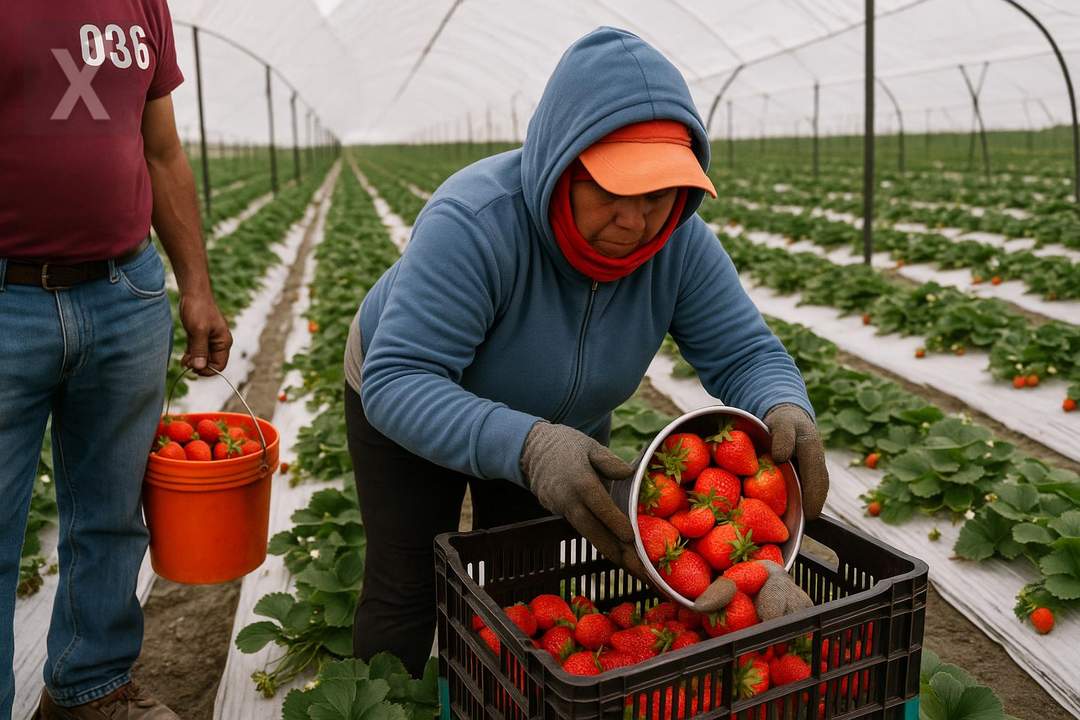
The growth of Mexican agriculture in the U.S. market is raising tensions ahead of the USMCA review, with Florida emerging as a key political front because of its winter harvests.
North America’s agri-food integration has become one of the USMCA’s economic cornerstones: it helps secure supply, streamlines supply chains, and reduces uncertainty in a global economy shaped by logistics shocks, climate events, and price volatility. However, that same integration has also intensified competition in segments where Mexican production has gained scale and consistency—especially fruits and vegetables that supply the United States market during critical months.
In just over two decades, Mexico’s agricultural exports to the United States have multiplied and now exceed $40 billion a year, supported by investment in protected agriculture, logistics upgrades, and a supply network that operates virtually year-round. This advance has not only broadened options for consumers; it has also taken market share from regions that historically dominated the winter window, such as Florida—where growers and local officials have documented significant losses in sales, jobs, and tax revenue tied to Mexican competition.
The friction comes at a sensitive time: formal USMCA review rounds have already begun, and on the agenda, agriculture stands out as one of the issues most likely to become politicized. For Mexico, the U.S. market is the natural destination for its agro-exports due to proximity, transportation costs, and familiar sanitary rules; for certain U.S. producers—especially in Florida—Mexico’s growth is seen as a direct threat during their peak season and to signature crops.
Florida state figures point to cumulative displacement in products such as peppers and tomatoes, as well as increasingly intense competition in berries. In terms of volume, Mexico sends to the United States an agricultural flow far greater than Florida’s in comparable categories, reinforcing the local perception that the market has been reshaped. On the Florida side, the ability to expand farmland also faces constraints from rising land prices, land-use changes, and urban pressure, which reduces room to respond with higher output.
The economic impact goes beyond the farm: when a state loses share during its strongest season, the entire value chain feels it (packing, transportation, services, seasonal employment). That’s why the debate easily moves from the commercial arena to the political one—particularly in a state with electoral weight and the capacity to pressure lawmakers and trade authorities in Washington.
Seasons, Prices, and Trade Measures: The New Battleground
The most sensitive point is the calendar. Between November and April, Florida concentrates much of its presence in several vegetable crops—a window that once served as a natural shield against competitors. Today that advantage has eroded: Mexican production, supported by regions with staggered harvests and greenhouse agriculture, can sustain a steady supply right when demand in the United States remains high. In practice, competition stops being “taking turns” and becomes a simultaneous contest over price, quality, delivery times, and supermarket contracts.
In that context, trade defense measures are back in focus. The imposition of countervailing duties on Mexican tomatoes and investigations into other products reflect the strategy of some U.S. producers to move the dispute from the grocery shelf to the case file. For Mexico, the risk is not limited to a single product: an escalation of antidumping actions or safeguards can create uncertainty for agricultural investment, disrupt logistics flows, and in some cases raise consumer prices in the United States. For Florida, by contrast, these measures aim to claw back breathing room against a competitor able to supply throughout the season.
The macroeconomic backdrop also matters. With moderate economic growth in Mexico and a domestic market that does not always absorb surpluses at attractive prices, the agro-export sector becomes an important engine for producing regions and for bringing in foreign currency. At the business level, many Mexican agricultural companies have raised standards for food safety, traceability, and packaging to meet U.S. buyers’ requirements, while border and transportation infrastructure becomes more strategic: any congestion, extra inspection, or regulatory change can translate into immediate costs.
The tension is amplified by the political climate in the United States. Florida carries unique weight in the national conversation and maintains close ties to leadership that often favors tougher trade stances. In a USMCA review, that can translate into pressure to tighten rules in specific seasons or expand trade defense tools. Mexico, for its part, will seek to preserve the preferential access and regulatory certainty that have enabled investment in agriculture—especially in exporting states in the Northwest and the Bajío region.
Looking ahead, the challenge will be balancing the logic of regional integration—which has made the agri-food supply more efficient—with the distributional pressure created by winners and losers in specific markets. For Mexico, the main asset is its ability to supply consistently and its logistical proximity; its main vulnerability is exposure to political decisions and trade disputes concentrated in high-profile products. For the United States, the challenge is maintaining stable prices and supply without turning the USMCA into an arena of seasonal exceptions.
In short, the advance of Mexican agriculture in the United States highlights the strength of integration under the USMCA, but it also reveals its tensions: when competition happens in the same season and in the most profitable crops, the economic debate becomes political and trade negotiations grow more heated.






