Mexico Seeks to Cement Itself as the Pacific Bridge in the New Geography of Trade

Mexico is trying to capitalize on trade’s shift toward the Pacific to attract Asian investment without losing alignment with the United States.
Mexico is turning its attention back to the Pacific with a pragmatic goal: to become a reliable link between Asia and North America at a time when global supply chains are being reshuffled. The narrative goes beyond nearshoring understood as “bringing plants over from Asia,” and points to a more complex integration: attracting capital, technology, and inputs from Asian economies to produce in Mexico and supply the regional market—dominated by the United States, its top trading partner—more efficiently.
This approach gains relevance as the world’s economic center of gravity shifts toward Asia-Pacific, a region that accounts for a significant share of global GDP and trade. For Mexico, that reality opens a business window, but also a challenge for economic policy: how to deepen ties with dynamic economies—from Southeast Asia to major industrial powers—without triggering trade friction with its primary export market.
In that context, the APEC Business Advisory Council (ABAC) serves as a platform to bring the private sector closer to the governments of the forum’s 21 economies. The mechanism matters because it organizes practical priorities—trade facilitation, connectivity, digitization, financing, sustainability—and turns them into recommendations that rise to the leaders’ level. For Mexico, active participation makes it possible to “tell its story” about production and regional integration, while also hearing what Asian companies are looking for as they diversify risk amid tariff tensions, export controls, and changes to rules of origin.
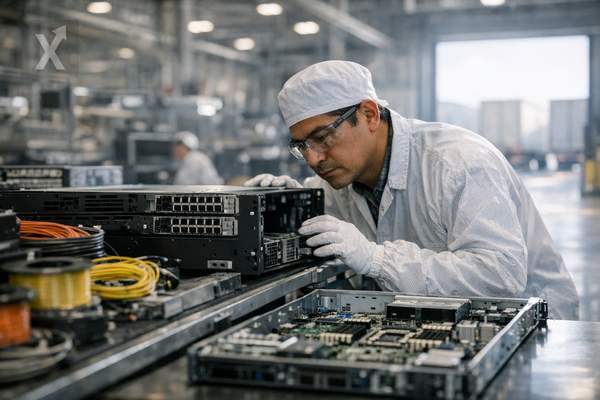
The bet draws on well-known advantages: location, preferential market access through its network of trade agreements, and a manufacturing base that already exports complex goods such as vehicles, auto parts, electronics, and medical equipment. But the current moment demands more: raising technological content, strengthening local suppliers, and easing bottlenecks in energy, water, transportation, and customs logistics—factors that determine whether investment turns into sustainable productive capacity.
The lead-up to this effort centers on ABAC business meetings slated to take place in Mexico City, aimed at reviving dialogue with Asia-Pacific corporations and laying the groundwork for 2028, when Mexico will host the APEC Leaders’ Meeting. For the country, the opportunity is not only diplomatic: it can also become a showcase for concrete projects in advanced manufacturing, agribusiness, the digital economy, and services—so long as there is regulatory clarity and public-private coordination.
Opportunities and Limits: Asian Investment Under the U.S. Lens
Mexico’s room to maneuver is constrained by its very high level of integration with the United States, which absorbs most Mexican exports. In practice, that means any strategy to attract Asian investment must coexist with a more demanding U.S. agenda on economic security, origin verification, and the prevention of transshipment. This is no small issue: when tariffs rise or inspections tighten, entire production chains absorb the cost—from auto parts to electronics—and, by extension, so do jobs and tax revenues in the country’s manufacturing regions.
That is why, rather than choosing between Asia or North America, the challenge is to design a “double compatibility”: attracting projects that comply with rules of origin, customs transparency, and labor standards, and that also drive smart import substitution (more domestic suppliers) in sectors where Mexico is already competitive. In the short term, the discussion translates into operational steps: traceability, certifications, border and port infrastructure, and digitizing processes to cut time and costs. In the medium term, the focus shifts to capabilities: training technical talent, innovation, and certainty for energy-intensive investments.
The conversation also includes a reputational component. In several Asian economies, there is still limited awareness of “productive Mexico” and its logistical and regulatory advantages. Hence the promotion strategy—including the narrative around the so-called Plan México as a calling card—aims to turn announcements into verifiable projects: plants, engineering centers, linkages with SMEs, and technology transfer. Without those elements, interest may remain stuck at the level of MOUs and visits, without tangible effects on productivity.
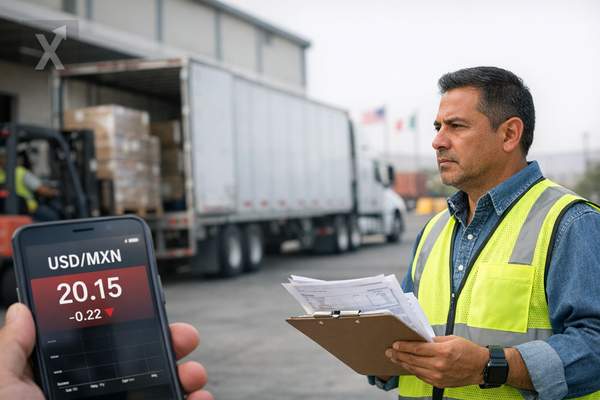
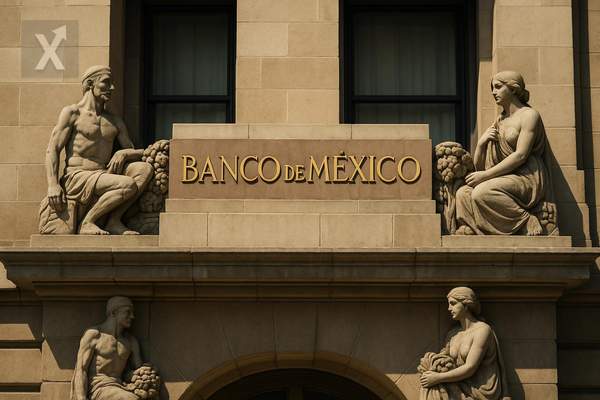
At the same time, the macroeconomic environment sets the pace. Mexico has maintained relative stability in inflation and public finances compared with other emerging markets, but it faces structural challenges: constrained potential growth, infrastructure gaps, and regional disparities. Relocation and a pivot toward the Pacific could lift investment and exports, though their impact will depend on whether the country resolves local constraints—energy, permits, security, water availability—that currently determine where and how new operations are established.
Looking toward 2028, holding the APEC chairmanship and hosting duties could act as a catalyst: a high-visibility moment to announce logistics corridors, port modernization, and industrial projects with clear governance. Still, success will be measured less by the diplomatic photo-op and more by hard indicators: fixed investment, domestic value added, market diversification, and Mexico’s ability to move up the value chain in exports without increasing trade vulnerabilities.
In short, Mexico is trying to position itself as a Pacific node that connects Asian capital and technology with North American demand; the opportunity is significant, but it requires clear rules, infrastructure, and an integration model that can withstand U.S. trade scrutiny.