Santander Mexico Tamps Down Credit Cards Amid Delinquency Signals and Doubles Down on SMEs and Infrastructure
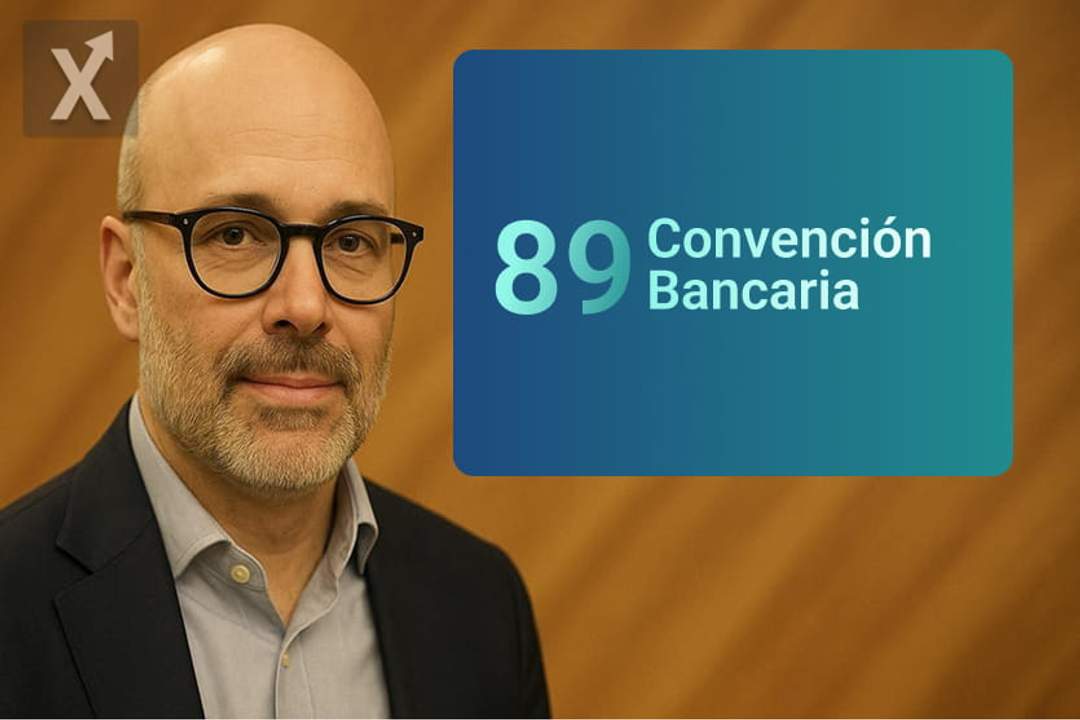
Santander is recalibrating its strategy: less push in cards due to credit risk and a sharper focus on productive lending to sustain growth.
Santander Mexico has decided to hit the brakes on issuing credit cards at a time when the financial system is facing a more challenging environment for consumer spending: tougher competition from digital issuers, signs of stress in loan portfolios, and a cost of funding that, while it has started to ease, remains high by historical standards. During the 89th Banking Convention, Felipe García Ascencio, the bank’s CEO, said the institution is aiming to be more cautious in this business amid indications of deterioration in credit quality.
The executive noted that the proliferation of cards in the Mexican market has increased the need for caution, while some players may be taking on greater risks to gain market share. In this context, Santander is focusing on tightening its origination, prioritizing customers with stronger repayment capacity and taking a more selective approach to growth in revolving credit.
According to figures from Mexico’s National Banking and Securities Commission (CNBV), Santander Mexico has the country’s third-largest loan book, totaling 985.629 billion pesos. In credit cards, at the end of last year it reported 81.954 billion pesos, a 4.43% annual decline from 85.757 billion pesos in the prior period, reflecting a less aggressive stance in this segment.
The decision comes as Banco de México (Banxico) has moved into a phase of gradual easing following a restrictive cycle aimed at containing inflation. Even so, the level of interest rates continues to affect funding costs and the minimum payments required from cardholders, which typically increases default risk when combined with a loss of purchasing power or a slowdown in formal employment.
Despite the pullback in cards, Santander still has appetite for auto financing and, above all, lending to the productive sector. The bank’s corporate portfolio accounts for about 42% of its total loan book, at more than 415.050 billion pesos, pointing to a strategy weighted more heavily toward companies, government entities, and especially small and midsize businesses (SMEs).
Credit Cards Under Scrutiny: Digital Competition and Early Signs of Stress
The credit card business in Mexico has become more competitive with the entry of new tech-based players, which often win customers through fast approvals, attractive initial credit lines, and fully digital experiences. This momentum has broadened access, but it has also put pressure on underwriting standards in certain niches, increasing the risk of over-indebtedness among households with variable income or limited credit history. For a large bank, the challenge is to balance growth with discipline: expanding the customer base without compromising portfolio quality, especially at a time when consumption is normalizing after periods of strong demand and households are reallocating spending toward services and financial obligations.
At the same time, Santander believes bank lending could still grow more if the country accelerates projects and provides greater investment certainty. García Ascencio estimated that this year the bank expects its loan origination to grow between 8% and 9%, above the growth seen across the industry. In his view, the expansion of credit must align with the economy’s real capacity to absorb debt without weakening payment performance—an essential balance in a country where private-sector credit as a share of GDP remains below that of comparable economies.
The institution also sees opportunity in a stronger push for infrastructure projects and in SME financing, in line with government plans aimed at boosting investment and strengthening value chains. In particular, Santander anticipated participating in large-scale highway projects linked to retirement savings, with intermediary transactions near $1 billion per project. These types of structures typically seek long tenors and stable frameworks, and they can become a channel for directing institutional capital toward productive assets—provided there are regulatory and execution frameworks that mitigate construction, demand, and operational risks.
The bank also highlighted the addition of Irene Espinosa, a former deputy governor of Banco de México (Banxico), to its Board of Directors. Bringing in leaders with experience in monetary policy and financial stability often strengthens corporate governance discussions, risk management, and best practices—particularly at a time when banks are facing technological change, new competition rules, and heightened scrutiny around responsible underwriting.
Looking ahead, credit performance in Mexico will depend on a combination of factors: the path of inflation and interest rates, the strength of formal employment, the evolution of consumption, and the ability of public and private investment to kick off projects with multiplier effects. For SMEs, access to financing will remain decisive—not only for working capital, but also for investment in digitalization, logistics, and expansion—in a context where nearshoring competes with challenges related to energy, water, security, and regulatory certainty.
In short, Santander is reshaping its business mix: greater caution in credit cards due to delinquency signals and intense competition, and a stronger emphasis on productive lending and infrastructure. The move reflects a defensive posture on consumer credit and a more proactive stance on investment, with implications for both origination momentum and portfolio quality in an economic cycle that demands selectivity.






