Mexico Strengthens Its Role as a Key Food Supplier to the United States: Ag Trade Tops $70 Billion
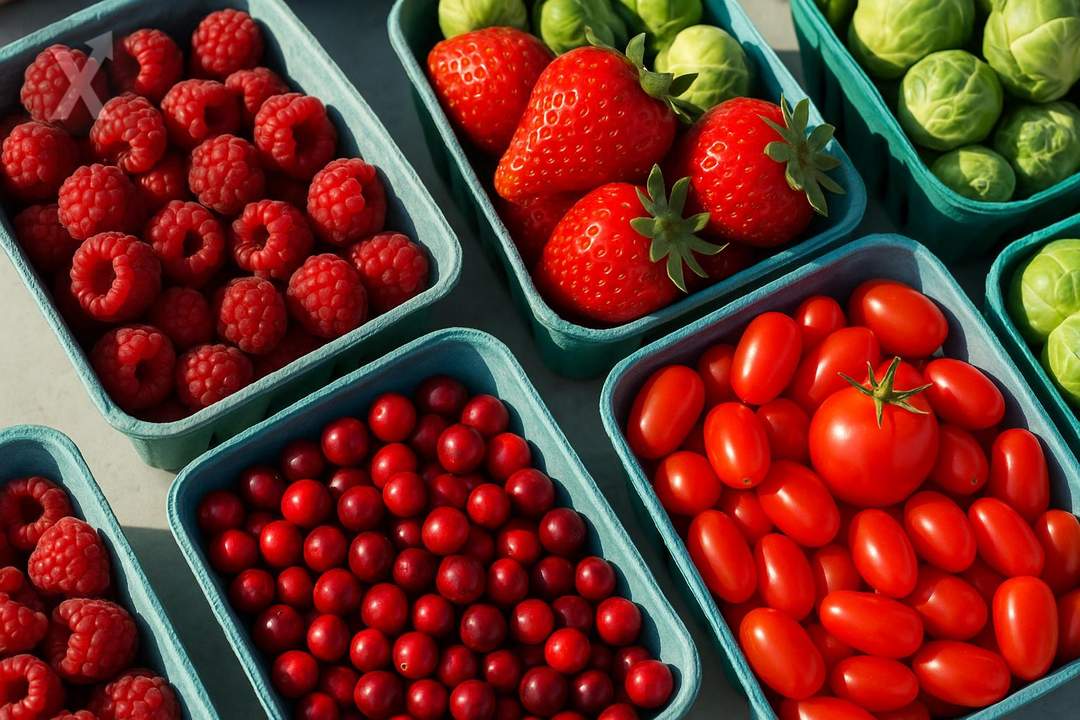
Agri-food integration between Mexico and the United States is growing, with Mexico serving as a strategic winter supplier and the U.S. running a sizable agricultural deficit.
America’s appetite for food produced in Mexico stayed strong in 2025: of roughly $213 billion in food products imported by the U.S. economy, close to 21%—about $44 billion—originated in Mexico, mainly fruits, vegetables, meat, and beverages. The figure confirms the growing weight Mexico has gained in the supply basket of its top trading partner, amid increasingly regionalized supply chains and consumers who have incorporated Mexican products into their everyday diets.
In the other direction, Mexico also buys at scale. In 2025 it purchased more than $30.6 billion in U.S. agri-food products, according to data from the U.S. Department of Agriculture (USDA). Taken together, two-way ag trade between the countries exceeds $70 billion a year, underscoring an interdependent relationship: Mexican agriculture supplies categories where it holds clear advantages, while U.S. production fills structural gaps in Mexico’s domestic output—especially in grains and oilseeds.
The mix of geographic proximity, competitive overland logistics, and productive complementarity has turned the Mexico–U.S. corridor into one of the most dynamic in the world. For Mexico, this relationship is particularly important because of its ties to rural employment, the food and beverage industry, transportation, and customs operations; for the United States, it is a supply backstop for categories sensitive to seasonality and weather shocks.
On the Mexican side, more than 70% of what the United States imports from Mexico is concentrated in vegetables, fruits, beverages, and distilled spirits. In these categories, Mexico’s supply has achieved scale, export-grade quality, and continuity. Products such as avocados, berries, tomatoes, tequila, and beer have become staples on U.S. shelves, supported by networks of growers, packers, cold-chain facilities, and distribution systems that operate on tight timelines and increasingly demanding margins.
A central factor is seasonality. During the winter, when production in certain U.S. farming regions declines, Mexico’s producing states—supported by different climates and complementary harvest windows—keep a steady flow moving north. That continuity, however, requires ongoing investment in water, technology adoption, plant and animal health, and infrastructure—at a time when water availability and heat waves have increased climate risk across several parts of the country.
For Mexico’s macroeconomy, agri-food trade with its northern neighbor is one piece of the export engine: it supports inflows of U.S. dollars, strengthens production linkages, and helps partially diversify away from more cyclical manufacturing sectors. That said, it also exposes producers to international price volatility, strict sanitary rules, and logistics costs that can spike quickly when there are border disruptions or regulatory changes.
Grains, Meat, and Dairy: Mexico’s Dependence That Sustains the U.S. Surplus
The other side of the exchange shows a consistent pattern: Mexico buys mostly inputs and staple foods from the United States. Corn, pork, and dairy products typically top the list, alongside grains, oilseeds, and related products. The explanation is structural: Mexico does not produce enough grains or oilseeds to meet domestic demand, forcing it to import large volumes that feed its livestock industry and processing chains. Some of those inputs are later converted into higher-value products—animal proteins, vegetable oils, flours, and processed foods—that supply the domestic market and, in some cases, cross the border again embedded in other supply chains.
This dependence has implications for inflation and food security. A sharp move in global grain prices, a climate event in the U.S. farm belt, or a logistics disruption can quickly pass through to production costs in Mexico—particularly for foods that account for a large share of household consumption. In recent years, the effect has been clearly visible when grain and fertilizer prices jump, pushing up costs for tortillas, meat, eggs, and dairy, although the final pass-through depends on the exchange rate, competition, and pricing policy along the commercial chain.
In balance-of-trade terms, the United States shifted from decades of positive agricultural balances to a deficit starting in 2019. Within that trend, Mexico has been a key driver: the imbalance peaked in 2024 and in 2025 exceeded $13 billion, reflecting the strong rise in U.S. purchases of Mexican products relative to the growth in what Mexico buys from its northern neighbor. For Mexico, this looks like an export advantage in higher-value segments—fresh produce and beverages—but also a reminder that competitiveness depends on sustaining productivity, sanitary standards, and infrastructure, as well as managing climate and labor risks.
Looking ahead, performance in bilateral ag trade will depend on several factors: how consumption patterns evolve in the United States, Mexico’s ability to sustain its exportable supply with water and investment, and the pace of border logistics modernization. Added to that is the sector’s sensitivity to sanitary measures and trade disputes, which can introduce bouts of uncertainty even when productive integration is high.
Overall, Mexico has cemented itself as a strategic food supplier to the United States, while maintaining a heavy dependence on U.S. grains and other staples. The relationship is more complementary than competitive—but it requires investment and risk management to keep its momentum.






