Gasoline subsidies squeeze revenue collection in March, but higher fuel demand softens the hit to the Treasury
Mexico’s Finance Ministry absorbed a revenue loss from IEPS tax incentives, but a rebound in fuel sales helped support tax receipts.
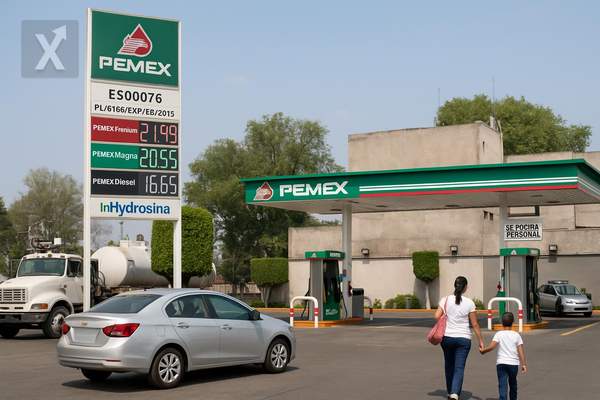
Mexico’s Ministry of Finance and Public Credit (SHCP) reported that in March it recorded a revenue loss of about 11.7 billion pesos linked to the tax incentives applied to gasoline and diesel—an instrument that is activated to smooth increases in pump prices when international energy costs rise. Deputy Minister for Revenue Carlos Lerma said the cost of these incentives had been estimated at roughly 2.5 billion pesos per week, a figure consistent with what was observed that month.
The fiscal adjustment took place amid volatility in energy markets driven by geopolitical tensions, which often feed through to international refined-product benchmarks. In Mexico, the fuel incentives tied to the Special Tax on Production and Services (IEPS) work as a shock absorber: when benchmark prices rise, the Finance Ministry temporarily reduces the IEPS burden to prevent sharp increases at the pump, with a direct impact on tax collection.
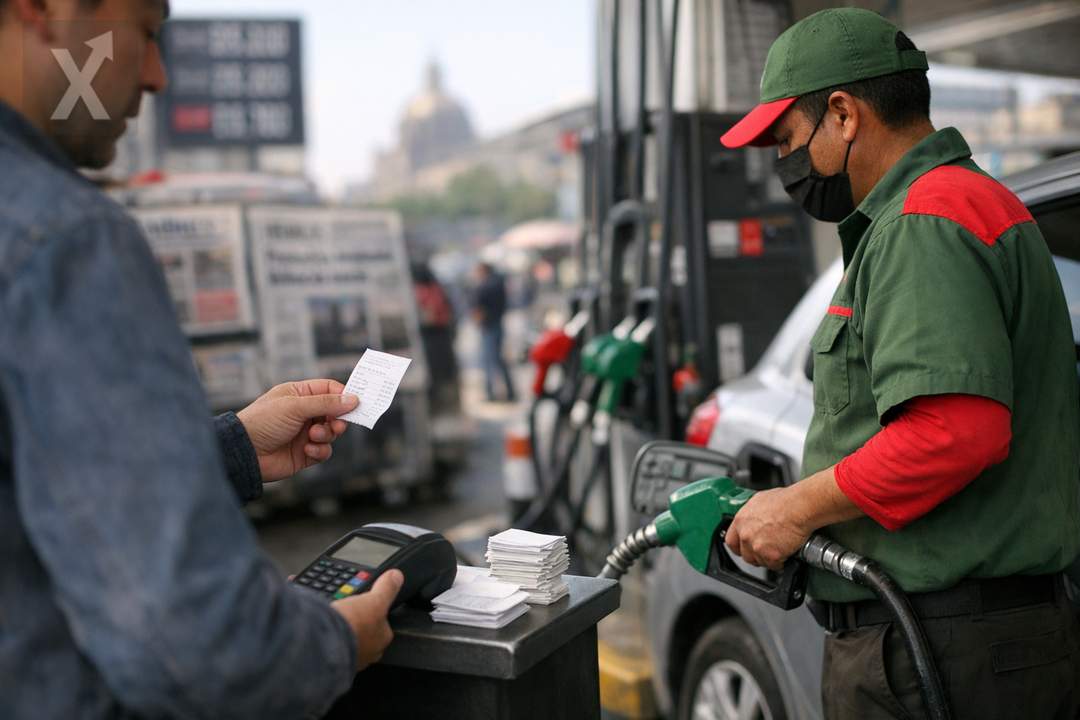
Even with that revenue “sacrifice,” the Finance Ministry said IEPS revenue from fuels in the first quarter totaled 115.444 billion pesos, above what had been forecast and also higher than a year earlier. The main explanation, according to the agency, is that higher fuel sales volumes during the quarter helped offset the revenue loss stemming from the incentives applied in March.
In its public-finance report, the SHCP said tax revenues came in slightly above plan, while oil-related revenues fell short of the target—an increasingly relevant pattern in recent years: domestic tax collection—VAT (IVA), income tax (ISR), and the IEPS—tends to be the anchor of federal government revenue, while the production platform, Pemex’s performance, and crude-price volatility add uncertainty to the oil component.
IEPS, inflation, and consumption: the dilemma of cushioning prices without blowing a hole in the budget
Using IEPS incentives has macroeconomic implications that go beyond monthly revenue. On the one hand, limiting gasoline and diesel increases can help moderate inflation pressures, since fuels affect transportation and logistics costs and ultimately filter into the prices of food and goods. On the other hand, when the incentive is extended or intensified, the government gives up revenue that normally finances public spending, so the “cushion” depends on consumption and economic activity maintaining momentum or on other tax lines making up the difference. This quarter, the Finance Ministry attributed the favorable outcome to a combination of domestic-market momentum, updates to tax rates/quotas, and enforcement actions—factors that typically bolster VAT and IEPS collection during periods of stronger consumption.
Official data also point to a mixed composition: performance in tax revenues was close to what had been budgeted, but total public-sector revenues were below target due to the shortfall in oil revenues. This contrast matters for budget management, because when oil revenues lag, the government can face greater pressure to reallocate spending, step up revenue-efficiency strategies, or rely on windfalls and other non-tax revenues to avoid larger deviations in the overall balance.
Looking ahead, the effectiveness of the IEPS incentive as a stabilization tool will depend on two variables: the path of international refined-product prices—sensitive to geopolitics, supply cuts, and global demand—and the resilience of domestic consumption. If the economy slows or fuel consumption loses steam, the room to offset the revenue loss with higher volume could shrink. By contrast, if incentives are applied in a targeted and temporary manner, and VAT and income-tax collection remains solid, the fiscal impact could be manageable without unanchoring public-finance goals.
In short, March highlighted the fiscal cost of cushioning gasoline prices, but it also showed that with an active domestic market and solid collection in other categories, the Finance Ministry can contain the impact in the short run—even though the overall balance will remain tied to energy volatility and the performance of oil revenues.