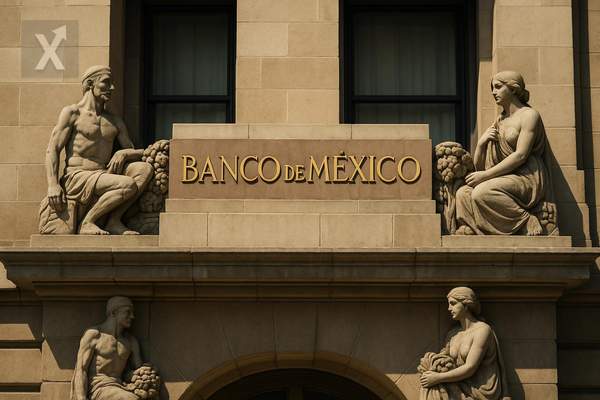
Finsus Strengthens Its Filing for a Banking License After Accelerating Growth and Returning to Profitability
The sofipo updated its application with the CNBV to reflect its new size and profitability, as it looks to expand into the United States.
Finsus, one of the most fast-moving sociedades financieras populares (sofipos) in Mexico’s market, updated its case file with the National Banking and Securities Commission (CNBV) as part of its process to obtain a banking license. The firm wants the information submitted to the regulator to more accurately reflect its current financial and operating position, following a period of rapid growth that changed its scale and business model compared with what was originally presented.
According to regulatory figures, between the fourth quarter of 2024 and the first quarter of 2025 the institution increased its assets by 72% to around 24.98 billion pesos, while its customer base grew 154%. At the same time, the company reversed losses it was still reporting as of year-end 2024 and began posting profits consecutively starting in early 2025—a meaningful shift in a segment where profitability is often pressured by funding costs, technology investment, and commercial spending.
The decision to “strengthen” the application reflects the fact that when the process began roughly 18 months ago, the institution was significantly smaller and its financial performance was different. The update, according to the company’s leadership, is intended to make the transition between approval of the license and authorization to begin banking operations more orderly, reducing administrative and operational friction when the change happens.
This development comes as financial authorities have stepped up scrutiny of new licenses—both for banks and nonbank entities. In Mexico, tighter standards around compliance, corporate governance, risk management, anti-money laundering, and information security have become a central requirement for any institution seeking to take in and manage the public’s savings at a larger scale.
Licenses, Competition, and the Role of Sofipos in Credit
The interest among several institutions in moving from sofipo to bank reflects two forces playing out at the same time in Mexico’s financial system: on one hand, demand for more agile digital products with lower operating costs; on the other, the need to access more stable and diversified funding. Broadly speaking, a banking license can expand capabilities—such as a wider product offering and access to certain funding markets—but it also significantly raises capital requirements, controls, and supervisory oversight. In a country with low credit penetration compared with similar economies, the orderly expansion of formal financial intermediaries can support greater competition. The challenge is ensuring that growth comes with sufficient controls to protect savers and sustain confidence in the system.
In recent years, the surge in financial platforms and accelerated digitization has coincided with a relatively high interest-rate environment, which increases funding costs and makes managing net interest margin more demanding. In this context, delivering consistent profitability and demonstrating operational resilience becomes key to convincing regulators and investors that the model can hold up over a full cycle.
Finsus says it has been incorporating corporate governance controls and “banking standards” in advance, aiming to make the transition as close as possible to a change in regulatory category without dramatically altering its commercial value proposition. In Mexico’s system, where trust and stability are top priorities, stricter oversight is often viewed as a necessary cost of entry to avoid episodes of deteriorating asset quality or risk-management failures.
At the same time, the company is maintaining plans for international expansion with an emphasis on the United States, a market it wants to enter with services geared toward the Hispanic community—particularly remittance solutions. The remittance corridor from the United States to Mexico remains one of the largest in the world and has been a key support for household consumption for millions of families; as a result, competition to offer faster and cheaper transfers has intensified among banks, fintechs, and specialized players.
The firm has also explored capital-raising paths and potential listings on overseas equity markets, although these plans, according to what has been reported, would depend first on securing the banking license. For the market, that kind of regulatory progress is typically read as a catalyst: it can make it easier to access capital, improve funding terms, and expand the potential customer base, but it also increases obligations around transparency and operational discipline.
Looking ahead, the outcome of the process will serve as a gauge of the regulator’s stance and of niche institutions’ ability to scale without compromising controls. If the company can sustain its growth with profitability, loan-portfolio quality, and strong compliance, its eventual conversion into a bank could intensify competition in digital segments; if not, higher regulatory demands will tend to act as a natural filter for projects with still-immature models.
In sum, Finsus’s updated filing with the CNBV reflects a maturation process: growing faster forces better documentation of risks, corporate governance, and financial performance—especially when the goal is to make the leap into banking and compete in an increasingly closely watched and contested market.