Card payments gain ground at gas stations; zero interchange fee reshapes the business for banks and fintechs
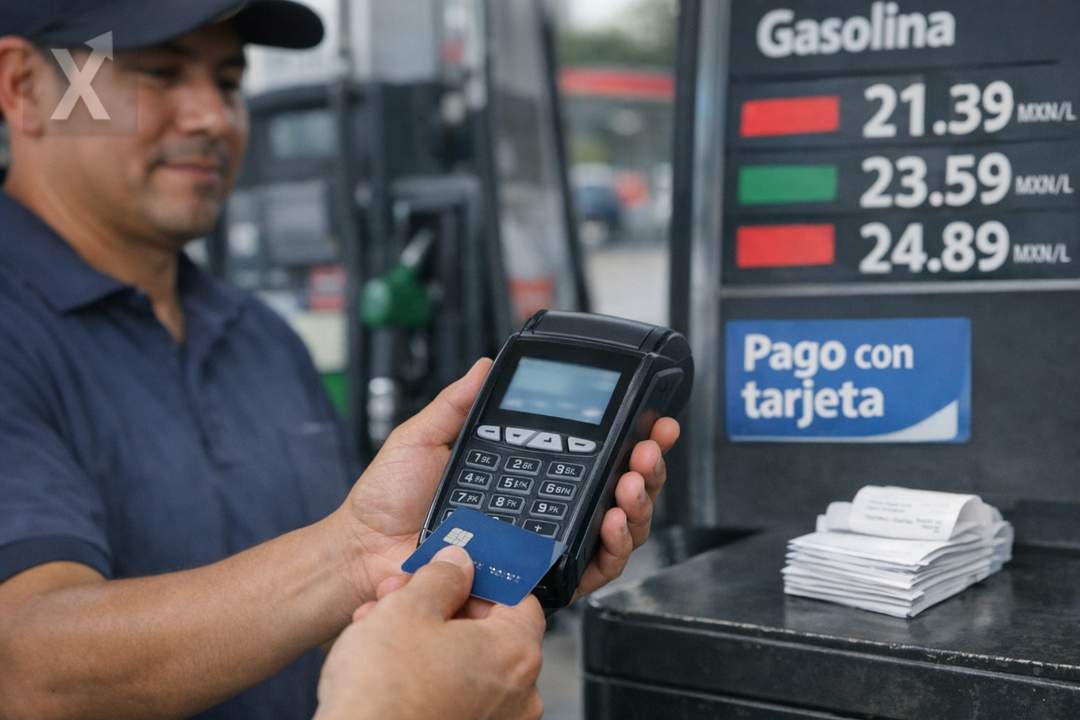
The temporary removal of fees at gas stations aims to push digital payments, but it also squeezes key revenue streams for issuers and acquirers.
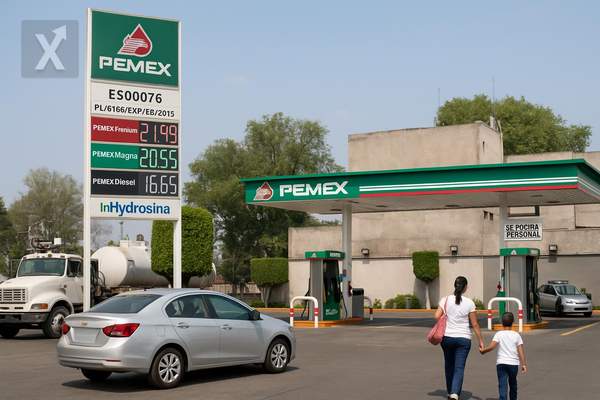
Using a card to pay for gas is no longer a fringe behavior and now carries weight in everyday consumer spending. Data from Banco de México (Banxico) show that in 2025 Mexico recorded 11,261.8 million credit and debit card payments; of that total, 7% took place at service stations. In all, 778.4 million transactions were made at gas stations for 481,373.2 million pesos, a 10% increase versus 2024 and a significant jump compared with levels seen around 2018.
Against this backdrop, the banking industry agreed to eliminate the interchange fee for card payments at gas stations—an initiative intended to speed up adoption of digital payments and ease costs for the sector amid pressure on energy prices. The proposal overlaps with the public debate over fuel prices and with episodes of international volatility that often filter through—at different magnitudes and with delays—into the import, logistics, and retail fuel chain.
Interchange is a central piece of the payments model: it’s the component that typically flows from the acquirer (the party that processes the merchant’s card acceptance) to the issuer (the institution that provided the card to the customer) and helps fund rewards, operations, anti-fraud efforts, and, broadly, the economics of card payments. That’s why taking it to zero in a specific vertical like gas stations can shift incentives: it lowers the merchant’s per-transaction cost, but cuts off a meaningful revenue source for traditional issuers and, especially, for several digital players.
Industry estimates point to potential impacts that vary depending on the issuer’s size and its reliance on that line item. For some digital players and SOFIPOs that offer everyday-use cards, interchange can be a revenue stream that materially affects the path to profitability. For a large bank, the absolute impact could be bigger due to volume; for a neobank, the relative impact may be more visible on its income statement.
Will prices fall for consumers, or will margins shift?
One stated objective is for the lower cost of accepting cards to show up in the final price of fuel. However, pass-through isn’t automatic: it depends on local competitive dynamics, each station’s ability to adjust prices, supply contracts, logistics costs, and how aggressively the merchant treats the reduction as extra margin versus a discount. In markets with limited competition or high fixed costs, the lower fee may not translate into a visible price drop for drivers, at least in the short run.
In addition, the “temporary” nature of the change matters. If the zero rate lasts only briefly, issuers may absorb it as a promotion or a short-term cost; if it drags on, the industry could adjust benefits, rewards, and risk policies. At the same time, merchants and acquirers would have incentives to renegotiate bundles of services, terminal maintenance, and operational support—especially for smaller stations where per-transaction economics are tighter.
The measure also touches the shift from cash to digital in a segment where cash has historically dominated. Digitization improves traceability and can reduce theft, register errors, and cash-handling costs. But changing habits can bring side effects: at many stations, attendants supplement income with cash tips, so a faster move to cards can pressure that dynamic unless equivalent digital tipping practices—or labor arrangements that offset the change—are put in place.
For the financial system, the move arrives as consumer credit and card usage continue to grow, while institutions face a mix of intense competition, higher cybersecurity demands, and a rate environment that—while it may gradually normalize—still forces close attention to costs and funding. For fintechs and neobanks, the challenge is bigger: they often build part of their model on transaction volume and interchange revenue to subsidize “no-fee” services and customer acquisition campaigns.
In the coming months, the market will be watching the regulatory rollout, the effective duration of the zero rate, and verification mechanisms to ensure benefits for merchants and, eventually, consumers. It will also be important to see whether the change spurs greater card acceptance at lagging stations, increases digital ticket size, and boosts adoption of contactless payments, which have shown steady growth in Mexico as terminal infrastructure expands and users become more familiar with this type of checkout.
In short, the agreement to take interchange to zero at gas stations could accelerate digitization and ease sector costs, but it reshuffles revenue for banks and fintechs and does not by itself guarantee a lower final price; its effect will depend on how long it lasts, competitive conditions, and the incentive design.