Mexico Watches the Trump–Xi Summit: Trade Truce, Supply-Chain Pressure, and Impacts on the Peso
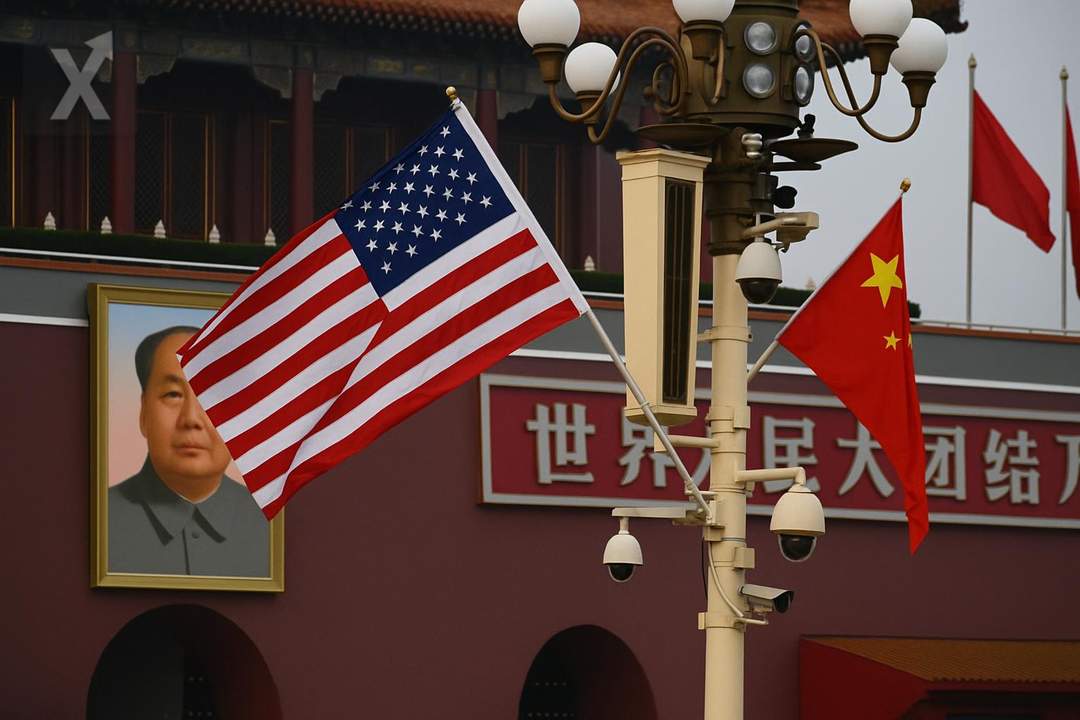
An extension of the truce between the United States and China could ease global volatility, but it could also reshuffle investment and trade flows that currently benefit Mexico.
The meeting between U.S. President Donald Trump and Chinese leader Xi Jinping is drawing the attention of global banks and investors for one main reason: more than a “big deal,” markets are looking for signals of stability that lower the risk of a new tariff escalation. For Mexico, the outcome matters because of its indirect—but meaningful—impact on global trade, risk appetite, and how the U.S. dollar behaves against emerging-market currencies, including the peso.
In recent years, Mexico has benefited from the supply-chain reconfiguration tied to the U.S.–China rivalry. The relocation of manufacturing processes to North America, along with the USMCA framework, has boosted investment in sectors such as auto parts, electronics, medical devices, and logistics. However, a temporary easing of tensions between Washington and Beijing could change incentives at the margin: it could reduce the urgency to diversify suppliers away from Asia, temper some nearshoring decisions, and at the same time support a less defensive global financial environment.
The prevailing view in international finance is that the summit aims to prevent further deterioration on highly sensitive issues: semiconductors, technology restrictions, control of critical minerals, and broader geopolitical friction. For Mexico, these disputes matter because many domestic manufactured exports depend on imported components, and any change in input costs, delivery times, or rules of origin flows through to prices, margins, and investment plans.
If the meeting creates room for sector-specific commitments—for example, partial relief measures or negotiation timelines that extend the truce—the immediate impact may show up more in financial markets than in the real economy: less demand for safe havens, portfolio shifts, and moves in exchange rates. In that context, the peso typically reacts both to the direction of the U.S. dollar and to the interest-rate differential and global risk sentiment.
Exchange Rate, Imported Inflation, and Banxico’s Role
A scenario of lower trade tension between the United States and China tends to reduce bouts of risk aversion, which can at times favor emerging-market currencies. For Mexico, a stronger or more stable peso against the U.S. dollar helps contain imported-inflation pressures—especially in goods, industrial inputs, and some processed foods—and can influence the pace at which the Bank of Mexico (Banxico) calibrates its monetary stance. In practice, Banxico has tried to balance an economic slowdown with the need to solidify disinflation, and a less volatile external backdrop makes that job easier; the opposite—a breakdown of the truce and new tariffs—could reignite FX volatility and complicate the inflation path.
At the same time, investment flows into Mexico depend not only on global trade policy, but also on domestic factors: regulatory certainty, availability of energy, water, and infrastructure, as well as security along industrial corridors. While U.S.–China friction has been a catalyst for nearshoring, the “floor” of that trend is supported by geographic proximity and deep production integration with the United States; by contrast, its “ceiling” is constrained by Mexico’s ability to clear bottlenecks and accelerate projects.
Another potential implication of an extended truce is the effect on prices of commodities and technology components. If threats of restrictions and retaliation involving strategic minerals or semiconductors recede, visibility could improve for industries operating in Mexico—autos, home appliances, and electronics—although full normalization is unlikely as long as structural disputes over technology and artificial intelligence persist.
For Mexico’s foreign trade, the main channel will continue to be the United States, the dominant destination for exports. A more stable U.S. economy—with less trade uncertainty—typically supports demand for Mexican manufactured goods. Still, a tactical rapprochement with China could also revive competition in segments where Mexico has gained share, especially if Asian inputs get cheaper or if tariffs are selectively adjusted.
In the short term, local markets will be watching the tone of the meeting and, above all, any signals on tariffs, technology controls, and supply chains. Over the medium term, the key question for Mexico is whether the global reshuffle will lead to deeper “decoupling” between the two powers or to a managed tension that keeps chronic uncertainty in place. In either scenario, Mexico’s advantage is not automatic: it requires effective industrial policy, competitive logistics, and a consistent investment climate.
In sum, extending the truce between the United States and China could reduce financial volatility and give risk appetite some breathing room, with implications for the U.S. dollar, the peso, and Banxico’s room to maneuver. But the trajectory of nearshoring and productive investment in Mexico will depend as much on the geopolitical direction as on Mexico’s internal capacity to turn the opportunity into sustained growth.






