Carstens and the “Glass Ceiling” in Global Institutions: What It Reveals About Mexico and the Financial Realignment
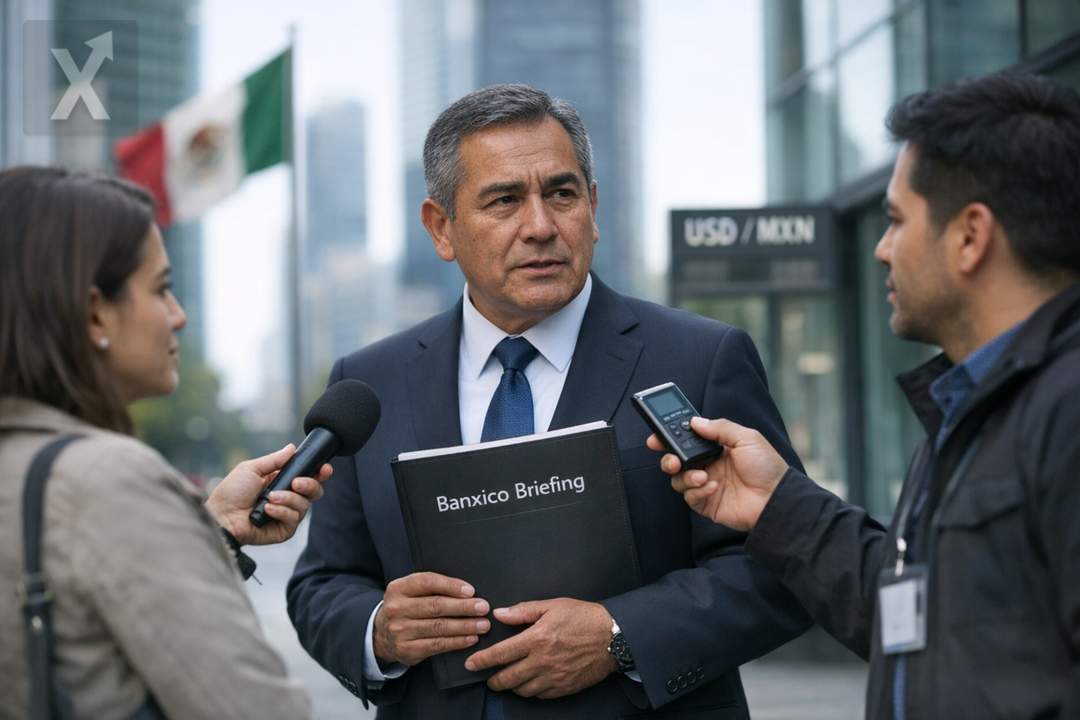
Agustín Carstens’s career shows how the informal rules of global financial power still shape Mexico’s voice in decision-making.
Agustín Carstens is one of the best-known figures in Mexico’s economic technocracy over the past few decades: he served as Secretary of Finance from 2006 to 2009 and as governor of the Bank of Mexico (Banxico) from 2010 to 2017—two roles from which he helped shape key policies aimed at the country’s macroeconomic stability. His track record, however, also highlights a recurring constraint for emerging economies like Mexico: even with strong credentials and international experience, the ability to lead global institutions remains shaped by unwritten traditions.
In 2011, Mexico nominated Carstens to lead the International Monetary Fund (IMF). His bid sought to push an agenda for greater representation for emerging markets and developing countries, including periodic adjustments to quotas and voting power within the institution—a topic that has remained at the center of the global debate ever since. But the process unfolded under a long-standing practice: the IMF is typically headed by a European, while the World Bank is led by a U.S. citizen. In that context, Carstens ultimately competed at a disadvantage against Christine Lagarde, who was appointed to the role.
This is not an isolated episode, but rather a reflection of how power is allocated within the financial architecture that emerged after Bretton Woods. For Mexico—which has sought to position itself as a macroeconomic stability anchor in Latin America—the experience offered a lesson: technical prestige opens doors, but it doesn’t necessarily break through the implicit political deals that structure international economic governance.
Over the years, Carstens further cemented his reputation outside Mexico: he served as Deputy Managing Director at the IMF (2003–2006) and later as General Manager of the Bank for International Settlements (BIS), a central institution for coordinating among central banks. After leaving the BIS, he joined the Swiss financial group UBS with responsibilities related to governance and corporate culture—a move that illustrates the common shift of former monetary authorities into the global private sector, where their experience translates into influence and access to top decision-makers.
Banxico, Credibility, and the Challenge of Navigating a More Volatile World
Banxico’s role and the credibility of monetary policy have been pillars for Mexico since the transition to central bank independence and an inflation-targeting framework. That reputation—built over decades and reinforced during bouts of volatility—has helped cushion external shocks, anchor expectations, and keep price formation relatively orderly, though not without costs to growth when rates have to stay higher for longer.
Recent international conditions have increased the complexity of that balance: more persistent inflation cycles, geopolitical tension, supply-chain reconfiguration, and episodes of risk aversion that hit open economies. In Mexico, public debate about stability often focuses on variables such as inflation, interest rates, the exchange rate, and public finances; but in practice, institutional quality and coordination across fiscal, regulatory, and financial policy also matter. The experience of figures like Carstens underscores a point: markets and international institutions don’t just look at the numbers—they also look for signals of consistency, clear rules, and the ability to respond to shocks.
Attention to confidence in the financial system—a recurring theme on the agenda of central banks and the BIS—becomes especially relevant in a period when financial and technological innovation is accelerating, along with operational, reputational, and cybersecurity risks. For Mexico, preserving the system’s resilience means maintaining prudential standards, strengthening supervision, and ensuring that financial intermediation continues to function even under stress—without choking off financial inclusion or productive financing.
In perspective, Carstens’s unsuccessful attempt to lead the IMF shows that Mexico can influence the global debate, but it runs into political inertia that is hard to move. At the same time, his tenure at Banxico and in international institutions underscores that macroeconomic credibility remains a core asset for the country: it supports confidence, reduces vulnerabilities, and expands room for maneuver in a global environment that—far from normalizing—appears structurally more uncertain.






