Treasury shields social spending through 2027: 2.7 trillion pesos and less room to adjust
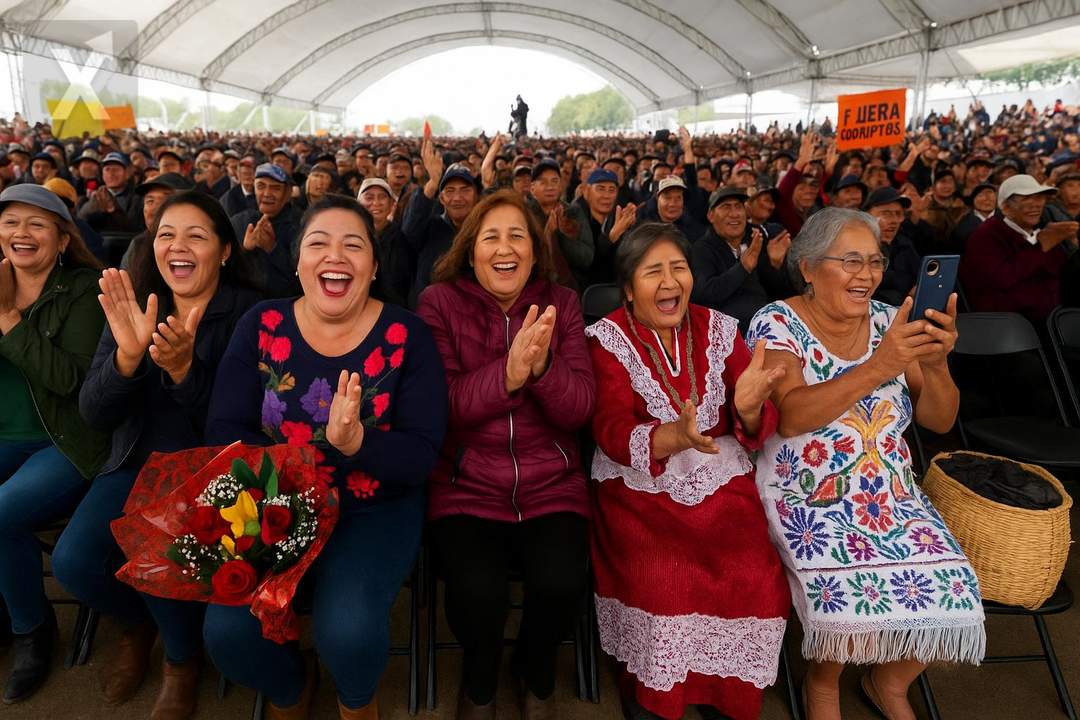
The package of priority programs will grow faster than inflation and take up more than a quarter of the budget, even with a cut to discretionary spending.
The federal government expects to allocate just over 2.7 trillion pesos in 2027 to a set of 107 priority social programs, according to the Finance Ministry’s projections for that year. The amount represents a 3.5% increase versus what is projected for 2026—growth that slightly exceeds the estimated annual inflation rate of 3% and comes in above the expected range for economic expansion, between 1.9% and 2.9% in real terms.
In budget-composition terms, the priority-program package would rise to about 27% of total public spending in 2027, up from an estimated 26% by the end of 2026, when it would total roughly 2.5 trillion pesos. The figure illustrates a trend that has become structural in Mexico’s public finances: social spending and transfer commitments are gaining relative weight in budget allocations, even in years when restraint is being proposed in other areas.
At the same time, the Finance Ministry is projecting a reduction in discretionary (programmable) spending for 2027 of 259.5 billion pesos, equivalent to a 6.8% real cut compared with what was approved for the current year. The adjustment, however, is framed as “preserving” funding for priority programs, implying that the cuts would fall more heavily on unprotected items—such as certain operational programs, general services, non-priority public investment, or administrative spending—depending on how the Expenditure Budget is ultimately structured.
The official argument is that these resources are key to maintaining a minimum welfare floor, stabilizing household income, and supporting private consumption, a decisive component of domestic demand. In Mexico’s context, this logic matters because consumption often cushions slowdowns, although its strength depends on the labor market, food and services inflation, and the cost of credit.
Within the priority package, two programs account for 43% of the total: Health Care Services, at 612.977 billion pesos, and the Pension for the Well-Being of Older Adults, at 547.523 billion. Together they exceed 1 trillion pesos, reflecting that the bulk of the budget effort is concentrated on health and direct transfers to older adults—a segment that will continue to grow as the population ages.
Beyond these items, Railway Infrastructure for Freight and Passenger Transport stands out as part of the priorities. This component suggests continuity in projects framed around logistics integration and mobility, though their economic impact tends to hinge on execution quality, coordination with state governments, route design, and the ability to attract enough freight and passengers to justify operating and maintenance costs.
Legal protections and fiscal pressures: the challenge of adjusting without touching what’s “protected”
A recent reform to the Budget Law established mechanisms that shield priority social programs from cuts due to insufficient resources and also delinked their growth from GDP performance. In practice, this reduces fiscal-adjustment flexibility: if a portion of spending becomes “untouchable,” consolidating the public balance tends to shift toward other budget lines, or to rely more on revenue increases, reallocations, or cuts to capital investment and operating spending.
This is a sensitive issue because Mexico faces persistent fiscal pressures: debt-service costs remain high after the global high-rate cycle; public investment is competing for space with social spending; and oil revenues—historically significant—have been volatile and have shown a medium-term tendency to lose weight. On top of that, tax collection, while improved through efficiency and enforcement, is still low compared with peer economies in the region and the OECD, limiting the room to expand spending without increasing deficits.
Looking toward 2027, the shielding also adds a political and planning dimension: by guaranteeing resources for priority programs, the government ensures continuity, but it also raises the risk that any macroeconomic shock—slower growth, a revenue shortfall, or more expensive financing—will force sharper adjustments in unprotected accounts, or lead to postponing investment that is often the lever for boosting productivity and potential growth.
Another relevant aspect is spending concentration. While two programs absorb almost half of the total, the bottom end of the list shows programs with very small budgets that, together, represent only a minimal fraction of the priority package. This asymmetry often fuels the debate over performance evaluation: large-scale programs have clear distributional effects, but they also require rigorous measurement of coverage, service quality (in health), and benefit adequacy (in pensions), as well as mechanisms to avoid overlap and improve targeting where applicable.
In the years ahead, the macroeconomic impact of social spending will depend on the interaction among transfers, inflation, and employment. If inflation remains contained, transfers sustain purchasing power and consumption; if it picks up, part of the spending is “eroded” by higher prices. Likewise, the impact on inequality can be positive, but fiscal sustainability requires a budget design that preserves room for public investment and for strengthening state capacity in health, education, and public safety, where returns are typically realized over the long run.
Overall, the 2027 projections point to a more rigid budget: priority social spending gains weight and is protected, while the adjustment shifts to other areas. The challenge will be balancing continued support programs with a credible fiscal path and enough investment to sustain growth.






