2026 World Cup in Mexico: Billions in Tourism and Services, but a Limited Boost to GDP
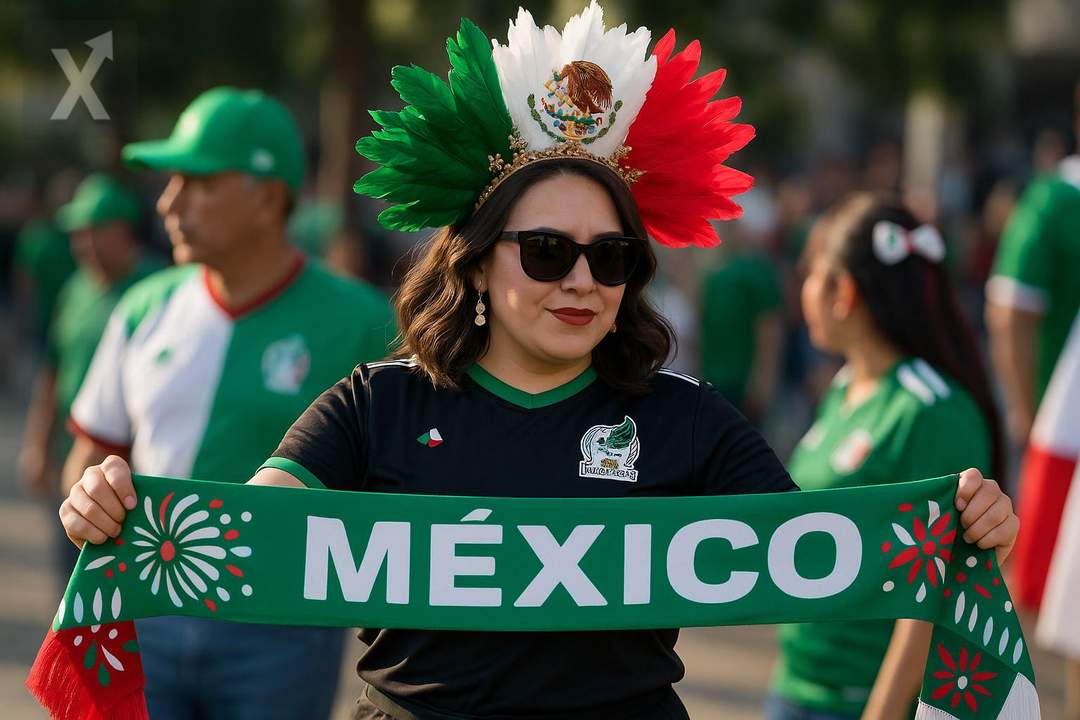
The World Cup will energize consumption, employment, and tourism for a few weeks, although its effect on national growth would likely be marginal compared with weak investment.
Mexico will host the World Cup again in 2026— for the third time in its history—at a moment when the economy’s long-term engine looks more fragile: investment. Unlike 1970, when the country was growing at high rates during the so-called “Mexican Miracle,” or 1986, in the midst of the debt-crisis hangover, this World Cup will share the calendar with a moderately expanding environment. Against that backdrop, economists largely converge on a central idea: there will be spillover spending and clear winners in tourism and services, but the tournament by itself is unlikely to change the trajectory of GDP.
Market estimates point to a limited impact on overall growth. Various calculations place the direct spillover in the range of $2.5 billion to more than $4 billion for Mexico’s host cities—Mexico City, Guadalajara, and Monterrey—with effects concentrated in lodging, transportation, restaurants, and entertainment. In macroeconomic terms, that injection would translate into a few tenths of a percentage point of GDP and a temporary uptick in activity, especially during the second quarter of 2026.
The broader takeaway is that the World Cup functions as a “one-off event”: it lifts tourist flows, accelerates sales in specific sectors, and creates short-term jobs, but its contribution fades once the tournament ends. At the national level, economic performance will continue to depend on more persistent variables, such as the pace of productive investment, productivity, the state of urban and logistics infrastructure, and the regulatory certainty faced by capital-intensive sectors.
In the near term, the boost could be felt strongly in services. Hotels, alternative lodging, restaurants, bars, ride-hailing apps, airports, and retail typically capture most visitor spending. Experience from other large-scale events also suggests increased demand for private security, logistics, and audiovisual production services, along with temporary hiring tied to venue operations, commercial activations, and side events.
Still, the balance sheet is not without tensions. In urban markets with limited hotel capacity or highly concentrated demand spikes, prices can rise significantly. That effect becomes more sensitive if it coincides with a period when households are already cautious about spending: even with resilient consumption in recent years, accumulated inflation and rising costs for some services have led many families to prioritize essentials and cut discretionary spending.
Services Inflation and Price Pressure: the “Local Cost” of the Party
The main risk channel for local consumers is a temporary bout of inflation in tourism-related services: lodging, prepared food, beverages, and transportation. Unlike goods—where competition and imports can cushion price increases—urban services depend more on installed capacity and labor, so a wave of demand can translate quickly into higher prices. For monetary policy, the challenge would be less about a broad-based inflation shock and more about contained episodes that complicate readings of core inflation in some months during the summer of 2026, right as businesses and households adjust expectations.
The “legacy” is also uneven. The spillover is concentrated in areas near stadiums, hotel corridors, and entertainment districts, while the rest of the country captures fewer direct benefits. In addition, the jobs created tend to be temporary, with high turnover and wages that depend on the momentum of the services sector. That helps explain why, even though soccer is a meaningful industry in Mexico—with household spending on content, betting, merchandise, and experiences—its scale is not enough to offset the factors limiting potential growth.
In perspective, the World Cup arrives as Mexico seeks to capitalize on opportunities from the reconfiguration of supply chains toward North America. The relocation of investment (nearshoring) has increased interest in the country, but execution faces bottlenecks: availability of electricity and water, rail and highway connectivity, as well as security conditions and permitting. In that context, an international event can improve visibility and spark consumption, but a sustained leap will require turning that attention into durable investment and projects that raise productivity.
There is also a financial angle: the spillover is often measured in U.S. dollars and is concentrated in services where prices can adjust with demand. For companies in tourism and consumer sectors, the exchange rate and air connectivity will influence both the number of visitors and their average spending. A stable peso can moderate imported costs, but it can also affect price competitiveness for foreign tourists; the net outcome will depend on the balance among rates, capacity, and the commercial strategy of each host city.
Looking toward 2026, Mexico’s economic performance will remain tied to public and private investment, the external cycle, and services-sector dynamics. The World Cup will provide a brief, visible boost, with tangible benefits for lodging, restaurants, transportation, and entertainment; nevertheless, its effect on GDP would likely be marginal relative to the structural challenges that currently constrain growth.






