Tortillas Return to the Center of Inflation: Producers Expect Hikes as Energy and Logistics Costs Rise
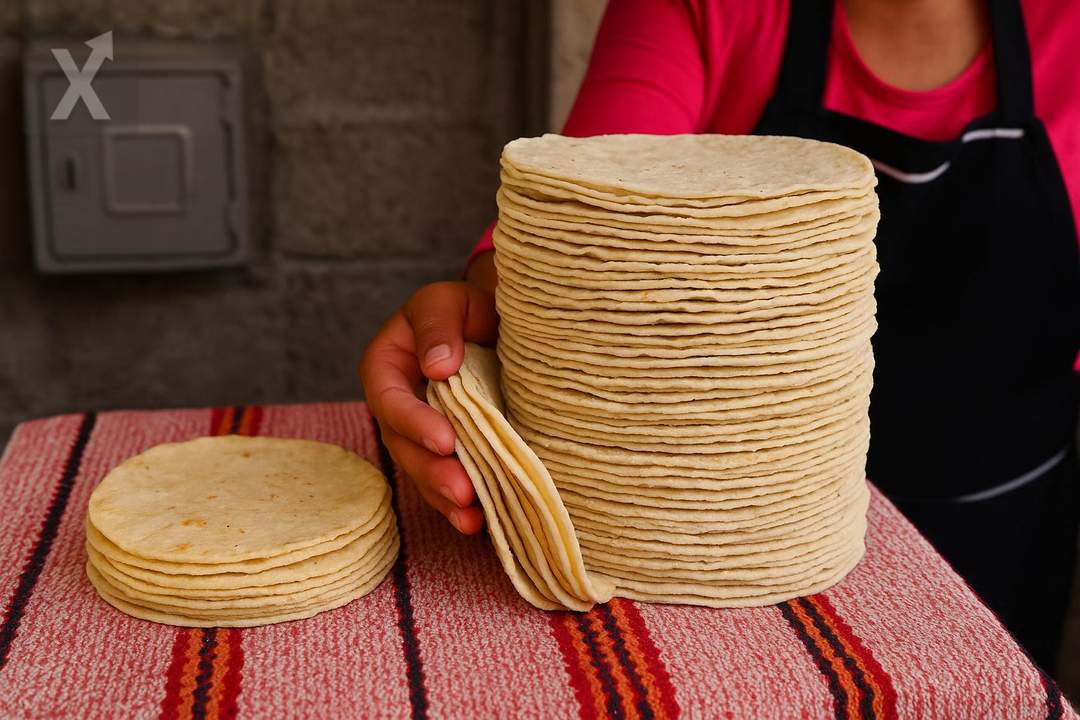
Producers foresee increases of up to 4 pesos per kilo in some regions, amid inflationary pressure and rising transportation costs.
The price of tortillas—one of the most widely consumed foods in Mexico—is facing fresh pressure in April, at a time when headline inflation has eased only partially and the cost of doing business—from fuel to logistics—remains high. Industry producers warn that, despite the recent stability in corn prices, the buildup of higher spending on inputs and services could be passed on to consumers through region-by-region adjustments.
There is no single nationwide price. According to market references, in April a kilo of tortillas has hovered around 22 pesos in parts of Aguascalientes, Chiapas, and Guanajuato, while in cities such as Mexicali, Acapulco, and Tepic it has been closer to 30 pesos. In the Mexico City metro area, the average stands at roughly 21.70 pesos in Mexico City and 20.29 pesos in the State of Mexico, reflecting differences in local costs, competition, and distribution channels.
Homero López García, president of the National Tortilla Council, has said that starting in mid-April increases of between 1 and 4 pesos per kilo could emerge depending on the market. The industry’s main argument is that, even though retail prices have remained relatively stable in recent years, businesses have absorbed higher costs for spare parts, gas, electricity, transportation, and other inputs—squeezing margins and limiting their ability to hold prices without adjustments.
The warning comes amid renewed inflation concerns: in March, Mexico’s annual inflation rate stood at 4.59%, above the Bank of Mexico (Banxico) target, and the food component posted larger increases. In practice, this means that even if some goods decline in price or stabilize, the basic consumption basket remains the most sensitive category for households—especially lower-income families, where food and transportation account for a large share of spending.
From the federal government, President Claudia Sheinbaum has said she does not see an underlying justification for a tortilla price increase if corn is at low levels, and indicated the Agriculture Ministry will review the issue to prevent a run-up in prices. The gap between the price of the raw material and the final product, however, is often explained by the cost structure: tortillas do not depend only on the price of corn, but also on energy for nixtamalization or industrial processing, cooking gas, wages, rent, maintenance, payment-processing fees, and distribution costs.
Energy, transportation, and “hidden costs”: the real barometer of a kilo
For tortilla shops and small businesses, energy volatility acts as a “hidden cost” that seeps through the entire supply chain. Diesel raises the cost of moving corn and flour and also affects distribution in urban areas; gas and electricity directly impact day-to-day operations; and equipment maintenance—from rollers to belts and motors—has become more expensive due to pricier parts and specialized services. On top of that come local fees, compliance and security expenses, as well as regional differences in rents and competition. The result is that even with cheap corn, the total cost per kilo can rise if fuel and logistics tighten—an important factor in an international context of geopolitical uncertainty that often pushes fuel prices higher.
In macroeconomic terms, any broad-based increase in tortillas has direct implications for inflation measurement because of their weight in everyday consumption and their “second-round” effects: if tortillas go up, prepared foods and food services become more expensive as well, putting pressure on the core inflation component Banxico watches closely. With inflation still above target, a new round of increases in staple goods could complicate the pace at which the central bank considers rate cuts and, at the same time, add strain to household budgets.
Looking ahead, the discussion is focused on whether there will be support measures, stabilization agreements, or steps to improve efficiency and competition across the supply chain. Recent experience suggests that holding down the final price without addressing operating costs can shift pressure onto producers; but allowing broad-based increases erodes purchasing power. Within that balance, energy prices, logistics, and oversight of market practices will be decisive in keeping any adjustment—if it happens—contained and as transparent as possible.
In short, the tortilla debate reflects a broader phenomenon: even when some raw materials are stable, energy and distribution costs continue to set the pace for inflation in Mexico. The size of any adjustment, if it materializes, will depend on local conditions and on the supply chain’s ability to absorb costs without fully passing them on to consumers.






