IEA releases 400 million barrels and reignites volatility: implications for Mexico on gasoline, inflation, and the exchange rate
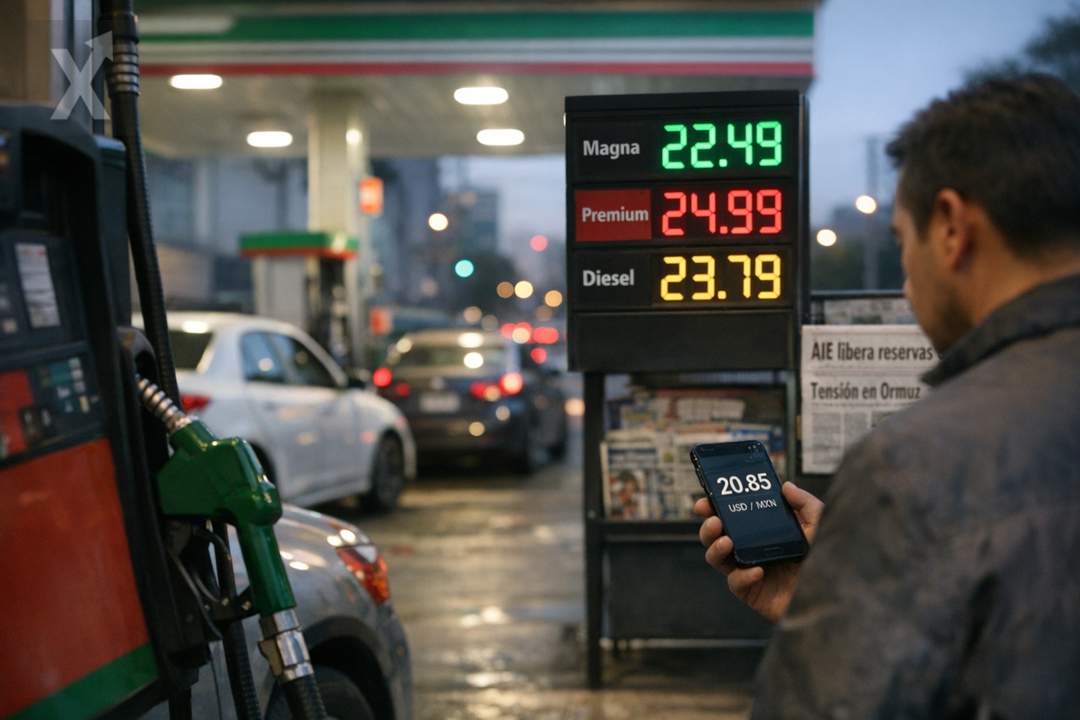
The IEA’s biggest use of reserves aims to contain the Hormuz shock, but in Mexico the impact will be felt in fuel prices, inflation, and public finances.
The International Energy Agency (IEA) unanimously agreed to release 400 million barrels of crude from the strategic reserves of its 32 member countries—marking the largest coordinated drawdown in the organization’s history. The decision is intended to offset supply losses linked to the disruption of energy trade caused by the de facto closure of the Strait of Hormuz, a critical chokepoint for the global flow of oil and refined products.
The move comes amid jitters in energy markets, with governments—including several in the G7—considering steps to soften the economic blow stemming from the escalation of fighting in the Middle East. Hormuz handles a significant share of the world’s seaborne shipments of oil and petroleum products, so any sustained interruption tends to translate into higher risk premiums, a jump in crude prices, and greater volatility in fuel costs.
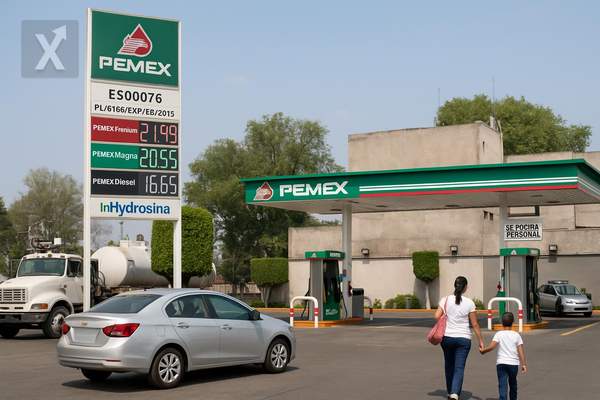
For Mexico, the episode matters for an immediate reason: the domestic economy is highly sensitive to international gasoline and diesel prices, both through the inflation channel and through the fiscal cost of price-smoothing mechanisms. Although Mexico produces oil, its refining system and market structure still make it a net importer of gasoline and other refined products, meaning external shocks pass quickly into the consumer basket.
In the short run, a large reserve release can help temper price spikes or, at minimum, prevent scenarios of physical shortages in key markets. However, its effect tends to be temporary if traffic through the Strait of Hormuz does not normalize or if logistical disruptions persist. In other words, the release can buy time, but it cannot replace the geopolitical stability needed to reduce supply risk.
The takeaway for Mexico is twofold. If international prices stabilize, pressure on non-core inflation—especially energy—eases, and the risk of broader cost increases in transportation and food declines. If, on the other hand, markets conclude the shock will be prolonged, the country could face a mix of higher fuel prices, greater pressure on inflation expectations, and a less supportive financial environment.
Gasoline, inflation, and Banxico’s reaction: the channel that hits wallets first
Fuels are among the fastest transmitters of an oil shock into inflation in Mexico. A rise in crude and refined products typically shows up as higher logistics and transportation costs, which ultimately filter into goods and services. That complicates the disinflation process when the price path had already been easing gradually, and it can make it harder to strike the right balance between economic activity and price stability.
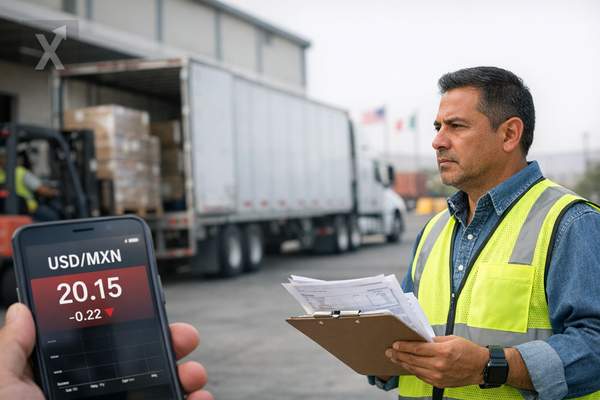
In that context, the Bank of Mexico (Banxico) typically focuses closely on how persistent the shock appears to be: if it’s viewed as temporary, the impact may be concentrated in the non-core component; if it drags on, the risk of second-round effects rises and inflation expectations may become less firmly anchored. In addition, a global rise in oil prices can strengthen the U.S. dollar (USD) during risk-off episodes, making imports more expensive and putting pressure on the exchange rate—adding another channel for inflation to spread.
For households, the impact depends not only on the international price but also on how it shows up at the pump. In Mexico, tax adjustments and fuel subsidies have historically been used to cushion abrupt moves, although heavy use can increase the fiscal cost and shrink budget room—particularly when economic growth remains moderate.
From a business standpoint, transportation-intensive sectors—freight, airlines, parcel delivery, agribusiness—tend to feel cost increases first. If higher fuel prices persist, pressure can build to pass increases through to final prices or to cut back on investment and hiring, at a time when Mexico is trying to sustain nearshoring momentum with competitive costs and operational certainty.
In public finances, more expensive oil does not always mean an automatic improvement: while it can boost oil-related revenue in certain areas, it can also raise the cost of importing fuels and the spending tied to price-containment measures. The net result will depend on the size of the shock, the spread between crude and refined products, and the current design of energy and fiscal policy.
Looking ahead, the episode reinforces the importance of energy resilience: efficient refining capacity, inventories, logistics, and clear rules to mitigate volatility. It also underscores that, in a world of recurring geopolitical tensions, price stability in Mexico will remain tied to external factors that go beyond the domestic cycle.
In sum, the IEA’s release of 400 million barrels may ease immediate pressure, but Mexico will remain exposed to how long the Hormuz shock lasts: the final balance will show up in fuel prices, inflation, the exchange rate, and fiscal space.