Grocery Vouchers Reach 10 Million Users, Set to Grow in 2025 Amid Rising Labor Formalization
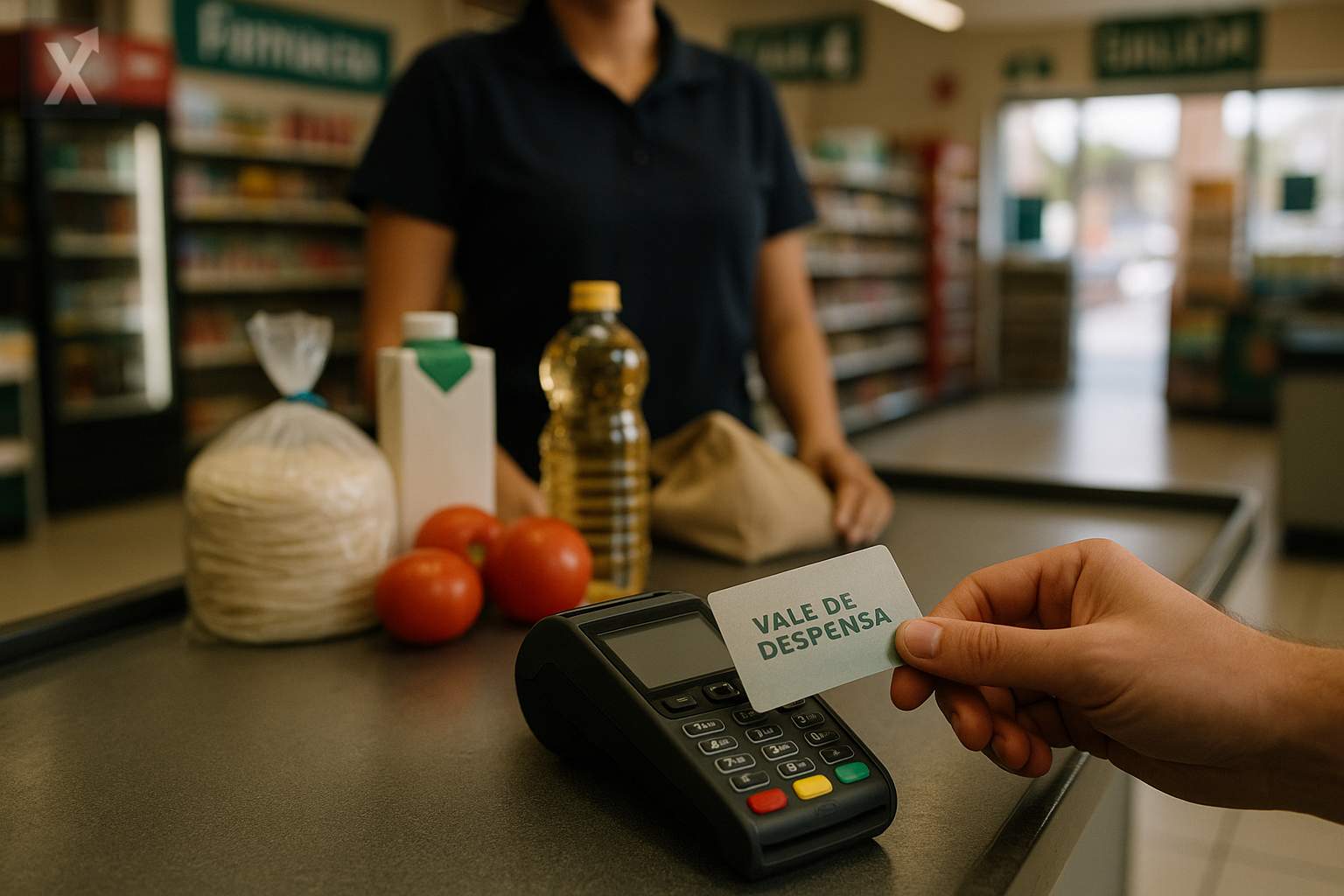
Grocery vouchers are cementing their role as one of the most widespread benefits among formal sector workers in Mexico. The Association of Voucher Issuers (Aseval) reports 10 million active users—equivalent to 44% of employees registered with the IMSS—and expects to add around 250,000 more beneficiaries this year, driven by the creation of formal jobs and increased digitalization of payment methods. With a potential universe of 22.7 million workers affiliated with the IMSS, there is room to keep expanding coverage as hiring and formalization trends continue.
According to Aseval, the average amount workers receive is about 1,400 pesos per month, with a projected maximum cap of 3,450 pesos for 2025, based on the evolution of the Unidad de Medida y Actualización (UMA). The UMA is updated annually in line with inflation, so price adjustments and changes in the minimum wage usually translate into benefit reviews. In practice, 80% of vouchers are redeemed at supermarkets and pharmacies, directly tying the benefit to basic household spending. Data from Inegi shows that Mexicans allocate about 30% of their income to food, making this benefit a buffer against rising staple prices.
Current regulations favor electronic vouchers. Following the 2014 tax reform, companies can only deduct expenses related to grocery vouchers if they use electronic systems authorized by the tax authority (SAT), accelerating the shift from paper to cards and improving oversight. The public sector is generally the only area where paper vouchers are still issued. To qualify for the benefit, companies must prove a formal employment relationship (IMSS enrollment and Infonavit contributions), a mechanism aimed at reducing fraud and ensuring the traceability of benefits.
On the macroeconomic front, private consumption has been one of the pillars of growth in recent years, supported by job recovery, minimum wage increases, and high remittance flows. At the same time, inflation has shown a downward trend compared to the 2022 peak, though certain basic components remain under pressure. In this context, in-kind benefits—like grocery vouchers—have gained importance in negotiations between companies and workers as a way to sustain purchasing power without destabilizing salary structures. For employers, the tax deductibility and targeted spending on food and healthcare have been key incentives to maintain and expand this benefit scheme.
Going forward, the performance of grocery vouchers will depend on three main factors: the creation of formal jobs, the path of inflation, and the continued digitalization of payments. The relocation of investments (nearshoring) in certain regions may drive new IMSS enrollments and, consequently, expand the user base. Increasing adoption of payment terminals and digital payments in small businesses also opens the door to broader acceptance. Risks include a potential slowdown linked to the U.S. economic cycle and persistent informality, which still covers more than half the workforce and limits the reach of formal benefits.
In summary, grocery vouchers remain a key social welfare tool and a pillar of basic consumption support. With 10 million users and plans for expansion, their future evolution will depend on the dynamics of formal employment, price trends, and the system’s ability to keep advancing digitalization with effective oversight.
Note: User data, average and maximum amounts, and redemption channels are sourced from Aseval; references to inflation, minimum wage, UMA, and household spending composition are based on public information from Inegi and current SAT regulatory criteria.






