2026 World Cup and Illegal Streaming: The Business of Sports Piracy Puts Pressure on Mexico
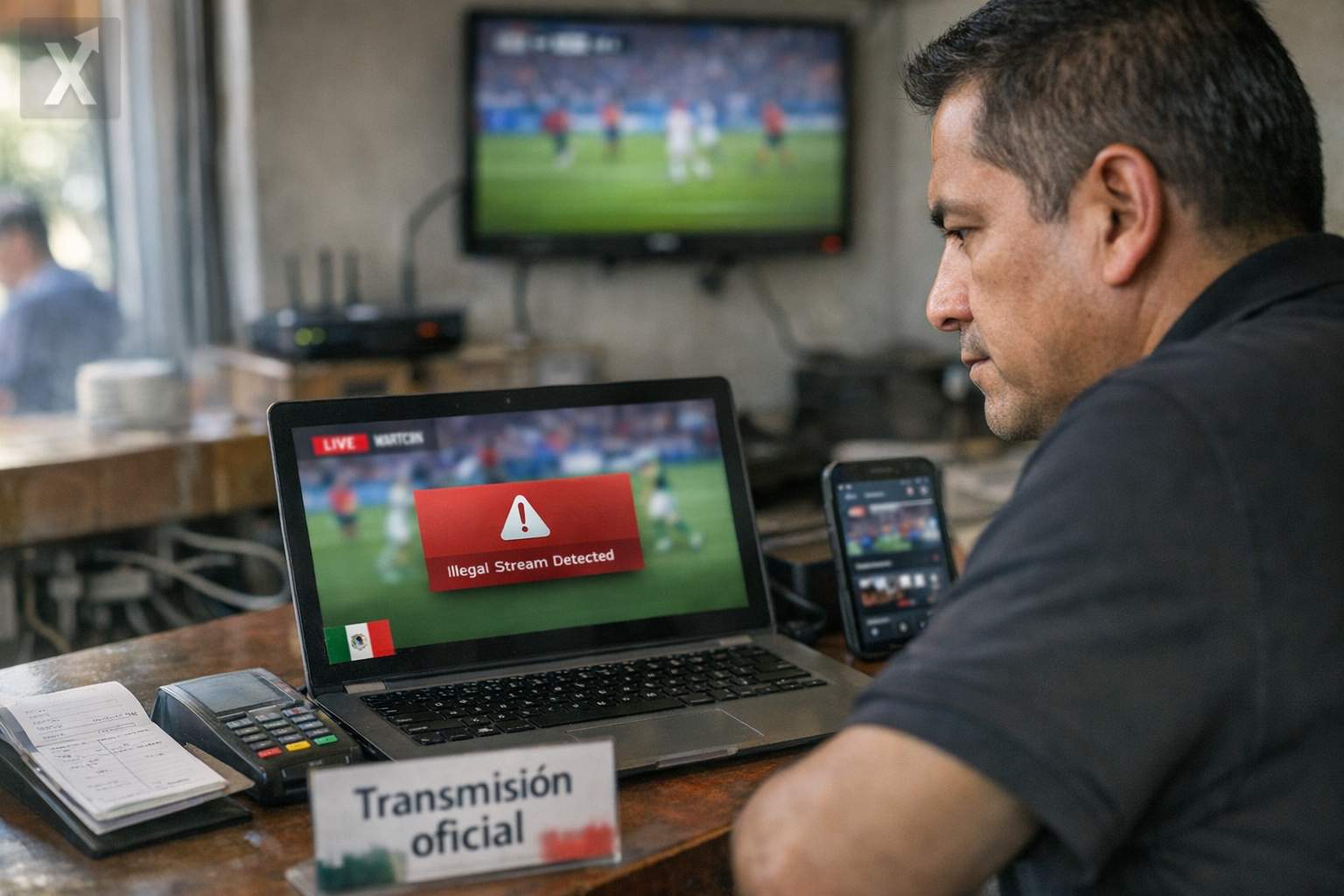
With the tournament just around the corner, live-stream piracy is threatening advertising and rights revenue in Mexico and raising the cost of enforcement.
The countdown to the 2026 World Cup—which Mexico, the United States, and Canada will co-host—is accelerating a conversation that blends entertainment, technology, and money: piracy of live sports broadcasts. In the United States, the Office of the U.S. Trade Representative (USTR) has already put the issue at the center of its intellectual property agenda, anticipating that major events will draw not only global audiences, but also illegal match distribution networks, underground subscriptions, and rebroadcasts on social media.
For Mexico, the problem is far from marginal. Soccer is a massive market that can be heavily monetized through broadcast rights, sponsorships, and advertising—and at the same time, it is a particularly vulnerable product: its economic value is concentrated in real time. If a signal is stolen and replicated during the match, the commercial damage happens immediately and is rarely undone, even if the content is taken down later.
The expansion of legal streaming—driven by digital platforms, subscription bundles, and hybrid ad-supported models—has modernized consumption, but it has also lowered technological barriers for infringers. Today, all it takes is capturing a legitimate feed and redistributing it via websites, apps, or “private” channels, and within minutes it can spread to thousands of users. The phenomenon is amplified by unauthorized IPTV services offering “all the sports” for a minimal fee, with payment flows that are hard to trace.
Globally, estimated losses from sports piracy amount to tens of billions of dollars a year, according to figures cited by leagues and industry groups. The concern is not just copyright: there is also a cybersecurity component, since many illegal streaming sites expose consumers to malware, data theft, and payment fraud.
Economic impact: rights, advertising, and jobs across the sports value chain
In Mexico, the sports broadcasting business supports a value chain that goes beyond TV networks: production companies, technical crews, commentators, distribution platforms, advertising agencies, sponsoring brands, and telecom operators. When illegal consumption rises, it puts pressure on rights revenue and makes content more expensive to acquire, which can translate into higher prices for end users or cuts to investment in local production. Also, for an event the size of the World Cup, expectations for hotel occupancy, restaurant spending, and commercial activations depend on captive audiences and a reliable broadcast experience, both on public screens and at home.
The hit also reaches advertising. Brands pay for verifiable audiences and safe environments; piracy fragments measurement, devalues ad inventory, and pushes some traffic to sites with no controls—where advertisers’ reputations can be harmed. In macro terms, the effect is hard to quantify, but it functions like leakage: value that is not fully recorded in the formal economy and that reduces tax revenue tied to legal activity.
The regulatory and enforcement challenge is compounded by the speed of the digital environment. Unlike traditional piracy, here content can “appear and disappear” in real time, migrate across domains, or be hosted on servers outside the country. This forces coordination among authorities, internet service providers, digital platforms, and rights holders. In practice, the most effective strategies combine automated monitoring, expedited takedown requests, targeting distribution networks (not just end users), and prevention campaigns to reduce demand.
With the United States raising the temperature in trade forums, Mexico faces added incentives to strengthen its institutional response—particularly in light of intellectual property and digital-economy commitments tied to regional integration. For companies, the 2026 World Cup will be a stress test: they will need to protect signals, improve anti-rebroadcasting systems, and ensure their legal offering is competitive on price, availability, and quality to curb the appeal of the illicit market.
Looking ahead to 2026, the balance will be delicate: expanding access to content without squeezing consumers with rising costs, while also preventing piracy from eroding a business that finances production, jobs, and a significant share of the sports spectacle. The conversation is no longer just cultural; it is economic and, to a large extent, about cybersecurity.
In short, piracy of live broadcasts is shaping up to be a meaningful economic risk on the road to the 2026 World Cup: it threatens rights and advertising revenue, calls for stronger regulatory coordination, and will force legal offerings to compete with better technology and more efficient pricing.






