Konfío Bets on Small-Business Banking and Reignites the Debate: Without Credit, Mexico Grows Below Its Potential
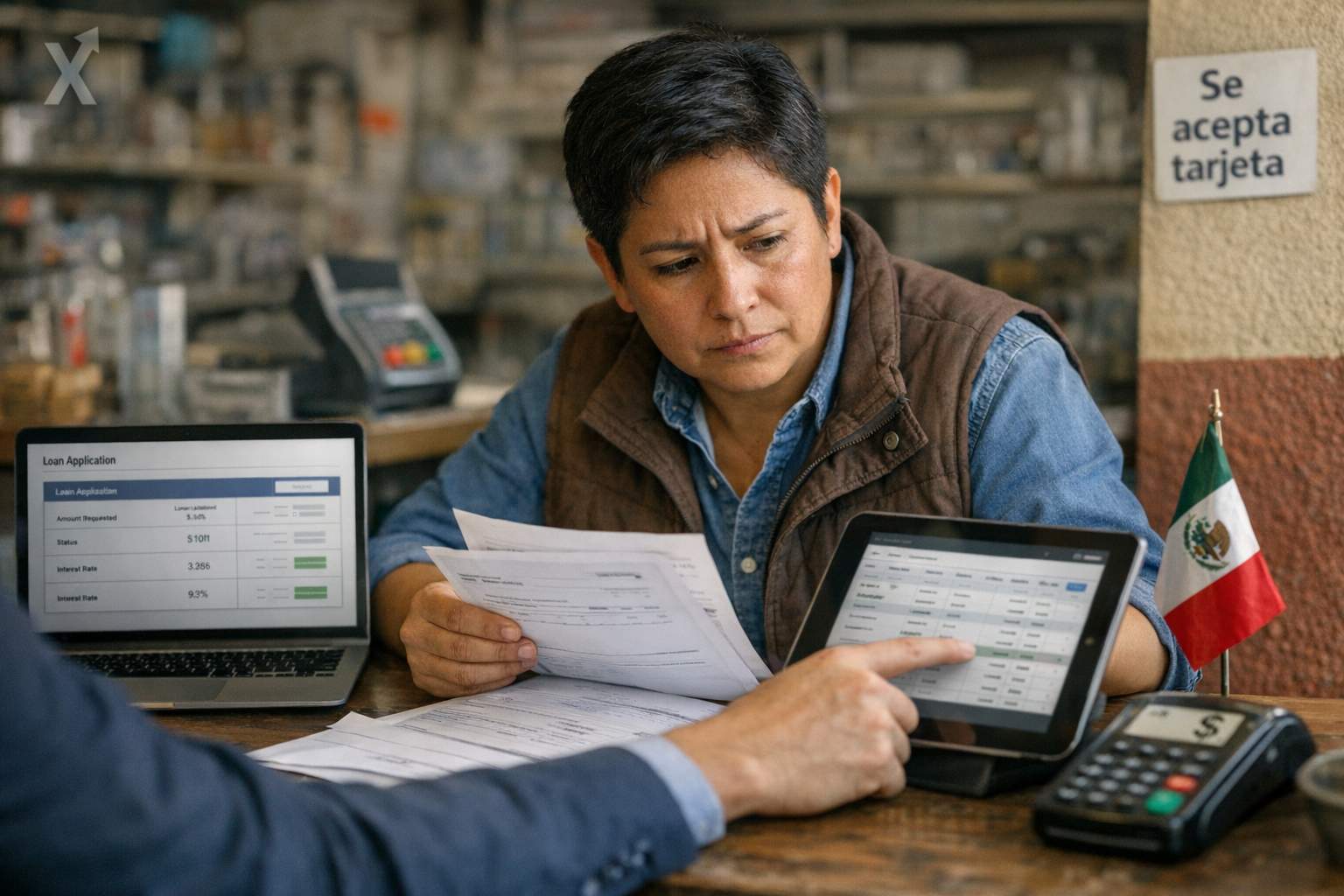
The lack of financing for small and medium-sized businesses remains a structural drag on investment, productivity, and growth in Mexico.
Small- and medium-sized business (SME) lending is back at the center of Mexico’s economic debate. Konfío, a fintech that has focused on this segment from the start, argues that Mexico’s economy is stuck with a growth shortfall because business financing remains limited compared with other Latin American countries. In a setting where GDP has posted modest performance and private investment remains cautious, the company is looking to become a bank to broaden its offering and deepen its reach.
The thesis is familiar, but no less relevant: when SMEs can’t finance working capital, inventory, equipment, or expansion, the result shows up in lower productivity, less formal job creation, and less competitive supply chains. In Mexico, where SMEs account for a significant share of formal employment and play a decisive role in the domestic market, credit constraints often amplify slowdowns during periods of uncertainty.
Konfío reports that over the past year it originated about 11 billion pesos in loans, even amid a challenging environment shaped by business caution and bouts of volatility tied to the global cycle. The firm, founded in 2014, runs a model based on digital origination and risk analysis using transactional data, and says it has been profitable since 2024. Its next step, however, depends on regulators: since 2023 it has applied for a banking license with the National Banking and Securities Commission (CNBV), expecting to operate as a multiple-purpose bank and offer a more comprehensive service.
At its core, the move reflects a broader trend: the line between fintech and traditional banking has been narrowing. For the market, the key question isn’t only whether there will be new banks, but whether these new entrants can expand credit without weakening asset quality and without passing excessive costs on to customers—especially in a country where financing for small businesses is often constrained by informality, limited financial transparency, and highly seasonal sales cycles.
SME credit: the challenge isn’t just “lending more,” but lending better
Mexico’s low level of business credit penetration stems from a mix of factors: high origination costs in traditional banking, information asymmetries, lack of collateral, limited credit histories, and a productive structure in which many businesses operate partly in the informal economy. In that context, the challenge for players like Konfío—and for the banking sector overall—is to scale financing without loosening risk standards. Digitization can lower costs and speed up decisions, but it doesn’t eliminate the business cycle: if domestic demand cools or corporate margins get squeezed, delinquency tends to rise. That’s why the focus on corporate governance, audits, and operational resilience becomes central when a fintech seeks to become a bank and take deposits—a regulatory leap that requires stricter controls and sufficient capital buffers.
The company’s plan also aligns with the public narrative of boosting SMEs as a growth engine. In recent months, the federal government has reiterated the need to expand financing and kick off infrastructure projects under the so-called Plan México, aiming to raise investment and strengthen the domestic market. For the financial system, that typically translates into lending targets and better terms; for businesses, in theory, it should mean more options, more appropriate maturities, and products tailored to real cash flows.
Even so, the macro backdrop adds nuance. With rates still relatively high compared with the past decade, financing costs remain a factor that limits expansion decisions, especially in tight-margin sectors. In addition, North American production integration leaves many SMEs exposed to cycles in exports, logistics, and industrial demand, meaning credit resilience depends as much on the health of the domestic market as on manufacturing and service activity tied to the regional supply chain.
Konfío, for its part, says it is ruling out consumer lending as its main growth driver and insists its focus will remain on businesses. It is also keeping its payments business as a complement, after entering that segment in 2021. That specialization could matter: SME lending requires operational proximity, sector know-how, and continuous monitoring—particularly in a country where many small businesses don’t have formal finance departments and rely on daily sales to keep operations running.
If the banking license comes through, the case will become another test of how financial intermediation can evolve in Mexico: more competition, more innovation, and potentially broader access, but also greater regulatory scrutiny and a greater need to maintain discipline as cycles shift. Ultimately, success will be measured by a concrete variable for the economy: whether financing reaches more viable businesses and translates into investment, jobs, and productivity—without compromising system stability.
In perspective, expanding SME credit looks like a necessary—though not sufficient—condition to accelerate growth. The combination of clear rules, robust risk assessment, and financial products tailored to business realities will be decisive in ensuring that financing stops being a drag and becomes a lever.






