Finsus Steps Up Its Bet on Small Businesses and Seeks a Banking License at a Pivotal Moment for Credit in Mexico
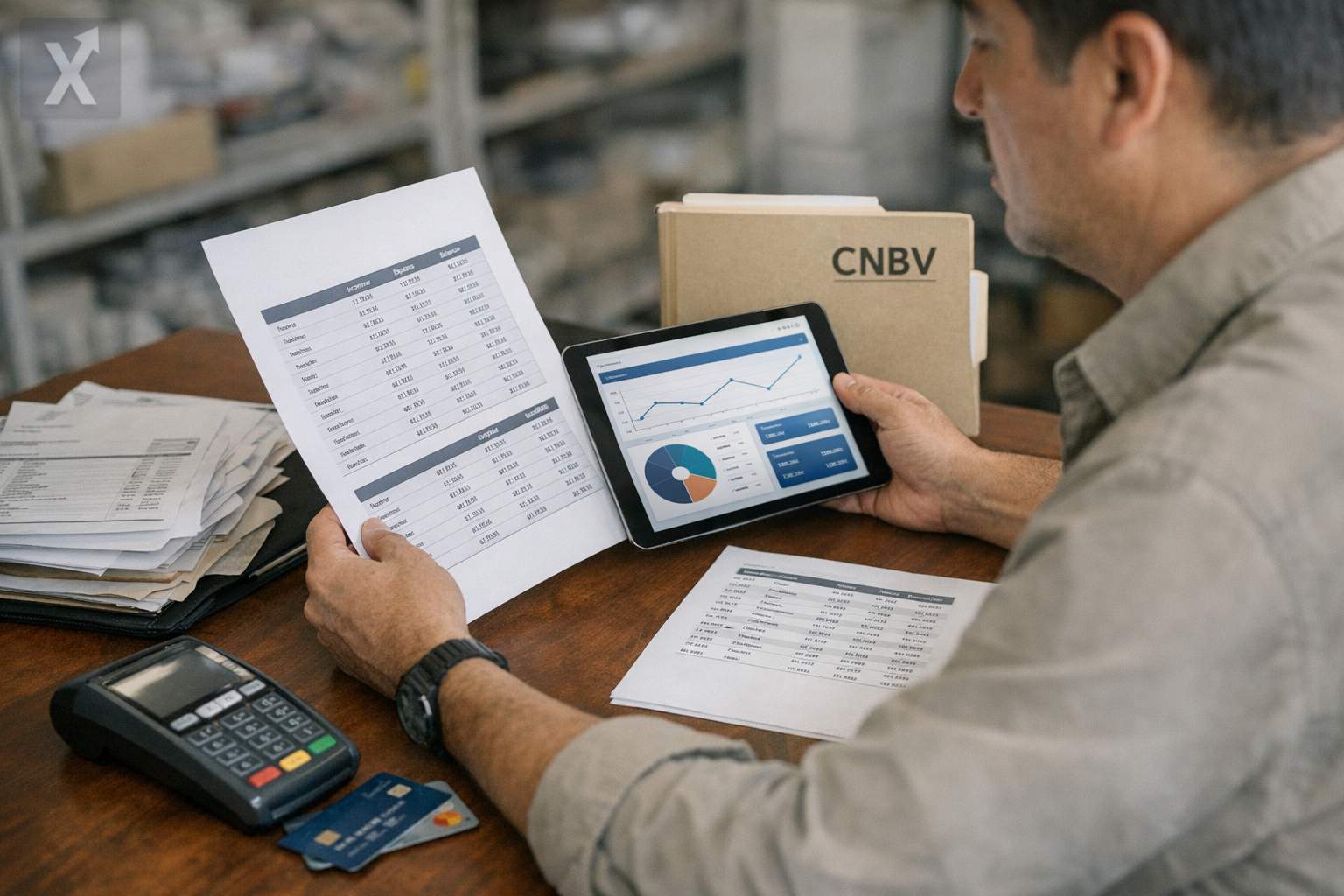
Sofipo Finsus wants to bring more certainty to small-business treasury operations and replace the use of personal credit cards as operating credit.
In Mexico, financing for small and medium-sized enterprises (SMEs) remains one of the main bottlenecks to growth, investment, and sustaining formal employment. In that arena, Finsus—a sociedad financiera popular (sofipo) led by Carlos Marmolejo—is betting on a business-focused model and on taking the next regulatory step: becoming a bank. The company began that process with the National Banking and Securities Commission (CNBV) last year and says it could be finalized toward the end of this year.
The strategy contrasts with that of other digital players that have prioritized consumer lending. For Finsus, the emphasis is on solving everyday business treasury needs: access to working capital, pay-in/pay-out tools, and more organized financial management. The company reports that about 90% of its loan portfolio—14.566 billion pesos as of the end of December—is placed with small and mid-sized businesses, while the remaining 10% corresponds to consumer credit, such as cards and personal loans.
The diagnosis behind this bet is blunt: a meaningful share of micro-, small-, and mid-sized business owners operate without formal financing and, in practice, replace business credit with personal credit cards. Finsus argues that credit-card indebtedness among owners and partners is particularly high—so much so that in the vast majority of applications, borrowers report lines that are nearly maxed out. That, in turn, weighs on their credit-bureau history and makes access to better financing terms more expensive—or blocks it altogether.
This pattern is unfolding in a context of still-elevated systemwide rates. Even though inflation has been decelerating from prior peaks, the cost of money has remained restrictive, and credit-card rates can reach very high levels—making it risky to use revolving credit to cover payroll, inventory, or supplier payments. The result is often a fragile treasury, with little ability to absorb shocks and a higher likelihood of delinquency if sales slow.
Finsus also reported deposits of 18.12 billion pesos as of December, and it argues that the move to become a bank would let it compete on a key attribute for SMEs: greater confidence in concentrating operating balances. Today, deposit insurance for sofipos has a relatively low cap for businesses with larger cash flows; an SME with biweekly payroll payments or recurring supplier purchases can carry significantly higher balances, and the limited protection of the insurance can influence where it chooses to keep its cash.
Personal Cards as “Working Capital”: A Symptom of Underfinancing
Using personal credit cards to fund operating costs has become normalized among many small businesses: inputs, rent, or utilities get paid with revolving credit, and then the balance is “kicked down the road” as receivables come in. Financially, this is equivalent to funding working capital with one of the most expensive and volatile instruments in the market, while also mixing personal finances with business finances. For the system, the problem is twofold: on one hand, formal SME credit remains limited relative to SMEs’ weight in the economy and employment; on the other, overuse of credit cards deteriorates the owner’s credit profile—who in Mexico is often the guarantor or the central figure in risk analysis. During periods of weaker demand or slower collections, the business can quickly fall into a spiral of interest, fees, and minimum payments, squeezing margins and investment capacity.
To compete in this space, Finsus says it is developing a suite of business transactional services: web banking, payroll distribution, transfers, supplier payments, and collection tools. Beyond the “credit product,” the transactional component is key because it makes it possible to observe cash flows, seasonality, and the quality of revenues—and therefore fine-tune origination and ongoing risk monitoring. The firm says it combines credit-bureau data with digital analytics models and anti–money laundering processes, and can even incorporate advanced analytics to identify payment patterns by industry, region, or season.
In an environment where banks and fintechs compete for data, access to transactional information can make the difference in offering more tailored credit. For SMEs, that can translate into lines that fit their business cycle—for example, retail with year-end peaks or service providers with delayed collections—and into products that are less expensive than revolving credit, so long as risk analysis remains prudent.
The company touts a delinquency rate of 1.81%, below levels seen in segments of traditional banking. While these indicators should be read with caution due to differences in portfolio mix, seasoning, and underwriting criteria, the figure suggests there is room for alternative evaluation models and for more competition in business financing—particularly in niches where traditional banks tend to be more conservative.
Looking ahead, the potential conversion of Finsus into a bank comes at a moment when Mexico combines opportunities and challenges: the reshuffling of supply chains and investment tied to manufacturing and logistics create room for local suppliers, but most SMEs need credit, digitalization, and better treasury management to plug into those chains. If more intermediaries manage to scale with strong controls and full transactional offerings, the market could see greater financial formalization in this segment and less reliance on personal credit cards as a lifeline.
In perspective, the Finsus case illustrates that the underlying issue is not only the lack of credit, but also its cost and how it is used: substituting business financing with personal credit cards raises operating costs and weakens the business. Regulatory evolution and competition to offer comprehensive treasury solutions will be decisive in improving SMEs’ financial health.