Mexico and the United States kick off the USMCA review: first formal round starts March 16
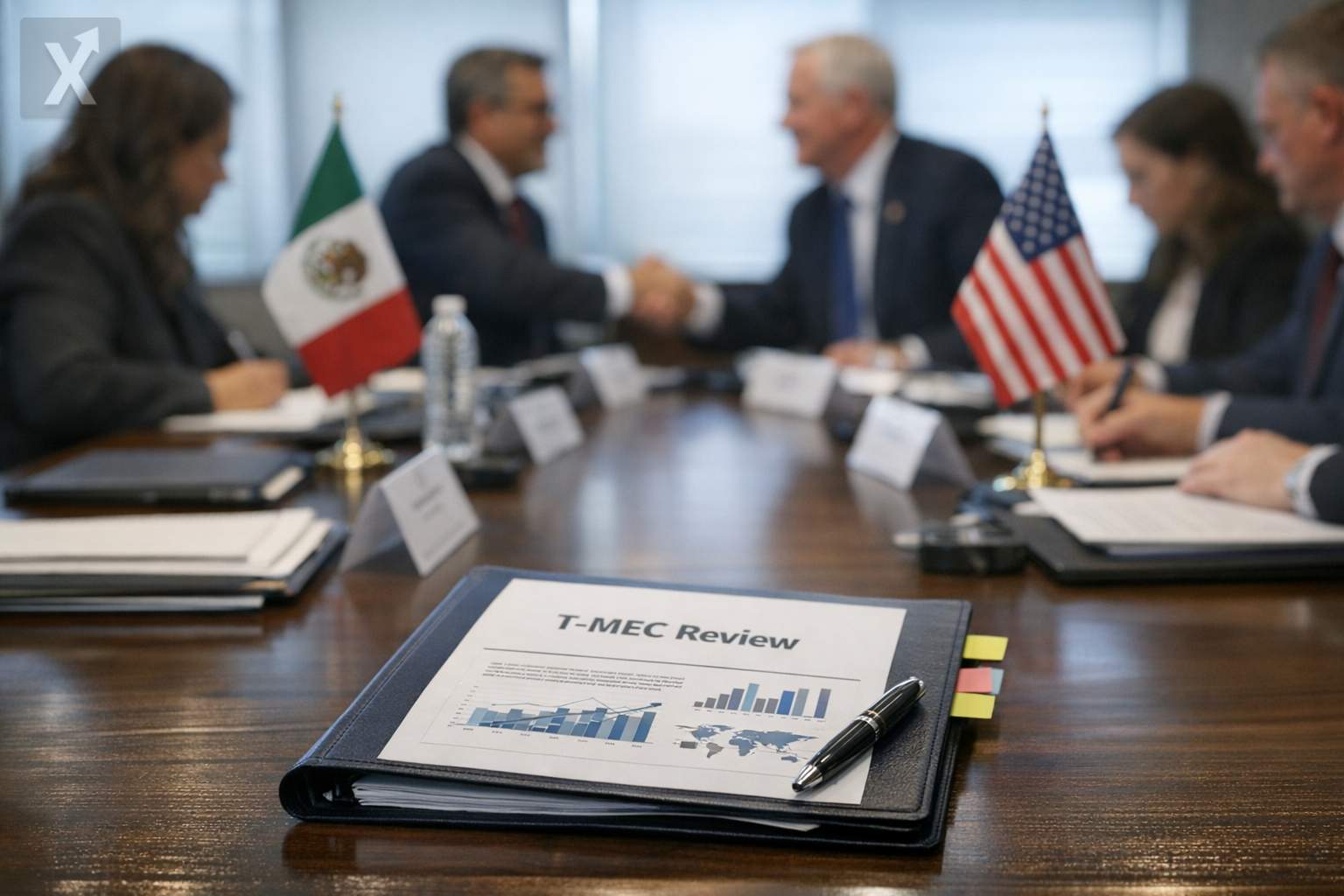
The start of the bilateral round marks the beginning of a process that could reshape rules of origin, supply chains, and investment incentives across North America.
Mexico and the United States will begin the first formal round of bilateral talks on March 16 aimed at reviewing the United States–Mexico–Canada Agreement (USMCA), a step that points to a high-intensity year for the region’s economic agenda. Economy Secretary Marcelo Ebrard said he reached an agreement with Jamieson Greer, the United States Trade Representative, to launch a structured dialogue that, after this first meeting, will seek to continue through regular sessions.
On the table, a debate is expected over strengthening rules of origin, deepening North American productive integration, and securing supply chains—issues that have gained prominence as the region tries to bolster its competitiveness against other industrial hubs. For Mexico, the review comes amid a reshaping of global trade, greater scrutiny of the regional content of exports, and a more active industrial policy in the United States—factors that can affect compliance costs, location decisions, and investment flows.
According to Mexico’s Ministry of Economy, the central goal is for the agreement’s benefits to be concentrated primarily within the member countries, which would imply adjustments or clarifications to discourage “transshipment” and raise North American content in strategic sectors. In practical terms, the review could translate into greater input traceability, stricter certifications, and potentially clearer rules for new industries tied to electrification, semiconductors, medical equipment, and logistics.
The timing matters for Mexico’s economy: foreign trade remains one of the main engines of activity, and the northern manufacturing corridor and the Bajío region depend on stable access to the U.S. market. At the same time, domestic challenges persist—infrastructure, energy costs, water availability in industrial regions, and security—that shape Mexico’s ability to capitalize on “nearshoring” and sustain export-led growth.
Rules of origin and supply chains: the economic core of the review
Tightening or clarifying rules of origin is often the component with the greatest economic impact because it determines which goods qualify for tariff preferences. For Mexico, this is particularly sensitive in integrated manufacturing—such as auto parts, electronics, and machinery—where the mix of imported inputs and local production defines margins and lead times. A more demanding framework could encourage import substitution through regional sourcing, but it could also raise short-term adjustment costs, especially for companies with already-optimized global supply chains. In parallel, supply-chain security—from logistics continuity to verifying the origin of components—aims to reduce vulnerabilities to external shocks, but it requires stronger regulatory and customs capabilities to prevent bottlenecks.
The negotiation also unfolds under the shadow of more active industrial and trade policies in the United States, with incentives for domestic production and stricter traceability and compliance requirements. For Mexico, the challenge is to turn regional integration into tangible projects: expanding the base of domestic suppliers, improving border connectivity, and accelerating investments in ports, highways, and customs crossings to reduce delivery times—an essential attribute for competing in high-turnover manufacturing.
Looking ahead, the outcome of these talks will shape business expectations, expansion plans, and hiring decisions. An early signal of regulatory certainty and a clear work plan could support investment and reinforce the narrative of North America as an integrated production platform; by contrast, a friction-filled agenda that drags on would tend to raise the risk premium and delay projects, especially in sectors that depend on specific regional-content rules.
In short, the launch of the March 16 round opens a decisive phase for the USMCA: Mexico is seeking to preserve preferential access to its main market while also turning integration into lasting competitive advantages through regional sourcing, more efficient logistics, and clearer rules.






