Digital Payments and SMEs: Fear of Tax Scrutiny Is Slowing Formalization in Mexico
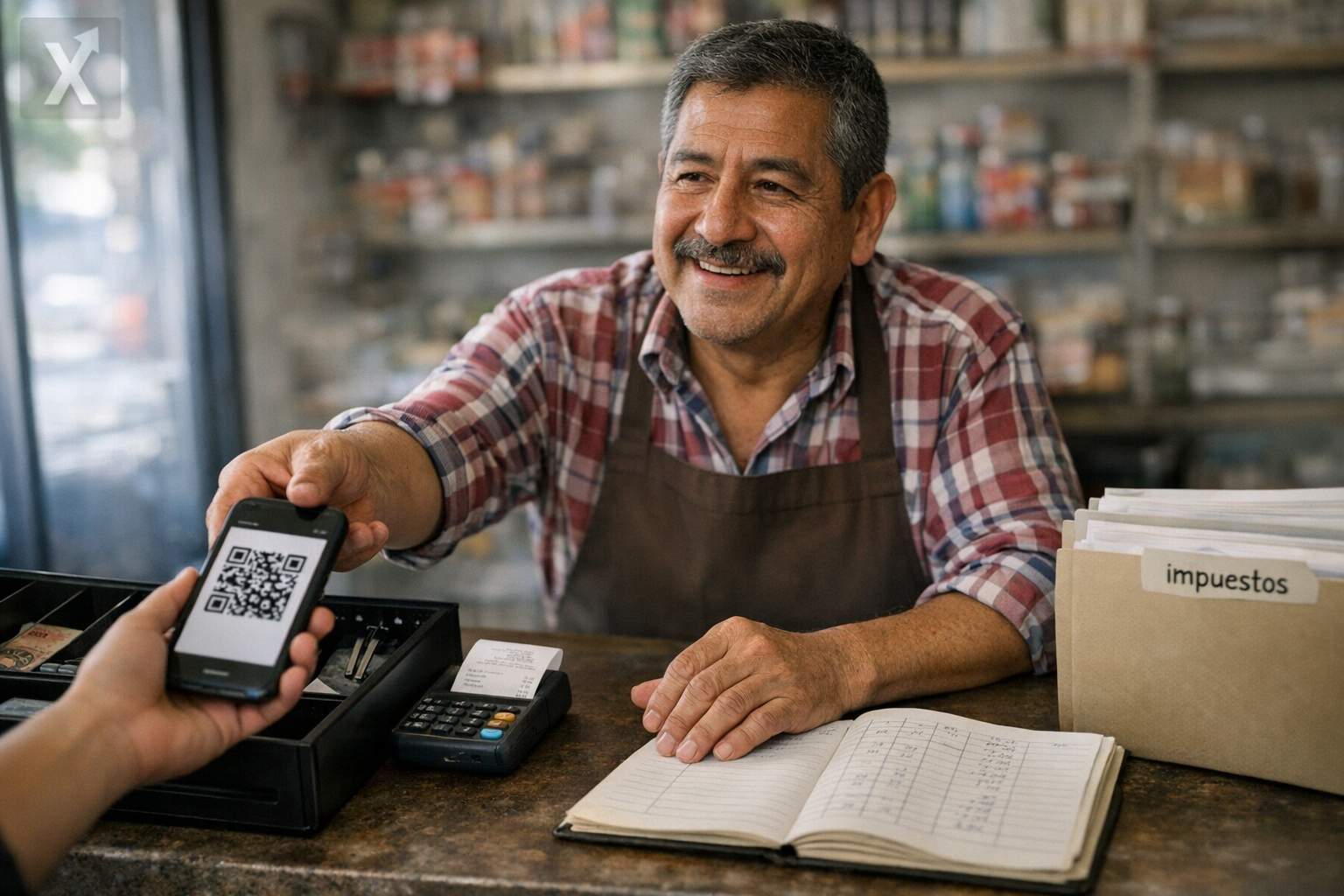
Concern about an SAT review keeps thousands of businesses reliant on cash, even though digitizing collections can open access to credit and improve financial oversight.
The shift toward digital payments in Mexico has accelerated in recent years, driven by the boom in e-commerce, real-time transfers, and the expansion of fintechs. But among micro, small, and medium-sized enterprises (SMEs), a hard-to-dislodge obstacle remains: fear of tax enforcement. Payments executives say that for many businesses, accepting cards or charging through a payment link is still seen as “turning on a spotlight” for the Tax Administration Service (SAT), pushing them to stick with cash.
The paradox is that this preference for cash also limits growth. Without a digital record of sales and cash flow, it becomes harder to prove income, estimate repayment capacity, or build the track record needed to access formal financing. In a country where most economic units are SMEs and they account for a large share of employment, this dynamic affects productivity, tax collection, and the development of more sophisticated supply chains.
The resistance is significant. Recent measurements from Banco de México (Banxico) show that cash continues to dominate everyday spending, even as acceptance points and transfers increase. For the financial ecosystem, the challenge isn’t only technological—it’s about trust, tax culture, and regulatory clarity. Industry players argue that digitization shouldn’t automatically be interpreted as an audit trigger, but among small merchants, perception still outweighs the official narrative.
Against this backdrop, Mercado Pago—the financial arm of MercadoLibre—has argued that adopting digital collections can help businesses “get organized” and grow beyond their current scale. The company, which began operating in Mexico in 2019, has been pursuing a banking license since 2024 to expand its offerings, raise the standard of legal certainty for users, and compete in a market where traditional banks and new entrants are battling for the SME customer relationship.
This move comes at a time when Mexico is sending mixed signals: on one hand, resilient consumer spending and a solid banking system; on the other, a moderate growth environment and financing costs that, while starting to adjust, still weigh on credit demand. For merchants, the cost of operating in cash—security risks, shrinkage, manual reconciliation—competes with fees, terminals, and the digital learning curve.
From the Cash Drawer to a Financial Track Record: What Changes When a Business Goes Digital
Beyond the payment method itself, digitization creates an information trail that can transform an SME’s relationship with the financial system. Recorded sales flows make budgeting, inventory control, cost management, and—most importantly—access to products like credit, insurance, or working-capital financing easier. In practice, many institutions—including fintechs—use transactional data to evaluate risk in real time, which can speed up decisions and improve terms for businesses with limited credit history. However, the benefit only shows up if the merchant moves a meaningful share of operations away from cash—and that’s where fear of tax scrutiny acts as an anchor that slows adoption.
This drag also has macro implications: the persistence of cash helps sustain an economy with high informality, where productivity grows slowly and competition can be distorted between those who comply and those who operate off the radar. At the same time, the expansion of digital payments increases pressure to improve financial education and consumer protection, especially as more people and businesses join low-ticket, high-frequency services.
For fintechs like Mercado Pago, obtaining a banking license would be a meaningful shift: it would bring greater prudential and compliance obligations, but also a broader regulatory platform to take deposits, lend, and develop products under banking standards. From a competitive standpoint, it would add pressure on traditional banks in segments that have historically been expensive to serve: small merchants, self-employment, and microbusinesses with day-to-day operations.
In the short term, the challenge is building trust. The message that “going digital isn’t the same as being audited” runs up against a reality in which small businesses often have had confusing experiences with paperwork, changing rules, or the costs of formalization. Coordination among authorities, the financial sector, and platforms will be key so that digital adoption is associated with tangible benefits—access to credit, lower risk, better management—and not just with obligations.
In sum, the discussion about digital payments for SMEs isn’t just about terminals or apps: it’s a conversation about formalization, productivity, and access to opportunity. Until SAT and the financial sector manage to reduce the perceived tax risk and demonstrate concrete advantages, cash will remain a safe haven for thousands of businesses—with clear costs for their growth and for Mexico’s economy.






