Mexico Prepares 2026 World Cup Commemorative Coins: Between Collecting and Economic Impact
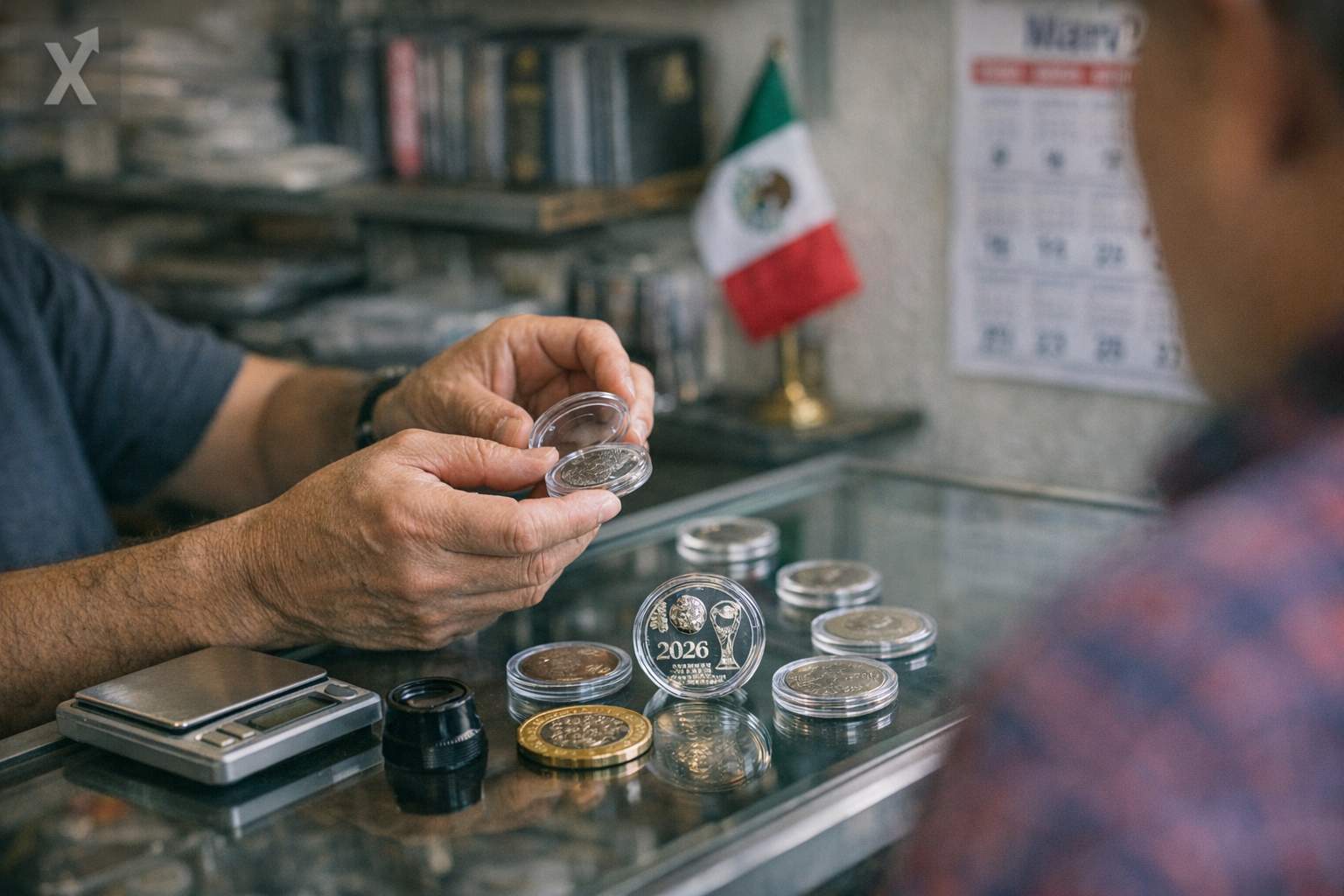
The Senate approved three coins—gold, silver, and bimetallic—on the road to 2026, a move that blends national identity, collector demand, and monetary considerations.
Mexico’s Senate approved the issuance of three commemorative coins marking the 2026 FIFA World Cup, a tournament Mexico will co-host with the United States and Canada. The decision adds to a long-running practice in the country: using numismatics as a vehicle for historical memory while also offering a product with market potential for collectors, tourists, and savers looking for precious-metal pieces.
According to the measure passed in the upper chamber, three pieces will be minted: a pure-gold coin with a face value of 25 pesos, a pure-silver coin with a face value of 10 pesos, and a bimetallic coin with a face value of 20 pesos. As with similar releases, the face value does not necessarily reflect the final retail price, which typically depends on metal content, minting costs, mintage, demand, and distribution margins.
The Bank of Mexico will hold the patrimonial and intellectual property rights tied to the design and minting. On the obverse, the coins will feature the National Coat of Arms with the legend “UNITED MEXICAN STATES,” while the reverse will include elements referencing the 2026 World Cup, whose trilateral hosting is a first for FIFA.
Beyond the symbolic component, the issue comes in an economic context in which Mexico is looking to capitalize on tourist inflows and consumption linked to international events, while maintaining a macro stability strategy built on relative fiscal discipline, an independent central bank, and a financial market with growing participation by investors and users of savings instruments.
Commemorative coins: face value vs. market value
In Mexico, commemorative precious-metal coins tend to occupy a hybrid space: they are legal tender, but their day-to-day use as a means of payment is marginal. In practice, their main destination tends to be collecting and, in some cases, value preservation. That’s because the price at which they are sold typically includes the intrinsic value of the metal (gold or silver), determined by its international quotation, plus production costs and a premium for design and limited edition.
For that reason, even if the gold piece reads 25 pesos and the silver one 10 pesos, their cost could be far higher—especially if the mintage is limited or demand spikes ahead of the event. The 20-peso bimetallic coin, by contrast, is generally more likely to circulate, since historically these issues are closer to everyday use, although they are also hoarded by collectors.
The announcement arrives as the Mexican economy navigates a period of moderate growth and high sensitivity to external variables such as industrial activity in the United States, interest rate trends, and the path of inflation. In that environment, physical products like commemorative coins can draw attention for cultural, tourism, or retail-investment reasons, although they neither replace traditional financial instruments nor guarantee returns.
The 2026 World Cup will expand to 48 national teams and 104 matches, increasing media exposure and visitor flows. For Mexico—where 13 games will be played—the potential economic effect is concentrated in sectors such as lodging, restaurants, transportation, entertainment, and retail. However, it also brings coordination challenges around logistics, security, and pressure on urban infrastructure, particularly in host cities with heavy tourist demand.
From a public finance standpoint, the recurring debate is how much of the spending associated with events of this scale turns into useful long-term investment and how much remains in short-lived costs. The coin issue, by itself, does not decide that equation, but it does reflect a “country brand” strategy that often accompanies these events: official memorabilia, collections, and licensed products that capture part of visitor and fan spending.
For the domestic market, the performance of these pieces will depend on sales rules, distribution channels, and clarity around technical specifications (weight, fineness, finishes, and mintages). In prior issues, limited availability or speculative resale has been a topic of debate among collectors, making transparency in the rollout especially important.
In perspective, the 2026 World Cup coins function as a cultural and commercial barometer: they distill sporting pride and historical narrative, but they also highlight how a global event can activate consumption chains and business opportunities. Their macro impact will be limited, though they can generate spillovers in specific niches and become a valuable object for those active in the numismatic market.
In short, legislative approval opens the door to an issue that combines national identity with commercial potential; the true economic reach will be seen in execution, demand, and Mexico’s ability to translate the World Cup into tangible benefits beyond collecting.






