Mexican exports rebound in February, reviving industrial momentum, but the trade deficit persists
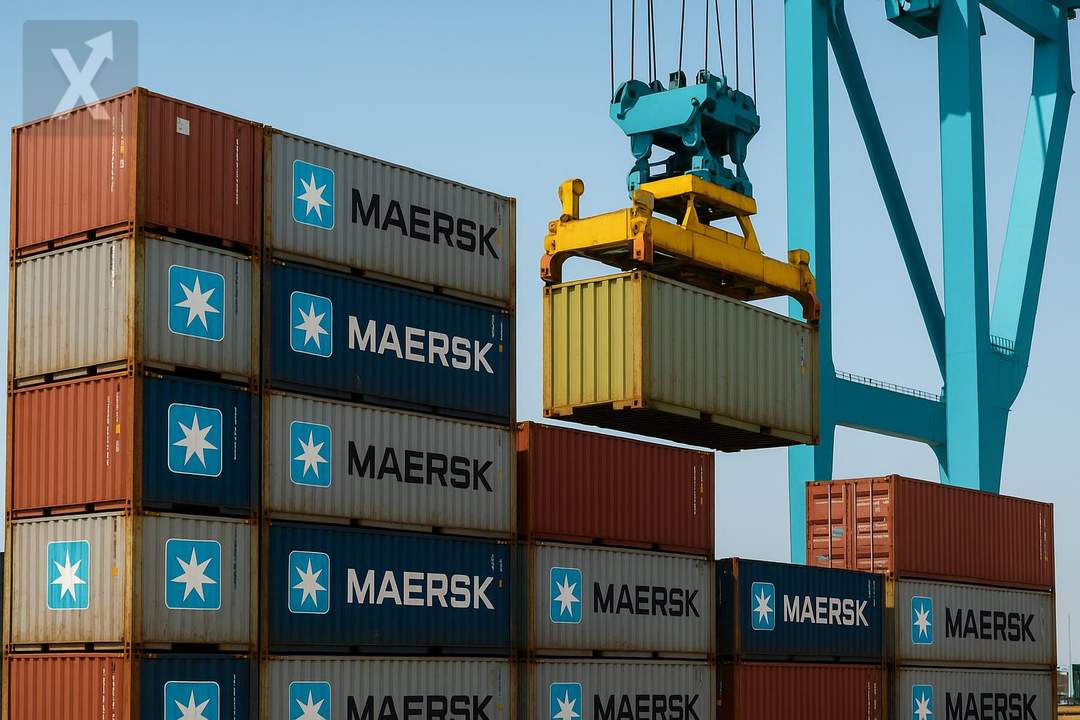
The sharp export gain coincided with even faster-growing imports, reflecting an active industrial base, albeit with mixed signals on investment.
Mexico’s foreign trade started the year with notable momentum: in February 2026, exports totaled $56.851 billion, a 15.8% year-over-year increase, according to INEGI data. The performance confirmed the strength of the export platform in a context where the Mexican economy continues to lean on manufacturing geared toward external demand—particularly activity tied to North American supply chains.
Growth was driven mainly by the non-oil component, whose exports rose 17.5%, while oil exports fell 24.2%. In practice, the figures underscore two realities: the strength of export-oriented industry and the persistent volatility in the energy segment, affected by swings in output, prices, and operating capacity.
Within manufacturing shipments—which exceeded $51.7 billion and grew 17.1%—exports of machinery and equipment, metal products, and electronics stood out. These segments often capture much of the impact of production relocation (nearshoring) and regional integration under the USMCA, though their expansion also depends on logistics factors, energy availability, and certainty for expanding plants and capacity.
The month’s weak spot was the automotive sector: its exports fell 3.4%, linked to lower sales to the United States. The pullback suggests more uneven demand in the top destination market, as well as sector-specific pressures such as the technology transition (electrification), inventory adjustments, and seasonal temporary shutdowns. Even so, overall performance remained solid in cumulative terms: from January to February 2026, Mexico exported $104.859 billion, a 12.2% year-over-year increase.
On the import side, growth was even more pronounced. In February, imports reached $57.314 billion, up 20.8% year over year. The increase was concentrated in inputs for production: imports of intermediate goods topped $46.2 billion and grew 27.2%, a sign that industry is demanding components and raw materials to sustain orders, complete processes, and supply exports.
By type of goods, consumer imports rose 5.2%, while capital goods imports fell 8.1%. This combination is often read as a mixed signal: on one hand, there is productive activity and demand for inputs; on the other, investment in machinery and equipment may be pausing in the short term, influenced by still-elevated financing costs, more selective expansion decisions, and infrastructure bottlenecks.
Strong manufacturing, selective investment: what imports suggest
The surge in intermediate goods and the drop in capital goods help explain where Mexico’s economy stands: export-oriented production may be running at a high clip—rebuilding inventories, increasing volumes, and meeting contracts—without necessarily translating immediately into a broad wave of new investment. In an environment where companies are weighing energy costs, water availability, logistics security, and permitting speed, it is common for expansion to come first through higher utilization of installed capacity and process optimization. If external demand holds and infrastructure constraints are addressed, the capital component could recover later; if not, growth may rely more on efficiency than on plant expansion.
The faster pace of imports affected the trade balance. In February 2026, Mexico posted a $463 million deficit, smaller than in January, when it exceeded $6.4 billion. The month-to-month improvement reflected a shift in the non-oil balance—from deficit to surplus—and a reduction in the oil deficit; however, pressure persists in the year-to-date figures: the trade deficit totaled $6.944 billion in the first two months of the year.
Looking ahead, foreign trade performance will remain tied to three pillars: the path of demand in the United States, the ability of Mexican industry to navigate logistics and energy costs, and the pace at which nearshoring-related investments materialize. At the same time, the macro read will also factor in the exchange rate and financial conditions, given their influence on import costs, exporters’ margins, and investment decisions.
Overall, February’s figures describe an economy with an active industrial engine and a competitive external position, albeit with a still-negative trade balance due to the strength of imports. The key will be whether manufacturing strength is reinforced by greater productive investment and stable external demand.






