Mexican banking heads into 2026 with more moderate growth amid Banxico rate cuts and USMCA noise
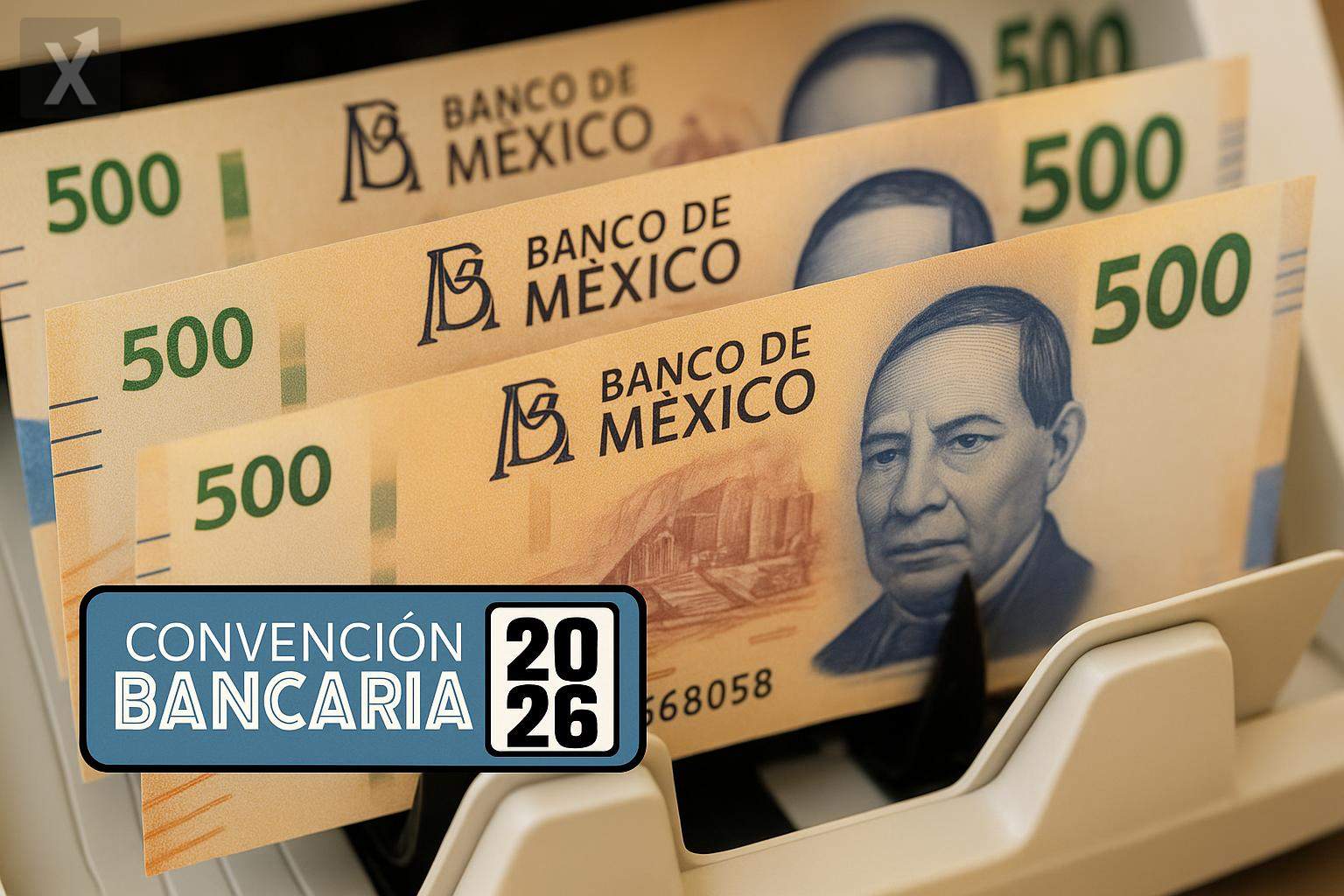
Banks are recalibrating their risk appetite as falling rates squeeze margins and investment stays cautious ahead of the USMCA review.
After several years of expansion fueled by high interest rates and a steady recovery in lending, banks operating in Mexico are entering 2026 facing a more constrained growth outlook. The rate-cutting cycle by the Bank of Mexico (Banxico), the economy’s recent lackluster momentum, and uncertainty tied to the USMCA review are reshaping the balance between financing demand, asset quality, and system-wide profitability.
This shift matters because, historically, loan portfolios tend to grow faster than GDP during stable periods. However, when private investment slows or gets postponed, corporate financing typically feels it more than consumer lending does. In 2025, amid modest economic growth, banks still posted nominal loan growth, but the pace of profit expansion cooled compared with the double-digit gains seen early in the decade, when net interest margins benefited from high rates.
For 2026, market consensus points to stronger economic growth than the prior year, though still not enough to trigger a robust corporate credit cycle if doubts persist around trade rules, supply chains, and tariff costs in North America. Against that backdrop, the banking system is bracing for fiercer competition for lower-risk customers, a heavier focus on operating efficiency, and more selective loan origination in segments sensitive to income shocks.
Credit: consumer and SMEs, with caution amid subdued investment
In discussions leading up to the Banking Convention, banks have reiterated their interest in expanding financing for small and midsize businesses (SMEs), a key segment given its role in employment and supply-chain linkages, but one traditionally constrained by informality, weak accounting practices, and limited access to collateral. Even with industry commitments to broaden SME lending, the cycle’s reality points to more cautious origination: as rates fall, margins compress and profitability depends more on volume, loss control, and funding costs—making strong risk segmentation critical.
At the same time, consumer lending often leads when the labor market remains resilient, though it is also the first to deteriorate if delinquencies or unemployment rise. That is why banks tend to strengthen underwriting models, early-stage collections, and data analytics, especially in unsecured consumer credit. In Mexico, financial inclusion has improved, but access to credit still lags account ownership and other products—suggesting growth potential that hinges on formalization, financial education, and households’ ability to repay.
Nonperforming loans will be one of the most closely watched variables in 2026. While aggregate levels have remained within ranges considered manageable, the slight deterioration seen recently makes it necessary to take a closer look at institutions with greater exposure to small-ticket loans and more volatile income profiles. In a lower-growth, falling-rate environment, discipline around loan-loss provisions and containing credit losses may matter as much as portfolio growth.
Reputation and compliance: U.S. allegations accelerate AML upgrades
Another factor reshaping priorities was the reputational and operational impact following allegations by the U.S. Treasury Department against financial intermediaries over suspected money laundering. Beyond the specific case and its effects on certain players, the episode raised the bar for the entire system: audits are expected to intensify, transaction monitoring requirements to increase, “know your customer” (KYC) policies to be strengthened, and oversight to tighten, with a particular focus on FX transactions and international transfers.
This tougher stance comes with costs: investing in compliance technology, training, and processes raises operating expenses. But it can also become a competitive differentiator, especially for banks that serve foreign trade and companies with U.S. exposure. In a system so closely tied to the North American market, the strength of Anti–Money Laundering (AML) controls influences correspondent banking relationships, access to international liquidity, and business continuity.
More digital competition and new licenses: growing through efficiency
The entry and consolidation of new digital-model players is pushing traditional banks to accelerate digitization, reduce friction in origination, and improve the user experience. Mexico has made progress in electronic payments and mobile banking, but still faces challenges in connectivity, security, and user trust. In 2026, system growth may rely less on margins and more on efficiency: automation, better use of data, and segmented offerings for households and businesses.
Competition will also play out in deposits and transactional customers, in a scenario where funding costs could become more sensitive as the policy rate falls and savers compare yields across banks, instruments, and platforms. In that environment, banks will look to deepen customer relationships through payroll accounts, payments, merchant acquiring, and investment products, while allocating credit under more selective criteria.
In the current environment, the core message is one of recalibration: the banking system remains profitable and central to financing businesses and households, but it is entering 2026 with a finer balance between expansion and prudence. Banxico’s path, the evolution of the USMCA review, and the sector’s ability to strengthen compliance and digital efficiency will set the tone for the year. If investment reaccelerates and trade certainty improves, corporate credit could regain momentum; if not, consumer and SME lending will grow—but under a tighter risk lens.
In perspective, 2026 is shaping up to be a transition year: fewer extraordinary tailwinds from high rates and more pressure to compete, comply, and extend credit responsibly. The outcome will depend as much on the external backdrop—especially the United States and the USMCA—as on banks’ internal execution in risk management, technology, and transparency.






