Mexico Leads Trade With the United States, but the USMCA Review Reopens the Debate Over Regulatory Barriers
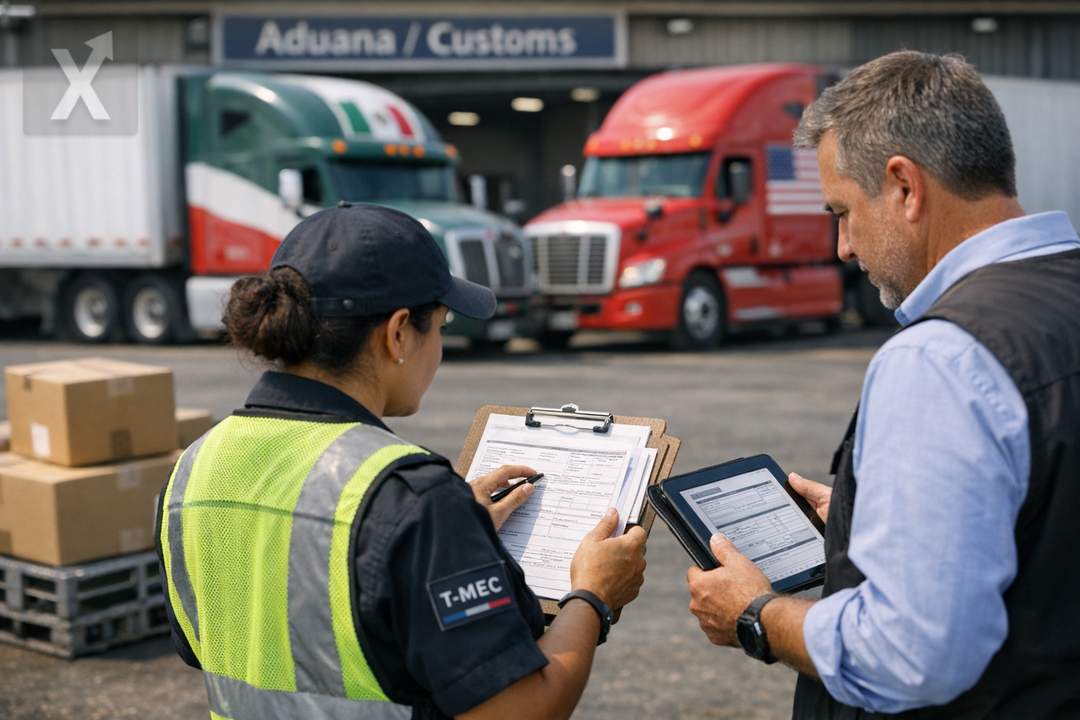
Trade momentum contrasts with U.S. complaints about regulatory uncertainty in energy, investment, data, and intellectual property.
Mexico heads into 2026 firmly established as the United States’ (U.S.) top trading partner—a position driven by North America’s manufacturing integration, the boom in nearshoring, and resilient supply chains that, after the pandemic, sought closer geographic proximity. However, the same relationship that powers exports and investment is also accumulating friction: the latest report from the Office of the United States Trade Representative (USTR) underscores that non-tariff barriers persist in strategic sectors for U.S. companies and for the day-to-day functioning of the USMCA.
In 2025, bilateral goods trade reached $872.8 billion (USD), with U.S. exports at $338.0 billion and imports from Mexico at $534.9 billion. The figures confirm the scale of the relationship, but they do not resolve the USTR’s main concern: the perception of shifting rules, less predictable processes, and compliance costs that, from Washington’s perspective, reduce investment certainty and make cross-border operations more expensive.
This tension is unfolding at a sensitive moment. The USMCA review scheduled for 2026 is shaping up as a venue to renegotiate expectations and demand results on commitments ranging from competition policy and investor treatment to labor and environmental disciplines. For Mexico, the challenge will be to sustain its manufacturing appeal—supported by its supplier network, workforce, and logistical proximity—without creating vulnerabilities that could lead to consultations or disputes that cloud the business climate.
One of the most delicate chapters is energy. The report notes that regulatory changes, permit suspensions, and tighter restrictions have increased uncertainty for investors in a sector where planning requires long time horizons and stable rules. It also points out that new hydrocarbon provisions limit activities such as storage and transport, shorten permit terms, and, overall, tend to favor state-owned firms like Pemex and CFE—altering, in the U.S. view, competitive conditions.
The USTR adds a financial dimension: U.S. companies report difficulties recovering payments on sector projects and supplies, with past-due amounts that would exceed $2.5 billion by the end of 2025. In practice, these delays can translate into smaller maintenance budgets, less appetite for new investment, and higher financing costs—right as Mexico seeks to expand energy infrastructure to meet electricity demand tied to industrial growth.
On investment, the document emphasizes restrictions in sectors deemed strategic, such as mining, energy, and transportation. Among other examples, it cites state control over lithium through LitioMx, which limits private participation in an input relevant to batteries and the energy transition. The debate is significant: growth in manufacturing tied to e-mobility and storage requires critical minerals, and the pace of project development often depends as much on legal certainty as on technical capability and access to financing.
Another front is data and digital trade. The USTR warns that certain regulations and technical requirements impose additional costs—for example, when local testing is required for telecom equipment, which can duplicate processes and cause certification delays. While progress has been reported on mutual recognition agreements, the mention of technical barriers suggests that integration in digital services—ever more connected to advanced manufacturing, logistics, and traceability—still faces bottlenecks.
Intellectual property remains a recurring concern: Mexico stays on watch lists due to piracy and counterfeiting in physical markets and, increasingly, through digital channels. For creative and tech industries, effective enforcement of copyrights and trademarks affects investment and distribution decisions; for the country, the challenge is to strengthen monitoring, penalties, and coordination among authorities without stifling innovation or formal trade.
The report also includes labor-related concerns: although Mexico has adopted measures to ban the importation of goods made with forced labor, it warns that enforcement still allows certain products to enter the market, affecting competition. At the same time, the environmental component adds pressure: illegal fishing and illegal logging are described as factors that distort trade and penalize producers who do comply, in addition to their ecological impacts. These issues often gain relevance in the bilateral agenda because they can trigger rapid response mechanisms and audits under the USMCA itself.
Underlying everything is the day-to-day operation of trade. The USTR cites a lack of clarity in customs processes and regulatory changes without sufficient notice, which raises logistics costs and forces companies to invest more in compliance. In an environment where the exchange rate, freight rates, and delivery times determine competitiveness, these frictions can dilute some of Mexico’s advantages as an export platform.
The Nearshoring Paradox: More Potential Investment, but Greater Demand for Stable Rules
Mexico’s economy has gained global visibility thanks to nearshoring and its role in regional supply chains for auto parts, electronics, aerospace, and medical devices, which has boosted demand for industrial parks, transportation, and energy. But that opportunity also raises the bar: companies considering new production lines compare labor and logistics costs, but also regulatory quality, permitting timelines, contractual certainty, and reliable access to electricity and water. In that sense, the USTR’s observations land as a reputational risk signal right as Mexico competes to attract productive capital against other jurisdictions. The country’s ability to streamline permitting, provide regulatory predictability, and strengthen the rule of law may become as decisive as its geography or its network of trade agreements.
Looking ahead to the USMCA review, it is likely that the U.S. will seek verifiable commitments on energy, trade facilitation, intellectual property, and the digital economy. For Mexico, the discussion will be how to reconcile public policy goals—including the state’s role in strategic sectors—with the need for certainty and competitive conditions that sustain the flow of investment, technology, and trade. The outcome will influence not only the bilateral relationship, but also the country’s growth and productivity trajectory in the coming years.
In short, Mexico combines strong trade ties with the U.S. with an unfinished agenda on regulatory certainty; the USMCA review will be a barometer of whether regional integration deepens—or becomes more costly due to recurring friction.






