HSBC Sees the Investment Brake Finally Loosen: Infrastructure and Energy Bring Growth Back to Life

HSBC Mexico expects the combination of new projects, bank financing, and a lower Banxico policy rate could improve growth after a weak 2025.
After a 2025 marked by modest expansion—estimated at 0.8%—the conversation between banks and companies refocused on a key question: what was Mexico missing to pick up the pace? For HSBC Mexico, the answer wasn’t so much a lack of liquidity or corporate appetite, but something more basic: a clear pipeline of projects with viable investment structures. According to Jorge Arce, the bank’s CEO, that “bottleneck” began to ease with the start of Claudia Sheinbaum’s administration and the rollout of infrastructure plans aimed at aligning the public sector with private capital.
That assessment comes amid a transition period. The first year of a federal administration typically brings less momentum due to shifting priorities, institutional reshuffling, and planning timelines. On top of that, Mexico inherited tighter fiscal conditions after years of heavy spending on flagship projects, which limited budget flexibility. In that context, the banking sector expects the boost to come from hybrid models: public funds, direct corporate investment, and credit from commercial banks.
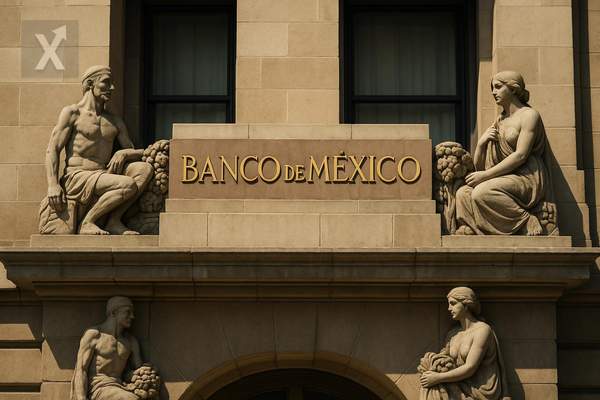
At the same time, the monetary cycle is providing a tailwind. With the Bank of Mexico (Banxico) cutting its benchmark rate from restrictive levels, financing costs should gradually ease for households and businesses—though the pass-through isn’t immediate and depends on bank competition, perceived risk, and the strength of each project’s cash flows. Even so, for the financial system, a shift in direction usually improves the feasibility of capital-intensive investments such as logistics, energy, and urban infrastructure.
HSBC ended the last year with a loan portfolio of 478.622 billion pesos, according to regulatory figures, and has flagged particular interest in energy projects, with an emphasis on sustainable generation. The institution argues that beyond the sheer amount of investment, energy availability and certainty around grid interconnection have become decisive for the relocation of supply chains and for sustaining Mexico’s appeal as an export platform in North America.
Energy and Logistics: The Projects That Actually “Move the Needle”
Among the projects the government has shared with the private sector, HSBC identified a meaningful energy package that, according to the bank, totals 26 gigawatts and will require significant financing. Economically, the importance goes beyond the headline number: available electric capacity has become a critical input for new plants, data centers, and manufacturing expansions tied to nearshoring. If the plans can translate into executable construction—complete with permits, interconnection, and clear business models—today’s delays that raise costs and inject uncertainty into long-term decisions could be reduced.
In logistics, interest is focused on ports and highways because of their direct impact on transit times, transportation costs, and supply-chain reliability. In a country where export competitiveness depends on efficient routes to the northern border and industrial corridors in the Bajío region, investment in connectivity tends to have multiplier effects: it boosts productivity, supports regional integration, and improves the ability to respond to external shocks.
Not all projects, however, are seen as offering the same clarity of returns. Arce voiced reservations about passenger rail, which is typically harder to make financially viable due to high upfront investment and sensitivity to subsidies, real demand, and fare structures. For banks, “bankability” rests on predictable cash flows, consistent regulatory frameworks, and strong contracts; when those elements are weak, credit either becomes more expensive or doesn’t show up at all.
The broader backdrop is an economy with both strengths and friction points. On the one hand, Mexico retains advantages from its manufacturing integration with the United States (U.S.), its export base, and a domestic market that—while unequal—remains meaningful. On the other, structural challenges persist: high informality, productivity gaps, limitations in local infrastructure, and, in certain regions, security issues that affect operating costs and investment decisions.
On that last point, the HSBC executive acknowledged insecurity as a risk factor in specific areas, though he highlighted declines in high-impact crimes and extortion in several regions. In practice, the financial sector often distinguishes between localized risks—which raise insurance premiums, private security costs, and logistics expenses—and systemic risks; that distinction matters when modeling projects and setting credit allocation.
Externally, the upcoming renegotiation or review of the USMCA adds a note of caution. HSBC does not expect talks that would directly hit the banking sector, though it sees possible discussions in areas such as electronic payments. At the same time, compliance demands remain stringent: banks operate under heightened U.S. scrutiny on anti–money laundering, pushing ongoing investment in technology, transaction monitoring, and internal control culture.
On the corporate front, HSBC brought on José Antonio Meade as chairman of its Board of Directors, aiming to strengthen institutional positioning and engagement with international stakeholders. In a period of intense competition for capital—and where factors like energy, rule of law, and regulatory certainty matter more than before—the message to investors typically centers on project viability, risk-adjusted returns, and stable rules of the game.
Finally, the institution is also adjusting its commercial strategy in Mexico as digital players and banks focused on mass-market customers gain ground. HSBC is looking to concentrate on middle- and upper-middle-class clients with needs across more than one product—cards, mortgages, auto loans, international services—a segment that typically shows deeper relationships, lower delinquency rates, and demand for cross-border solutions.
Overall, HSBC’s view is that growth will depend less on expectations and more on execution: concrete projects, investment structures that share risk, and effective coordination across infrastructure, energy, and financing. If that engine moves forward, the country could translate its industrial and logistics potential into more sustained expansion; if it stalls, the boost from nearshoring and lower rates could fade amid persistent bottlenecks.