Inflation picks up in the first half of February: services and food keep pressure on prices
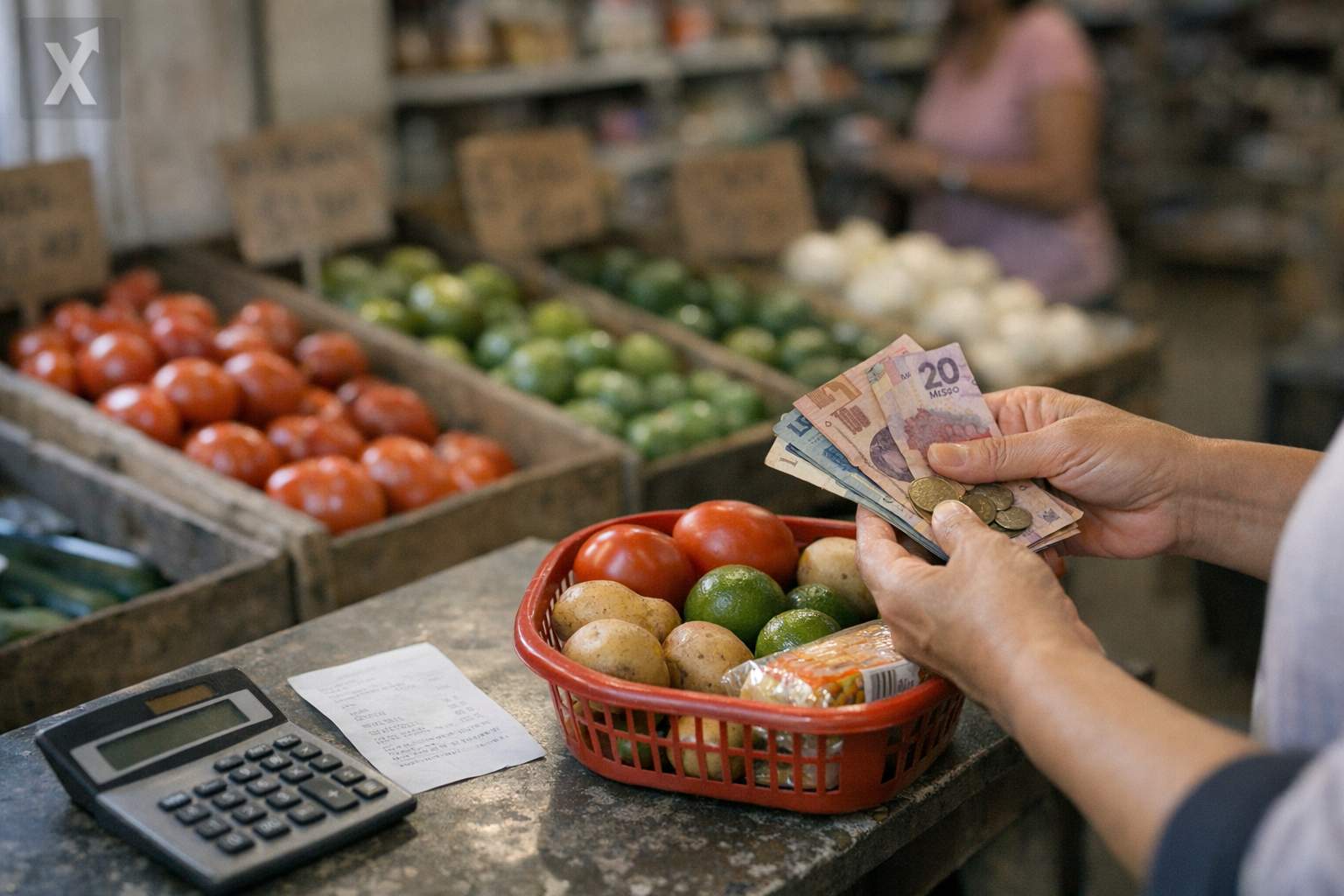
Mexico’s CPI (INPC) accelerated to a 3.92% annual rate by mid-February, with core inflation still elevated—complicating a quick easing of monetary policy.
Inflation in Mexico regained momentum in the first half of February, in a start to the year in which prices continue to send mixed signals. The National Consumer Price Index (INPC) posted a biweekly increase of 0.25%, bringing the annual rate to 3.92%, according to figures from Mexico’s National Institute of Statistics and Geography (Inegi). The reading remains within the Bank of Mexico (Banco de México) target range (3% +/- one percentage point), but it confirms that the disinflation process is not linear.
The core component—seen as a better gauge of the underlying trend because it excludes the most volatile prices—rose 0.22% over the two-week period and reached an annual rate of 4.52%. This suggests that even though headline inflation is contained, more “sticky” pressures persist in categories tied to labor costs, domestic demand, and services, which typically adjust more slowly.
Within core inflation, goods rose 0.20% biweekly and services 0.24%. On an annual basis, notable increases included food, beverages, and tobacco (6.28%), education services (6.05%), and restaurants and lodging (7.22%)—segments that often reflect both higher input costs and gradual pass-through to final prices. For households, rising service prices tend to be felt more persistently because they involve recurring expenses that are hard to substitute.
On the non-core side, prices increased 0.32% over the two-week period, though the annual rate eased to 1.92%. The move was driven by a rebound in fruits and vegetables (up 2.10% biweekly), while energy prices and government-administered tariffs posted a slight decline of 0.01%. Among the items with the largest upward impact were tomatoes, potatoes and other tubers, tomatillos, and limes; on the downside were personal deodorants, zucchini, chicken, and onions.
Meanwhile, the Consumer Price Index for the Minimum Consumption Basket—a benchmark for the cost of essential goods and services—rose 0.29% biweekly and 3.71% year over year. This indicator is closely watched due to its connection to households’ purchasing power, particularly for those who allocate a larger share of income to food and transportation.
Implications for Banxico and consumption: disinflation that requires patience
The pickup in headline inflation, combined with core inflation still above 4%, keeps the spotlight on Banxico’s risk balance for monetary policy. Generally speaking, when services and processed foods continue to post sizable increases, the path back to 3% tends to be slower—reducing room for rapid cuts to the policy rate without jeopardizing anchored expectations. At the same time, movements in energy and agricultural prices can still generate bouts of short-term volatility that distort the monthly read without necessarily changing the underlying trend.
From a consumption standpoint, inflation within the target range helps prevent a sharp deterioration in purchasing power; however, persistent increases in services can squeeze household budgets and discretionary spending decisions. For businesses, a cost environment that is more stable than in recent years supports planning, although labor-intensive sectors or those with strong domestic demand may continue to adjust prices if their cost structures keep rising.
Looking ahead, market attention will focus on whether core inflation begins to ease more clearly as certain costs normalize and the cooling of domestic pressures becomes more established. For now, the mid-February reading reinforces the idea that a sustained return to levels near 3% will depend less on temporary shocks and more on a gradual slowdown in the most inertia-driven components.
In short, inflation remains under control in terms of the target range, but elevated core inflation points to an incomplete convergence process—with direct implications for Banxico’s caution and for household wallets.






