Card payments at gas stations gain ground, and “zero interchange” opens a new front for banks and fintechs
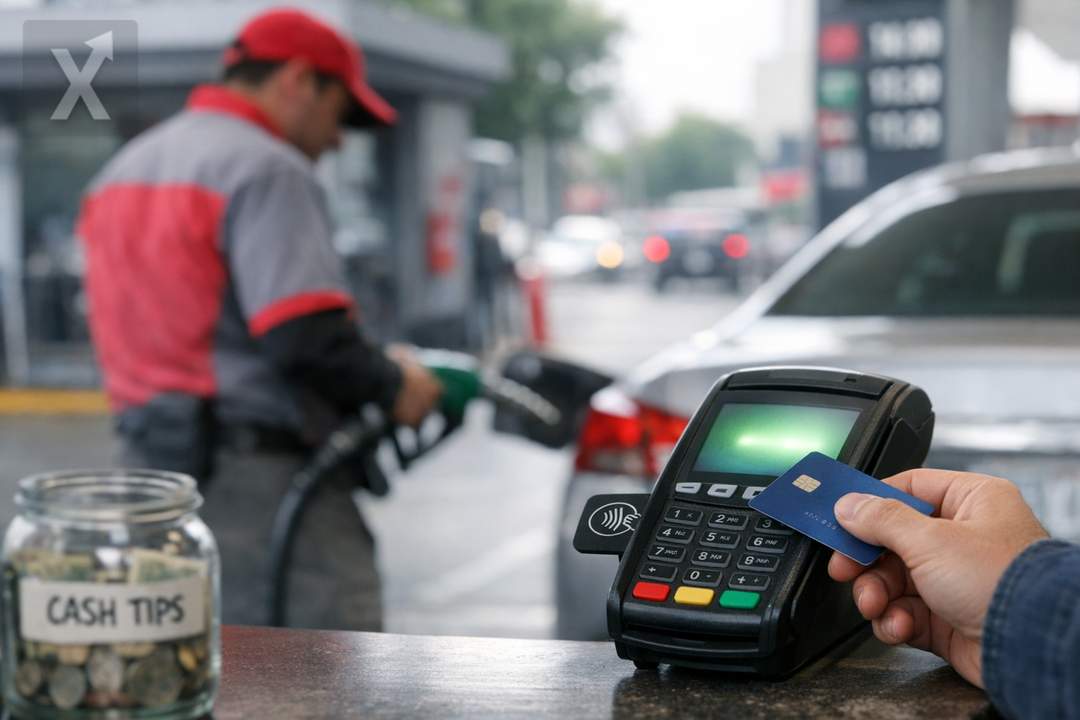
The temporary elimination of the interchange fee at gas stations aims to push digital payments, but it squeezes a key revenue stream for the financial system.
Paying by card at service stations is no longer a niche in Mexico. Data from the Bank of Mexico (Banxico) show that in 2025 there were 11,261.8 million credit and debit card payments, and 7% of those transactions took place at gas stations: 778.4 million transactions totaling 481,373.2 million pesos. Volume not only grew 10% versus 2024; it also surged compared with 2018, reflecting broader penetration of point-of-sale terminals, shifting habits, and the normalization of digital payments in everyday spending.
Against that expanding market backdrop, the Mexican Banking Association (ABM) agreed at the 89th Banking Convention to eliminate the “interchange fee” for card payments at gas stations. The measure—framed as temporary—is being pitched as an incentive for digitization and as support for the fuel retail sector amid international volatility that often feeds into energy prices. In parallel, the Ministry of Finance has indicated the regulatory framework needed to launch the scheme would be ready soon, though without specifying the duration, evaluation metrics, or oversight mechanisms.
In practice, the debate hits a sensitive point in the payments system: interchange is a meaningful revenue source for issuers (banks and some digital players) and a cost for merchants. Setting it to zero in a high-volume category—like fuel—can reshape commercial strategies, customer acquisition incentives, and especially the unit economics of business models that rely on transaction fees.
Who takes the hit—and what changes for consumers?
Legal and financial sector specialists warn that the impact will be concentrated among institutions more dependent on interchange revenue. For neobanks and digital issuers, where profitability is often built on large scale and thin margins, the reduction could be material. Estimates circulated around the Convention point to varying effects by institution, ranging from hundreds of millions of pesos for some digital players to billions for large banks. The market’s read is straightforward: if the scheme is extended, it could accelerate adjustments to rewards, cash-back, annual fees, promotional rates, or even the willingness to originate and manage certain card portfolios.
For end users, the implicit promise is that lower merchant fees could translate into lower prices or, at a minimum, less pressure to pass card-acceptance costs onto consumers. However, the pass-through isn’t automatic. In a market where retail fuel prices are shaped by international variables, logistics, station margins, and tax policy, the benefit may be diluted—or captured somewhere along the supply chain. That’s why, without transparency rules—such as aggregated reporting on interchange savings and how they show up in prices—the effect on consumers’ wallets remains uncertain.
There’s also a less visible social angle: at many gas stations, cash flow supports tips for attendants. A faster shift to digital payments—without alternatives like tip prompts on terminals or simple transfer options—could reduce workers’ supplemental income, even as formal payments rise. In a country with high labor informality, the payment method can have broader effects than the transaction cost alone.
The debate comes at a time when Mexico is pushing financial inclusion and payment digitization, yet still shows a structural preference for cash across large segments of the population. Banxico has promoted infrastructure and standards for the payments ecosystem; even so, acceptance costs for small merchants, connectivity, security, and financial education continue to determine how quickly spending shifts to electronic methods.
Looking ahead to the coming months, the fine print will matter most: whether zero interchange will be mandatory or voluntary, how long it will last, how operating costs will be offset, and what safeguards will prevent the adjustment from being repackaged into other fees. At the same time, banks and fintechs may redesign products and partnerships with gas station chains to preserve volume and market share without eroding margins, while regulators face the challenge of balancing competition, inclusion, and payments-system stability.
In short, eliminating interchange fees at gas stations accelerates a real trend: paying by card is already a core part of fuel purchases. The potential upside for merchants and digitization is tangible, but the hit to financial-sector revenue and the uncertainty around whether savings reach consumers point to an implementation marked by friction and adjustments.






