Banxico Defends a 6.5% Policy Rate Amid Persistent Inflation and an Uncertain Global Backdrop
The central bank believes the current rate level remains restrictive enough to steer inflation lower, while keeping an eye on external volatility.
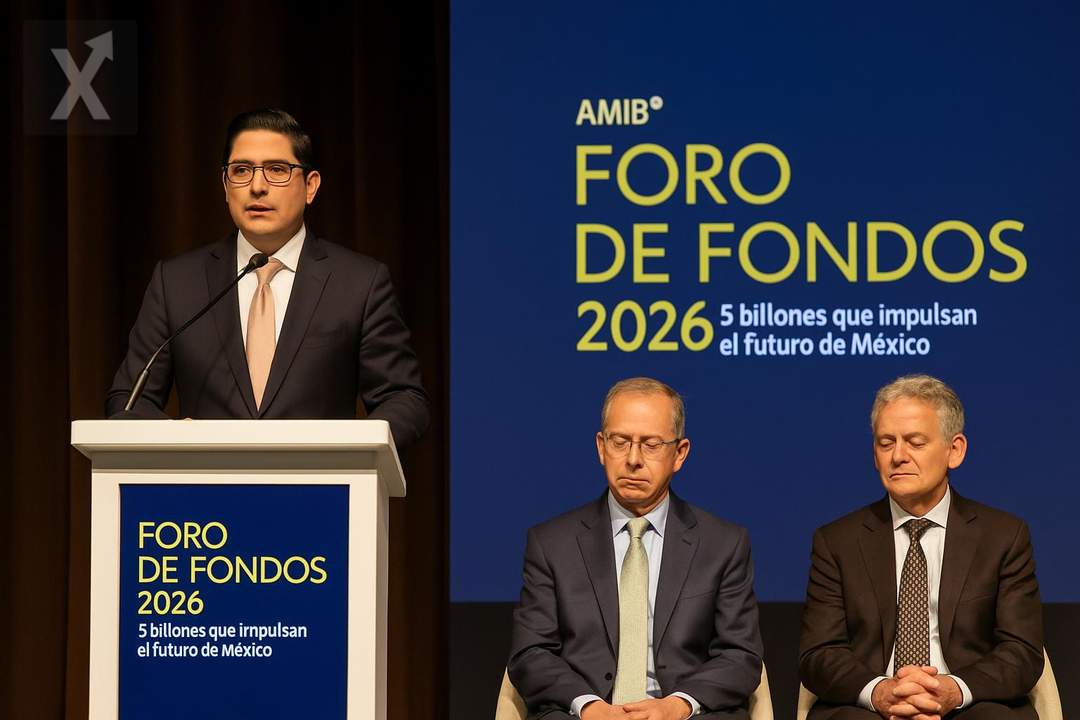
The Bank of Mexico (Banxico) says it is maintaining a monetary policy stance “with the appropriate degree of restriction” by holding its benchmark rate at 6.5%—at a time when disinflation is progressing, but still coexists with bouts of pressure in certain components and heightened international uncertainty. That was the message from Deputy Governor Omar Mejía Castelazo, who said the current rate level is consistent with the central bank’s primary objective: preserving the currency’s purchasing power.
The remarks come after the Governing Board cut the rate by 25 basis points to 6.5%, a decision Mejía supported on the grounds that the balance of inflation risks allows for gradual adjustments without abandoning a restrictive stance. In practical terms, Banxico is trying to avoid an early loosening of financial conditions while it assesses the inflation path, exchange-rate behavior, and how credit is flowing through to households and businesses.
In the background, Mexico faces a mixed picture: on one hand, an economy that often shows resilience thanks to its manufacturing integration with North America and investment tied to supply-chain relocation; on the other, potential pressures from supply shocks, geopolitical risks, and episodes of volatility in financial markets. In that environment, the central bank’s communication is aimed at anchoring expectations and maintaining conditions that help inflation converge to the target in an orderly way.
Capital Markets and Funds: The Bridge Between Stability and Higher Investment
Mejía emphasized that macroeconomic and financial stability is a necessary—but not sufficient—condition to raise the economy’s growth potential; the next step is translating it into more financing and productive investment. Under that logic, capital markets and investment funds become central tools for channeling savings into long-term projects, driving innovation, and boosting productivity—especially in a country where fixed investment still faces structural challenges such as infrastructure gaps, logistics costs, and regional disparities.
In particular, the deputy governor highlighted the role of funds in infrastructure projects and in instruments linked to ESG (environmental, social, and governance) criteria. The idea is that deeper financial markets—supported by risk management, a long-term horizon, and consistent standards—expand financing options for companies and governments and encourage sustainable projects that strengthen productive capacity. In Mexico’s case, this matters given persistent modernization needs in energy, transportation, water, and logistics, as well as growing demands for greater transparency and traceability in how resources are used.
Looking ahead, the debate won’t be only about the pace of rate adjustments, but also about the interaction between monetary policy, credit conditions, and investment momentum. If inflation continues to ease, Banxico could stick with a gradual, data-dependent approach; but any unexpected rebound in prices, a sharp peso depreciation, or a deterioration in expectations would require continued caution. At the same time, developing markets and funds focused on infrastructure and sustainability could help lift potential growth, as long as regulatory frameworks and projects with sound technical and financial viability are put in place.
In sum, Banxico argues that a 6.5% policy rate remains restrictive enough to address inflation risks in a volatile external environment, while the country looks to strengthen its financial markets to turn stability into long-term investment.