IMF raises Mexico’s 2026 growth forecast, but energy pressures increase risks

The institution expects a moderate rebound in Mexico, though higher oil prices and geopolitical uncertainty could slow momentum.
The International Monetary Fund (IMF) slightly improved its 2026 growth forecast for Mexico, estimating an expansion of 1.6%, up from the 1.5% projected at the start of the year. The revision comes amid a more challenging global backdrop, shaped by an expected rebound in energy prices and rising risk aversion in financial markets—factors that often translate into inflationary pressures and higher borrowing costs for emerging economies.
In its baseline scenario, the IMF says Mexico would move past the weak performance of 2025—when growth came in at 0.6%—and shift into a path of gradual recovery, with growth potentially reaching 2.2% in 2027. The projection assumes a partial normalization of financial conditions and a steady improvement in productive activity after a year weighed down by trade tensions and bouts of volatility tied to U.S. trade policy.
The backdrop is a slowdown in the global economy, which the IMF pegs at 3.1% for 2026. Even with an upward revision for Latin America and the Caribbean (2.3%), the institution warns that today’s shocks are not evenly distributed: net energy-importing countries tend to feel the impact of higher fuel costs more sharply, along with the pass-through into the prices of goods and services.
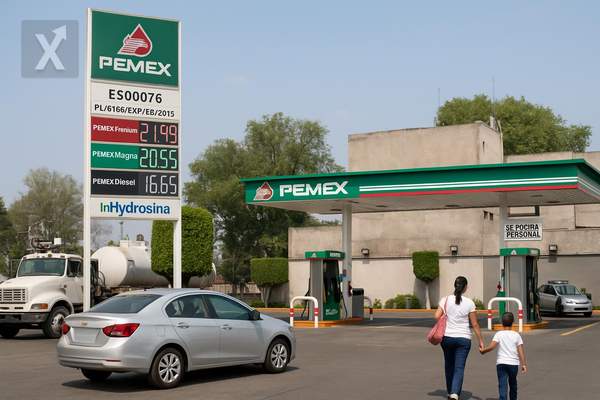
For Mexico, the balance is particularly sensitive. While the country produces crude oil, in practice it imports a significant share of refined fuels, and rising international prices can show up in logistics costs, rates, and pressures on supply chains. In addition, the fiscal room to cushion shocks through broad-based subsidies is often limited by consolidation needs and rigid spending, forcing policymakers to calibrate measures to avoid distortions and added pressure on public finances.
Costlier energy, inflation, and the monetary policy dilemma
The IMF expects energy prices to rise by about 19% in 2026, with oil up more than 21%. In Mexico, that kind of environment can complicate the decline in core inflation—the measure that best captures demand-driven pressures—if the impact on transportation, processed foods, and services becomes persistent. Under that scenario, the Bank of Mexico (Banxico) faces the challenge of balancing disinflation with the need to avoid choking off a still-fragile recovery, especially in credit-sensitive sectors such as durable goods consumption, housing, and private investment.
The financial channel matters too: when energy prices climb and uncertainty rises, markets tend to demand higher risk premia. That typically increases funding costs for companies and the government and can translate into weaker investment momentum. For Mexico—where fixed investment has posted gains but has also seen episodes of business caution—macroeconomic stability and clear regulatory signals become critical to sustaining productive projects.
Reliance on the U.S. and trade: the most decisive external variable
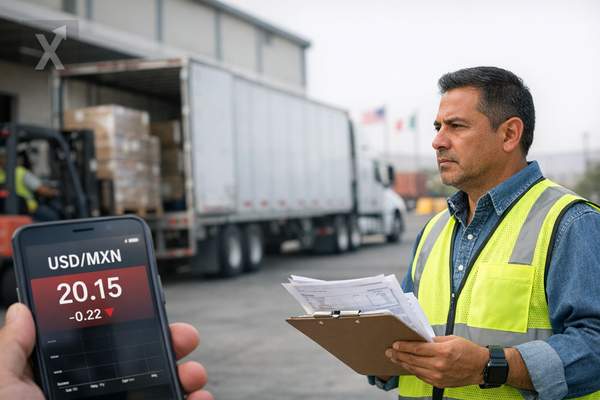
Mexico’s economy remains deeply integrated with the United States (U.S.) through manufacturing exports, automotive supply chains, and remittance flows. While that proximity can provide a cushion when U.S. demand remains solid, it also creates vulnerability when trade disputes intensify or tariff measures tighten. The IMF notes that Mexico went through a period of tension in 2025 due to tariffs and a more aggressive trade stance from Washington; an improvement in 2026 will depend, to a large extent, on cross-border trade and investment operating with less friction.
Domestically, performance in 2026 and 2027 will be shaped by the path of consumption (tied to employment and purchasing power), public and private investment, and the industry’s ability to seize opportunities from production relocation. However, a global environment of higher energy costs and more expensive financing can squeeze margins and delay expansion decisions, especially among mid-sized firms linked to supplier networks.
Overall, the IMF’s upgrade for Mexico points to a scenario of moderate recovery, but not without risks: the energy shock, financial volatility, and the trade relationship with the U.S. will remain the key determinants of the pace of growth. The takeaway for 2026 is progress, though conditioned on inflation continuing to ease and external factors not deteriorating further.