Tomato and Other Vegetable Prices Fall: Temporary Relief for Inflation and Household Budgets
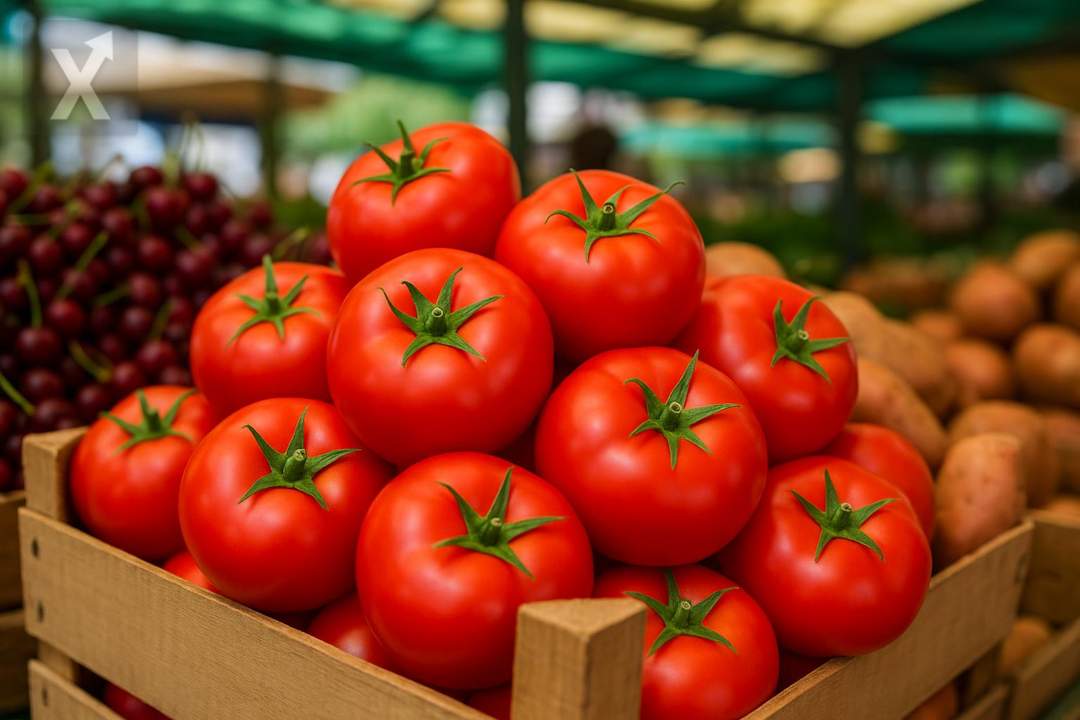
Lower tomato and fresh chili prices in June helped temper inflation, even as household budgets remain squeezed by services and processed foods.
The price of tomatoes—one of the most sensitive items on Mexican households’ tables—posted a sharp drop in June that has begun to show up in day-to-day spending. According to monitoring by the Federal Consumer Protection Agency (Profeco), the national average price per kilogram fell from 49.11 pesos to 28.74 pesos between the third week of May and the third week of June, a 41.4% decline.
The adjustment comes after months of high volatility in fruits and vegetables, a category that often swings sharply due to seasonal factors, weather conditions, logistics costs, and changes in regional supply. In prior weeks, price readings in some cities had shown elevated spikes, reigniting the debate over intermediaries, distribution, and storage capacity throughout the agri-food supply chain.
Profeco attributed the decrease in part to the “National Agreement to Organize Tomato Production, Supply, Marketing, and a Fair Price,” signed in early June between the federal government and industry representatives. The goal, according to the agency, is to improve coordination between producers and marketers to avoid abrupt increases and support a more stable supply. Even with these kinds of agreements, specialists often note that the path of agricultural prices depends mainly on harvest seasonality, water availability, and transportation-cost dynamics.
The tomato correction came alongside declines in other staples: fresh chili prices fell about 43.8% over the same period, while bananas and eggs also posted decreases, though more moderate. For consumers, these reductions can mean immediate relief in weekly spending; for the price index, they typically translate into lower short-term pressure.
Impact on inflation: fruits and vegetables drop, but services remain firm
In the first half of June, annual inflation came in at 3.55%, with a meaningful contribution from lower agricultural prices, especially fruits and vegetables. Items such as tomatoes, chiles, and eggs were among the biggest downward drivers of the index—behavior consistent with episodes in which supply normalizes after periods of price increases. Still, the inflation picture isn’t determined only by the farm sector: the services component has remained elevated, posting increases above the overall average, reflecting pressure from labor costs, demand in certain segments, and lagged adjustments in administered or market-set prices. Meanwhile, processed foods, beverages, and tobacco have shown year-over-year gains that tend to be more persistent, given their link to inputs, energy, logistics, and commercial strategies.
For monetary policy, these moves matter: a steep decline in fruits and vegetables can help cool the headline figure, but it doesn’t necessarily change the trend in core inflation—the measure the Bank of Mexico typically watches more closely to assess how persistent price pressures are. In other words, this “breather” in agricultural markets can be meaningful for consumers, but it’s not always enough to declare victory on inflation.
On the consumption side, cheaper tomatoes can also influence what households put in their shopping basket: when fruits and vegetables get more expensive, some families switch to processed alternatives or cut back on perishables. When prices fall, that effect partially reverses, supporting both spending on fresh foods and households’ perception of the inflation they face—especially among lower-income families.
Looking ahead to the coming weeks, the main risk to sustained low prices is the category’s inherent volatility: heat waves, heavy rains, pests, logistics disruptions, or fuel price increases can quickly affect supply and distribution. On top of that, even if prices improve at the farm level or at wholesale produce markets, how much reaches the end consumer depends on retail margins, spoilage costs, and competitive conditions in each local market.
For those trying to stretch their budget, Profeco continues to offer a store-level price-tracking tool that’s useful for comparing supermarkets, public markets, and big-box grocery chains, where differences can be wide even within the same city. That dispersion matters: the national average may fall, but consumers still face very different local realities.
In sum, the sharp drop in tomatoes and other fresh products provided visible relief for household budgets and helped contain inflation in June, though the overall balance remains shaped by the resilience of services and processed foods, which tend to move with greater inertia.