Mexico and Cuba: small trade, a large surplus, and an energy-laden relationship
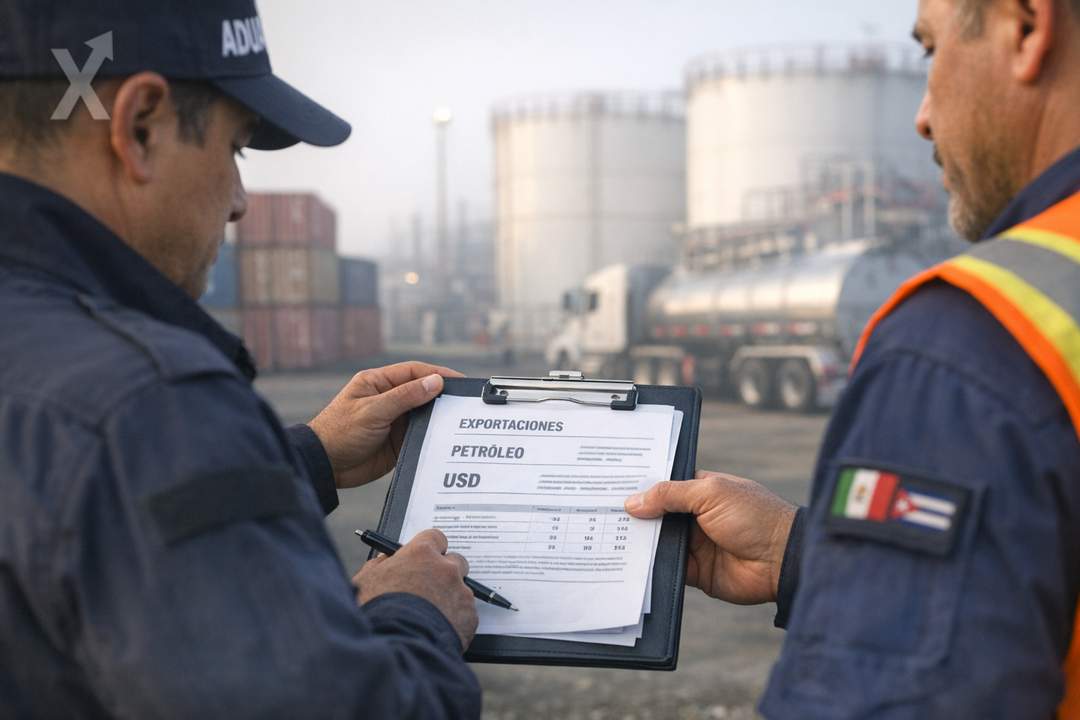
Bilateral trade is marginal for Mexico, but the oil component sustains an economic tie with political implications.
Trade between Mexico and Cuba remains active, but it is still small relative to Mexico’s overall foreign trade. Even so, the bilateral relationship leaves a clear mark: Mexico sells far more than it buys. In 2025, Mexican exports to the island totaled $758 million (USD), while imports came in at just $14 million, for a $744 million surplus, according to figures from the Bank of Mexico (Banxico).
In relative terms, Cuba is a low-weight partner. Its share of Mexico’s total exports stood at about 0.12%, and its share of imports at only 0.0022%, according to statistical records published by official trade platforms. These percentages show that, for the Mexican economy, the link is not a major driver of aggregate growth or employment; however, it does help explain certain export niches and—above all—the energy dimension of the exchange.
The persistent surplus also reflects the productive structure and the limited integration of value chains between the two countries. While Mexico operates as a diversified exporter to North America and other destinations—with the auto sector, electrical equipment, and machinery as key pillars—trade with Cuba is concentrated in fewer categories, with less complex manufacturing content and lower logistics density.
The trade basket: energy out front and very limited Mexican purchases
The main driver of Mexican exports to Cuba in 2025 was energy minerals: fuels, oils, and petroleum, with an approximate value of $609 million USD. These shipments were complemented by agri-food products and specific raw materials—such as grains, coffee, seeds, and vegetables—along with base metals and some basic manufactured goods. On the other side, what Mexico buys from the island is minimal and concentrated in food-industry products worth around $7 million USD, with cigars standing out as the most visible item, valued at more than $4 million.
This pattern points to a relationship that is more transactional than industrial: there is no meaningful integration of suppliers, productive investment, or shared value chains, as is the case with Mexico’s main trading partners. In practice, the exchange is sustained by targeted supply operations, product availability, and specific trade agreements, rather than by sustained productive complementarity.
For Mexico—which in recent years has strengthened its role as a manufacturing platform tied to North America—the Cuban case contrasts with the trend of nearshoring and supply-chain relocation, where the country aims to attract investment, expand higher value-added exports, and improve infrastructure. Cuba, due to its scale and integration conditions, falls outside that logic and remains a small market.
Beyond size, the energy dimension raises the sensitivity of the relationship. In 2025, a significant part of the exchange was tied to petroleum exports under trade agreements, which increases the political weight of the trade even if total volume is low. In an environment where Mexico has sought to balance foreign-policy goals with fiscal pressures and domestic needs—for example, investment in refining, fuel availability, and discipline in public finances—energy shipments to a small partner can become a subject of debate in terms of timing, cost, and priorities.
In the macroeconomic context, the relationship is also viewed through the lens of external stability. Mexico typically shows a high dependence on the economic cycle of the United States and on investment and trade flows with that region, so an exchange like the one with Cuba does not move the big aggregates. Still, it matters in the narrative of trade diversification and in how the country manages international relationships with economic implications.
Looking ahead, the path of Mexico–Cuba trade will depend less on Cuban demand overall—limited by payment capacity and internal constraints—and more on specific decisions around energy, logistics, and supply agreements. If Mexico prioritizes an export strategy focused on higher value-added products and on markets with scale, Cuba will likely remain a marginal destination; if, instead, the energy component continues, trade could hold at similar levels, highly concentrated in a handful of products.
In sum, bilateral trade is small relative to the size of the Mexican economy, but the large surplus and the central role of oil make it relevant as a gauge of priorities: what gets exported, for what objectives, and under what economic and political considerations.






