Openbank Bets on Digital Banking Adoption in Mexico, Backed by Santander
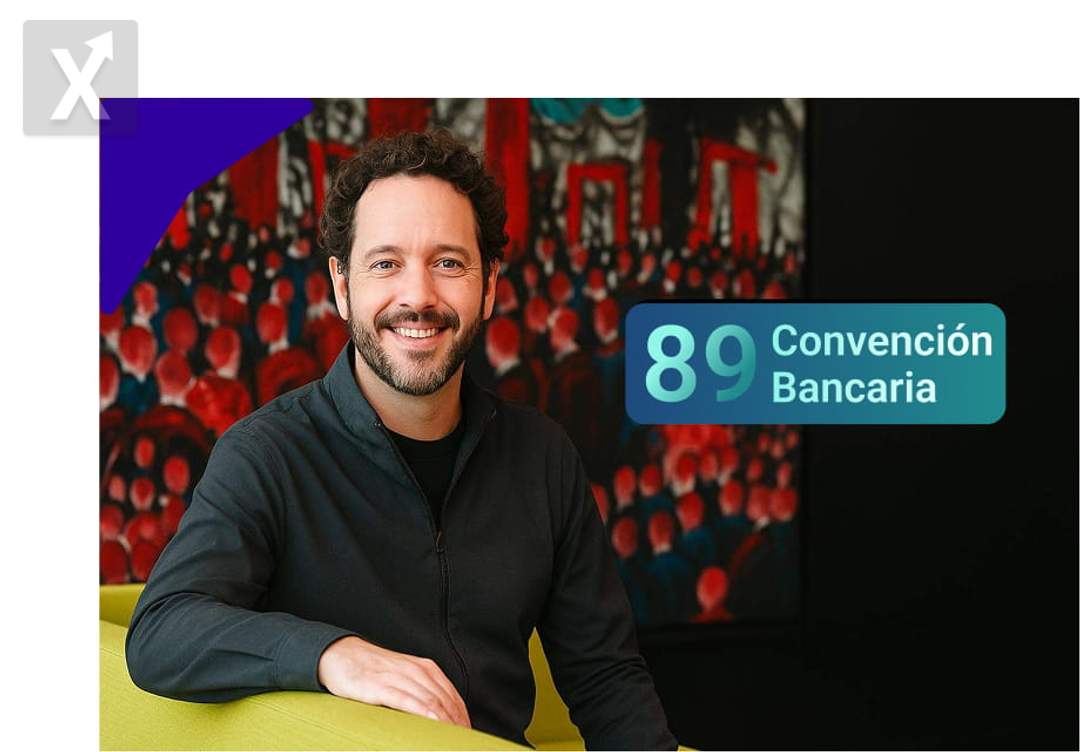
The neobank aims to cement its position with a small set of products and a user-experience focus, while financial inclusion remains a structural opportunity.
In Mexico’s increasingly competitive digital banking market, Openbank says its main differentiator versus other neobanks is that it operates with the corporate backing of Banco Santander. That support—according to management—allows it to pursue a long-term strategy without relying on immediate results to justify its expansion. The message comes as digital institutions fine-tune business models to grow without hurting profitability, especially among customer segments that are still not fully integrated into the financial system.
Juan José Galnares, CEO of Openbank in Mexico, says the institution has already surpassed half a million customers and that its priority is to strengthen the user experience in everyday products such as debit and credit cards, rather than spreading itself thin across a broad portfolio. The focus, he adds, is to capture a share of the market that still lacks financial products or uses them only to a limited extent—an ongoing gap that Mexico’s 2024 National Survey on Financial Inclusion (ENIF) continues to highlight as a persistent challenge.
The economic appeal is clear: Mexico still has significant gaps in banking penetration and financial depth compared with other similar economies, despite progress in digital payments, the spread of finance apps, and the growth of e-commerce. For digital banks, that landscape offers room to scale; for the system as a whole, it means the potential to expand formal saving, access to credit, and households’ financial resilience—though it also comes with challenges around financial education, cybersecurity, and user trust.
Openbank operates as an independent bank with its own corporate governance, even though it shares the brand of a global group. In practice, the backing of a traditional player can translate into greater funding capacity, more robust risk controls, and a longer runway for technology investment; at the same time, it must compete in an environment where customers compare yields, fees, ease of use, and service quality in real time.
Based on figures reported to the regulator, Openbank has extended credit through card products totaling hundreds of millions of pesos, while its investment phase shows up as short-term accounting losses—a common pattern in digital models that prioritize customer acquisition and the buildout of technological infrastructure. The challenge, sector analysts agree, is to prove that the user base translates into recurring transactional activity and sustainable revenue, without increasing delinquency or operating costs.
Profitability, Regulation, and the “Cost” of Growing in Digital Banking
The question of when a neobank reaches break-even becomes more relevant as the ecosystem matures. On one hand, Mexico’s regulatory framework—with oversight by the National Banking and Securities Commission (CNBV) and Banco de México guidelines on areas such as payment systems—raises operating standards for resilience and fraud prevention, which often increases fixed costs. On the other, the macroeconomic environment also matters: interest rates that remain high by historical standards make funding more expensive and tend to temper appetite for credit, even as they support the offering of yield-bearing accounts. In that context, profitability depends less on “launching lots of products” and more on achieving efficient scale, tight risk management, and heavy customer engagement with the platform.
Openbank’s stated strategy is to keep a streamlined product catalog and go deeper on key offerings, ruling out—for now—lines such as mortgages or auto loans. The bet aligns with a clear trend in the sector: prioritizing high-frequency products—accounts and cards—to build relationships, transactional data, and habits before moving into longer-term, more complex credit products. At the same time, competition is intensifying around perks, rewards, yields, and digital experiences, which squeezes margins and forces continuous investment in technology.
Looking ahead, the performance of digital banks will also be tied to external variables: the momentum of formal employment, inflation stability, the evolution of consumption, and user trust in digital channels. If the economy sustains moderate growth and the financial system remains stable, the opportunity to bring more people into formal saving and payment methods will remain open; if the cycle weakens or fraud incidents rise, the cost of acquiring and retaining customers could increase.
In short, Openbank is looking to gain ground in Mexico by leaning on Santander’s backing and a long-term strategy centered on essential products and user experience. The market offers meaningful potential because of financial inclusion gaps, but the real test will be converting customer volume into recurring usage and sustainable results under increasingly demanding regulatory and risk standards.






