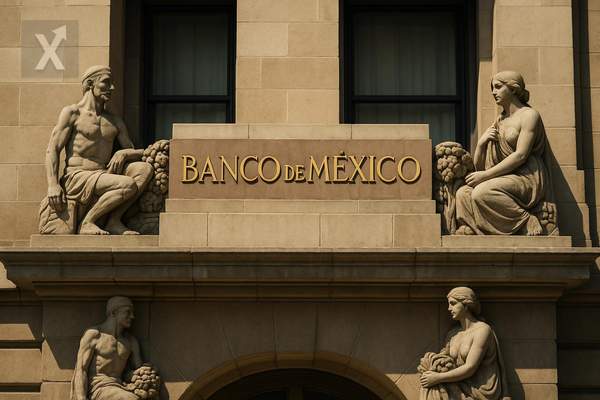
Agustín Carstens Joins UBS: A Sign of the Weight of Mexican Talent in Global Banking
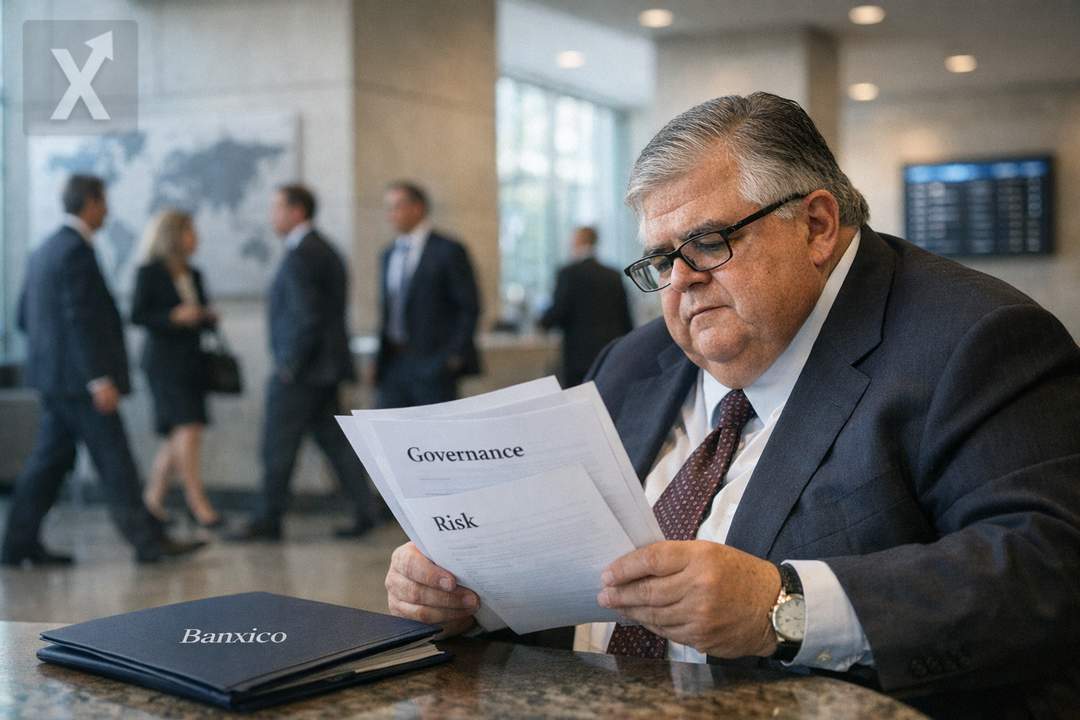
Agustín Carstens’ move to UBS underscores the value of Mexican expertise in financial stability at a time of challenges for the economy and markets.
Agustín Carstens, one of Mexico’s most seasoned economists across financial bodies and institutions, has joined the UBS Group AG board, serving on committees tied to corporate culture, responsibility, governance, and nominations. The move comes months after he stepped down as General Manager of the Bank for International Settlements (BIS), an institution that serves as a key forum for cooperation among central banks and for discussions on international prudential standards.
The appointment is significant. At a time when global banks are looking to strengthen internal controls, risk management, and governance—particularly after recent bouts of financial volatility and regulatory reshuffling across jurisdictions—leaders with backgrounds in monetary policy, financial stability, and international coordination are increasingly in demand.
Carstens built his career at the intersection of public service and multilateral institutions. In Mexico, he held key roles such as Finance Minister and Governor of the Bank of Mexico (Banxico). Globally, he served as Deputy Managing Director of the International Monetary Fund (IMF) and as Chair of the International Monetary and Financial Committee. At the BIS, he repeatedly emphasized the importance of preserving trust in the financial system, especially as technological innovation accelerates changes in payments, intermediation, and risk management.
UBS, for its part, is now Switzerland’s largest universal bank and a dominant player in wealth management and investment banking. Following its acquisition of Credit Suisse, the group has faced even greater scrutiny around operational integration, internal controls, capital management, and regulatory compliance. In that context, bringing Carstens on board aligns with the need to strengthen credibility, corporate culture, and decision-making at a systemically important institution.
What does it mean for Mexico when a former Banxico governor joins a Swiss financial giant?
For Mexico, having a former Banxico governor at a top-tier financial group is a reminder of the human capital the country has placed in influential positions within the international financial system. Beyond symbolism, moves like this often function as informal bridges for shared understanding of regulatory standards, best practices in risk management, and global finance trends—insights that tend to filter into conversations across Mexico’s financial sector, from banking and markets to supervision and compliance.
Mexico’s economy reaches this moment with a mix of strengths and challenges: a banking sector that is relatively well-capitalized and well-regulated; a monetary policy stance aimed at containing inflation after recent shocks; and deeper manufacturing integration with North America driven by the relocation of supply chains. At the same time, risks remain tied to external volatility, the exchange rate’s sensitivity to episodes of risk-off sentiment, and the domestic challenge of boosting investment and productivity. In that landscape, the discussion of financial stability—a central theme in Carstens’ career—remains structurally important.
Governance, trust, and stability: the core of the financial debate
Carstens’ international experience matters at a moment when financial stability is tightly linked to trust: trust in capital quality, liquidity, accounting transparency, and risk management. After years of rapid change—from digitization and new tech-driven entrants to tougher regulatory demands—boards face the challenge of sustaining a strong control culture without stifling innovation. For a global bank like UBS, balancing growth with prudence is essential, and that’s where leaders with central bank experience often bring a resilience-focused perspective.
From a Mexican standpoint, the trust debate also connects to how markets function: lower risk premia and more accessible financing depend in part on investors seeing strong institutions, clear rules, and a predictable macroeconomic framework. Under that logic, the international conversation around governance and risk-management best practices isn’t a distant issue; it influences the cost of capital, appetite for emerging-market assets, and investment flows into economies like Mexico’s.
In perspective, Carstens’ move to UBS reflects how experience in monetary policy and financial stability has become a valuable asset for global banking, even as Mexico continues to navigate an environment of productive opportunities and external risks. The appointment doesn’t, by itself, change the macroeconomic outlook—but it does underscore the growing importance of governance and trust as pillars of the financial system.