Political pressure on the Fed puts Mexico back in focus: U.S. rates and their effects on the peso, inflation, and financing
Fresh criticism from U.S. President Donald Trump of the Federal Reserve (the Fed)—including a public call to “substantially” lower interest rates—has once again put on markets’ radar the delicate balance between politics and central-bank independence. Although this episode is unfolding north of the border, its implications are felt immediately in Mexico through the exchange rate, borrowing costs, and financial conditions for businesses and households.
The Fed decided to keep its policy rate unchanged in a 3.50% to 3.75% range, arguing that inflation “remains somewhat elevated.” That message contrasts with the political narrative that rising prices are no longer a risk, and it comes at a time when the U.S. government has intensified its attacks on the institution and its chair, Jerome Powell. These kinds of tensions tend to increase investors’ sensitivity to any sign of interference, which can translate into bouts of higher global volatility.
For Mexico, the main transmission runs through the interest-rate differential and risk appetite. If the market concludes the Fed could cut sooner or more aggressively, flows into emerging-market assets usually improve; but if attention shifts to institutional uncertainty, the effect can be the opposite. In practice, both channels show up in moves in the FX market and in the way bonds, equities, and hedges are repriced.
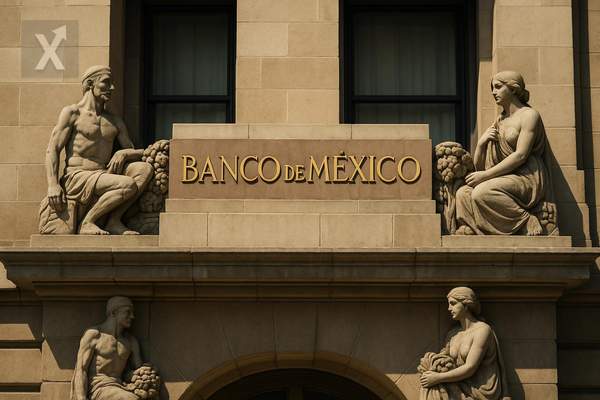
On the domestic front, the debate matters because of the path of monetary policy at Banxico. With Mexico’s economy showing resilience but signs of slowing in some sectors—and with inflation easing from its peaks—market participants are watching closely how much room there is to adjust the policy rate without reigniting price pressures. A faster easing cycle in the U.S. could create room to loosen financial conditions in Mexico; by contrast, a more restrictive Fed for longer tends to “anchor” the global cost of money and limits how quickly Banxico can ease without affecting the exchange rate.
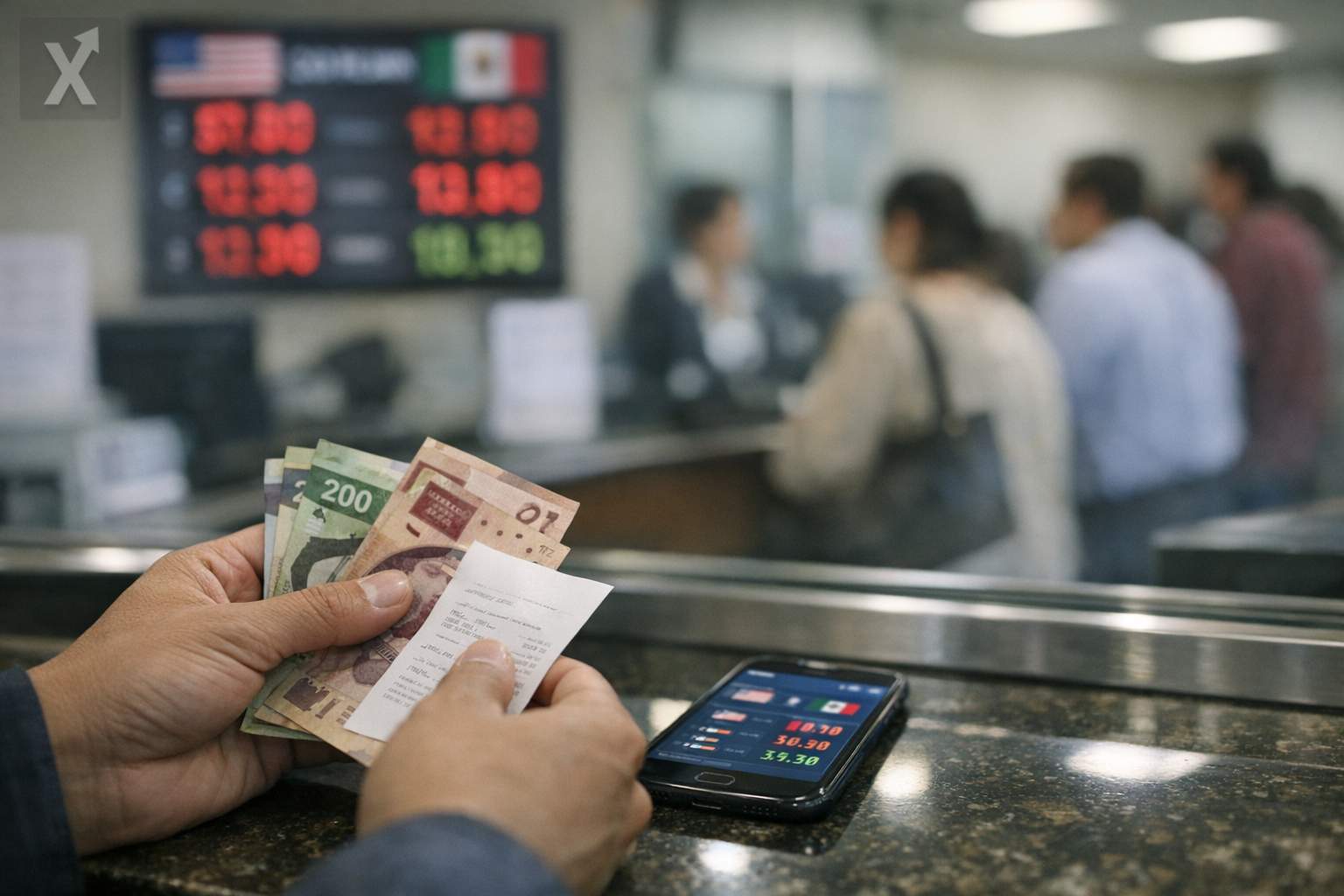
The currency is a key barometer: a stronger peso usually helps contain imported inflation (energy, inputs, and finished goods), while a sustained depreciation complicates the outlook for prices and expectations. At the same time, for companies with foreign-currency liabilities or supply chains integrated with the U.S., the behavior of the USD affects margins, planning, and investment decisions. This is especially relevant for export industries and for firms that finance inventories or machinery with credit tied to international rates.
There are also fiscal and debt implications: when global rates fall, refinancing costs can improve and pressure on the local yield curve eases; when rates rise or monetary tightness persists, issuers—including the public sector—face tougher conditions to place long-dated debt. In an environment where Mexico is trying to maintain macro stability and attract productive investment, the implicit coordination between signals from the Fed and Banxico’s response becomes crucial to balancing growth and disinflation.
Looking ahead, the market will keep reading two things: the trajectory of U.S. inflation and the institutional tone around the Fed. For Mexico, the most favorable scenario would be gradual U.S. rate cuts alongside easing inflation, allowing for orderly adjustments in local rates and a less volatile exchange rate. The more challenging scenario would combine doubts about the Fed’s independence with renewed inflation pressures, increasing risk aversion and putting pressure on emerging-market currencies.
In short, even though the political fight is being waged in Washington, the relevant signal for Mexico is how expectations for rates and institutional credibility are being reshaped: that will drive the peso’s performance, the potential pace of Banxico cuts, and the cost of credit for businesses and families in the coming months.