Iztapalapa, the Urban Thermometer of Mexico City’s Economy: Jobs, Income, Education, and Foreign Trade
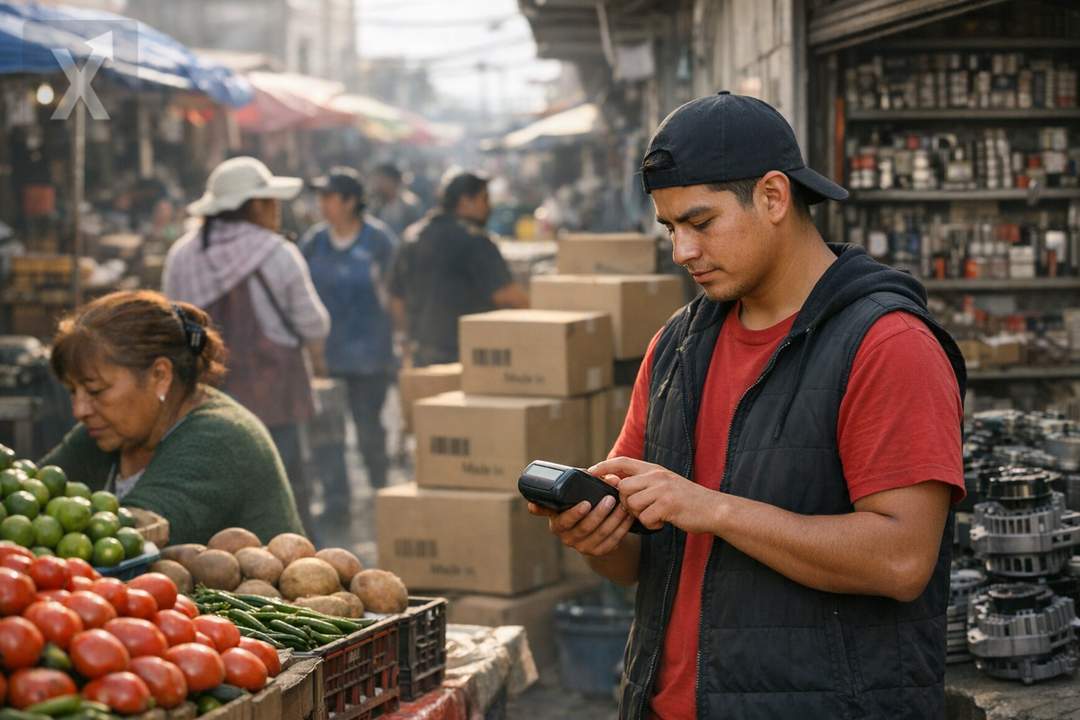
Iztapalapa concentrates a young, service-oriented workforce, with moderate incomes and productivity challenges in one of the country’s most populated areas.
Iztapalapa isn’t just the most populous borough in Mexico City: because of its size and day-to-day dynamics, it operates like an “economy within the economy” in the capital. With 1.8 million residents, its internal market—consumption, work, transportation, services, and microbusinesses—offers clear signals about how Mexico’s urban economy is behaving: heavy reliance on retail and services, pressure on labor income, and an educational base that is improving but still faces gaps in quality, job placement, and social mobility.
Available data show that about 770,827 people are employed in the borough, a figure that underscores its weight in the metropolitan labor market. In practice, what happens to employment, wages, and access to opportunities in Iztapalapa affects demand for services, informality, and social stability in a key part of the Valley of Mexico.
The occupational structure confirms a typical pattern in dense urban areas: the highest concentration of jobs is in retail and services, with more than 131,000 people working in stores, markets, and a wide range of businesses. Industry shows up as a relevant but secondary component, with around 70,707 jobs, while the primary sector is essentially marginal. This mix points to a long-term challenge: raising productivity in activities that tend to generate thin margins and limited wages, especially among microbusinesses.
The demographic factor also explains part of the economic pressure: a large young population, with hundreds of thousands of people ages 15 to 29, increases demand for formal jobs, training, and access to public services. In a country where economic growth has been moderate and formal job creation tends to concentrate in certain industries and regions, densely populated boroughs need local development policies to keep employment from sliding into more precarious conditions.
In terms of income, the reported average for an employed person is around 9,348 pesos per month. That figure helps explain why, even with a job, many people still struggle to make ends meet once housing, transportation, food, and education costs are added up in an expensive metropolis. In addition, the fact that a significant share of the population faces poverty—including extreme poverty—points to a structural problem: employment alone doesn’t guarantee well-being if productivity and wages don’t keep pace with the cost of living.
The Productivity Dilemma: Lots of Retail, Little Room to Raise Incomes
The concentration of work in retail and services usually implies a strong presence of microbusinesses and self-employment—segments where productivity is low and access to credit, technology, and training is limited. At the macro level, Mexico has faced the challenge of boosting total productivity for decades; locally, that translates into businesses with high turnover, intense competition, and little room to pay higher wages. In Iztapalapa, pushing retail digitization, professionalizing supply chains, improving public safety, and strengthening technical training could have a bigger impact on household income than a strategy focused solely on opening more points of sale.
The education profile adds nuance to the picture. In the borough, a meaningful share of the population has completed middle school or high school, and some already hold a bachelor’s degree. Fields of study show specialization patterns: women are more represented in health sciences and men in engineering, manufacturing, and construction, while business administration, business, law, and psychology also stand out. In technical education, areas such as programming, computer support and maintenance, and accounting suggest demand for practical, job-ready skills—with the potential to connect young people to more productive jobs if there are strong links to employers and clear certification pathways.
However, the bridge between education and employment isn’t always automatic. Mexico’s economy has been changing alongside trends such as supply-chain relocation (nearshoring), which opens opportunities in advanced manufacturing, logistics, information technology, and specialized services. The challenge for densely populated areas is turning that trend into nearby, formal, well-paying jobs through infrastructure, connectivity, security, and training programs aligned with companies’ actual demand.
A less visible but crucial component is its interaction with international trade. The borough posts exports of $917 million in 2024 and imports of $4.002 billion, resulting in a significant trade deficit. The pattern suggests local economic activity participates in productive chains—for example, auto parts and electrical components—but depends heavily on imported inputs. Export destinations are led by the United States, while sourcing is led by China, reflecting how Mexico is integrated into global chains where assembly, distribution, and consumption coexist with technological and component dependence.
This snapshot highlights clear opportunities: strengthening local capabilities to increase domestic content, promoting more specialized suppliers, and leveraging a young human-capital base. For an urban economy like Iztapalapa, moving toward higher value added means attracting investment in professional services, information technology, industrial repair and maintenance, light manufacturing, and last-mile logistics—along with improving the business environment for the small retailers that currently support a large share of employment.
In perspective, Iztapalapa captures key tensions facing the country: mostly service-sector employment, incomes that don’t always go far enough, and an economy that’s connected abroad but imbalanced. If technical education, investment, and productivity policies are aligned, the borough can shift from being a large consumer market to establishing itself as an urban engine with better wages and greater formality.






