WTO ruling against U.S. green subsidies reignites the trade dispute with China and puts pressure on North America’s industrial policy

The World Trade Organization (WTO) sided with China in a dispute over public support for renewable energy in the United States, concluding that certain incentives tied to the Inflation Reduction Act (IRA) were “incompatible” with multilateral commitments. The panel recommended that Washington withdraw those benefits before October 1, 2026—a decision Beijing welcomed and the Office of the U.S. Trade Representative (USTR) called “absurd,” deepening the clash over how to regulate subsidies in a global economy shaped by geopolitical tensions and technological competition.
China filed the case in March 2024, arguing that tax credits and subsidies for clean energy favored production located in U.S. territory and excluded inputs or components from China, which—from its perspective—distorts competition. The panel did not rule on subsidies for clean vehicles after that portion was withdrawn following policy changes in 2025; still, the ruling’s core message is that origin-based “green” incentives can sit on the edge of trade rules.
Beyond the legal dispute, the episode once again highlights an institutional fracture: the WTO’s Appellate Body has remained paralyzed since 2019 due to the U.S. blockage of judge appointments. In practice, this limits the multilateral system’s ability to close disputes with final, binding rulings, opening room for unilateral responses, retaliation, or political negotiations on a case-by-case basis. For economies highly integrated into North America, like Mexico’s, that environment raises regulatory uncertainty for value chains tied to the energy transition.
In Mexico, the potential impact shows up through two channels. The first is the “nearshoring” dynamic: companies looking to move production closer to the U.S. market typically weigh tax incentives and regulatory certainty. If part of the U.S. green support package faces international pressure or domestic adjustments heading into 2026, some investments could reshuffle their timelines or their location within North America, with implications for industrial corridors in the Bajío, the northern border region, and automotive and auto-parts clusters. The second channel is trade: a tougher tone between Washington and Beijing often translates into more import controls, tighter rules of origin, and greater scrutiny of components, which can raise compliance costs for Mexican industries embedded in global supply chains.
Timing matters, too. Mexico heads into 2026 with structural challenges that shape its ability to seize opportunities: energy availability and costs, infrastructure, water constraints in industrial regions, logistics security, and regulatory quality. The transition toward manufacturing linked to clean energy—batteries, electrical components, energy efficiency—depends on clear public-policy signals and competitively priced access to electricity. If North America seeks to shield “green” supply chains from China, Mexico can benefit from proximity and trade agreements, but it will also face higher demands for traceability, regional content, and environmental compliance.
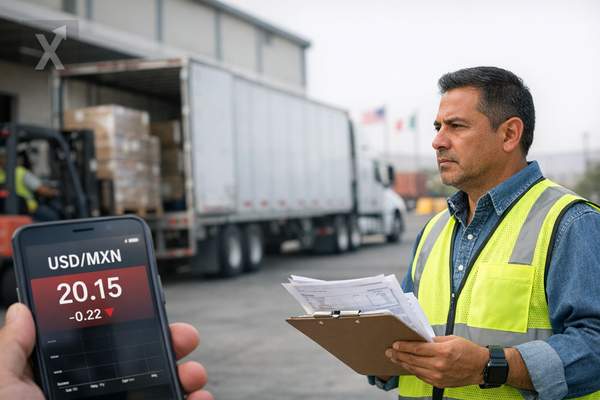
On the financial side, episodes of trade friction often quickly feed into expectations for growth and investment. Rising uncertainty in international trade can shift flows toward safe-haven assets and put pressure on exchange rates; for Mexico, that combines with domestic factors such as inflation, interest rates, and perceptions of sovereign risk. In that context, importing and exporting firms tend to strengthen hedging strategies and adjust costs in response to volatility in the foreign-exchange market, especially when news affects sectors heavily exposed to international trade.
The WTO ruling also raises a deeper question for the region: how to design industrial and climate policy without clashing with trade rules—or hollowing out the multilateral system. The answer isn’t straightforward, because competition for advanced manufacturing and clean technologies has become an economic-security issue. In practice, both the U.S. and China have used public support—explicit or implicit—to develop strategic sectors; the difference lies in the legal framework and the political room to sustain it.
For Mexico, the most relevant scenario isn’t only whether Washington adjusts specific incentives, but whether the dispute accelerates a broader regionalization strategy: shorter supply chains, deeper integration within North America, and stricter filters on inputs from outside the region. That would favor Mexican plants already in place and new projects alike, but it would also raise the bar on compliance and on the capacity to build local supplier networks. The challenge will be turning the moment into long-term productive investment, not just a temporary relocation.
In sum, the WTO decision in China’s favor opens a new chapter in the global debate over green subsidies and confirms that trade will remain deeply intertwined with geopolitics. For Mexico, the episode may create opportunities through regional integration, but also more requirements and more volatility for companies plugged into export supply chains—especially in sectors tied to energy and advanced manufacturing.