U.S. Court Blocks Trump’s Bid to Delay Tariff-Refund Litigation; Mexico Gauges the Impact on Trade and Investment
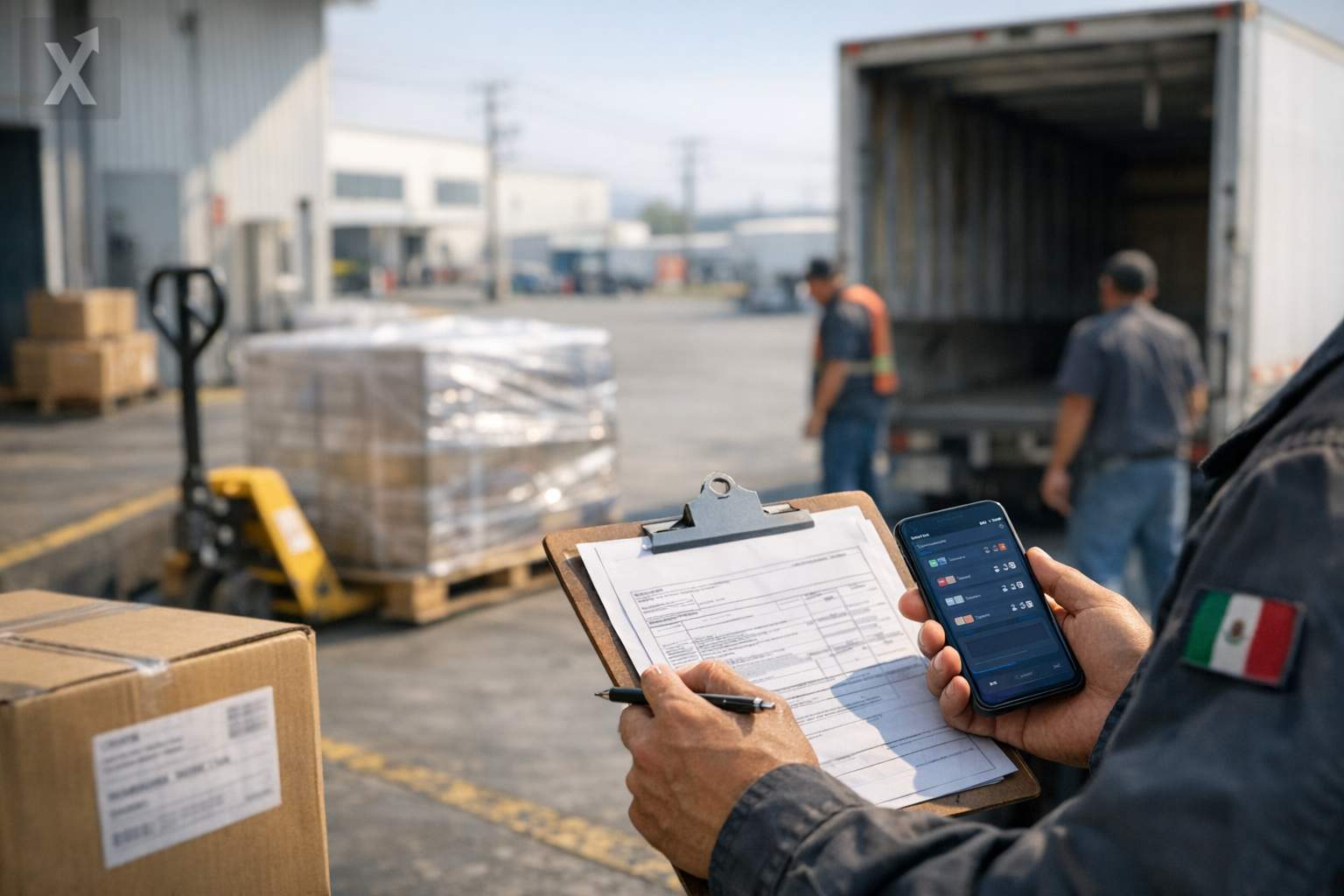
A U.S. judicial refusal to slow tariff-related lawsuits reignites trade uncertainty and forces Mexico to recalibrate export and investment expectations.
A federal appeals court in the United States rejected former President Donald Trump’s request to postpone—by up to four months—legal proceedings tied to refunds of money collected by the federal government in the form of tariffs. The decision keeps the litigation on track following an earlier setback for the Republican’s trade policy, which opened the door for companies to seek refunds for duties paid over the past year.
The case carries implications well beyond Washington. For Mexico—the U.S.’s top trading partner and one of the economies most exposed to shifts in trade rules—this episode puts the risk of regulatory volatility and the administrative costs associated with unilateral trade measures back in the spotlight. While a significant share of bilateral trade takes place under the USMCA, recent experience shows that tariff or quasi-tariff tensions can still emerge through executive actions, sector-specific disputes, or regulatory interpretations.
According to the case report, the U.S. government may have collected more than $130 billion in these charges in less than a year. The scale helps explain why the litigation has become a major front for importing companies and for supply chains integrated across North America. For Mexico—whose export sectors rely on steady flows to the U.S. market, particularly in manufacturing, auto parts, electronics, and agribusiness—the continuation of the legal process adds another layer of uncertainty around customs costs and processing times, as well as inventory and contract planning.
In markets, tariff issues tend to show up in investment expectations and risk perception. Periods of heightened trade confrontation often lead to greater corporate caution, even as nearshoring has sustained interest in setting up or expanding operations in Mexico. Locally, however, the assessment is more nuanced: companies weigh not only cost advantages and proximity, but also the stability of the trade framework and the likelihood that new measures could raise input costs or disrupt cross-border flows.
Implications for the peso, inflation, and Banxico’s strategy
For the Mexican economy, trade uncertainty with the U.S. can transmit through several channels. In foreign exchange, risk sentiment typically influences demand for peso-denominated assets and exchange-rate volatility; if trade frictions escalate, markets may demand a higher premium to maintain exposure to Mexico, especially during periods of elevated global sensitivity. On prices, tariffs and logistical disruptions can push up the cost of imports and intermediate components, which can complicate the disinflation process—or at least make it less linear. In this context, the Bank of Mexico tends to closely monitor external shocks that affect inflation expectations and financial conditions, even when the source of the move is outside domestic control.
At the same time, Mexico faces the challenge of sustaining productive investment in an environment where integration with the United States is a strength but also a source of vulnerability. Ongoing tariff litigation—and the prospect of billion-dollar refunds—underscores that rules can change and later be challenged in court, with real effects on corporate cash flows. For some companies, any eventual refund could improve liquidity; for others, legal costs and interim uncertainty can influence decisions on expansion, sourcing, and pricing.
Looking ahead, a key point for Mexico will be distinguishing between court episodes that unwind past measures and signals of future trade policy. Even if refunds are ordered, the core issue for Mexican exporters is predictability: the day-to-day operation of the trade relationship depends on certainty at the border, clear technical criteria, and dispute-settlement mechanisms that don’t become bottlenecks. In that sense, the USMCA’s performance as a buffer against tensions will be closely watched by both industry and policymakers.
In sum, the U.S. court’s refusal to delay tariff-refund litigation keeps alive a case with significant financial impact and once again highlights the economic cost of trade uncertainty. For Mexico, the priority will be managing supply-chain risks and maintaining domestic conditions that support investment and stability.






